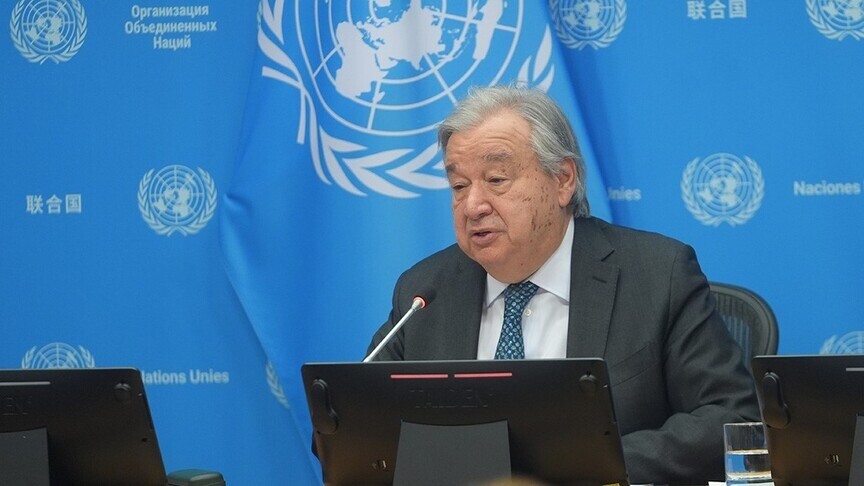
UN Chief Calls for Reform of “Unjust Global System” Blocking Africa’s Progress
UN Secretary-General António Guterres has launched a direct challenge to the global financial order, labeling it “unjust” and calling for systemic reform to unlock Africa’s economic potential. At the Africa Forward Summit in May 2026, Guterres framed the continent’s underdevelopment as a structural failure of international institutions—from debt traps to resource extraction—while the African Union demanded permanent Security Council seats. The stakes? A continent holding 60% of the world’s uncultivated arable land and 30% of global mineral reserves, yet hemorrhaging $40 billion annually in illicit financial flows. This isn’t just a moral crisis; it’s a supply-chain and security time bomb for multinationals.
The Geopolitical Fracture: Why Africa’s Economic Exclusion Is a Global Risk
The UN’s latest indictment isn’t just rhetoric. Africa’s GDP growth has stagnated at 3.4% annually—half the rate of Asia’s post-colonial boom—while foreign direct investment (FDI) into the continent has plummeted 23% since 2020 due to perceived instability and predatory lending terms. The IMF’s austerity prescriptions, still default policy, have forced countries like Zambia and Ethiopia to divert 40% of national budgets to debt servicing instead of infrastructure. Meanwhile, China’s Belt and Road Initiative (BRI) has carved out trade corridors, but with strings attached: 70% of BRI loans in Africa come with resource-backed collateral, turning sovereign wealth into leverage.
“The current system is a relic of colonial finance. We’re not asking for charity—we’re demanding structural equity. If the G20 won’t reform, then regional blocs like the African Continental Free Trade Area (AfCFTA) will have to build parallel institutions.”
Debt as a Weapon: How Predatory Lending Locks Africa Out of Global Trade
Take Ghana. In 2022, it defaulted on $13 billion in Eurobonds, triggering a credit rating downgrade that pushed its borrowing costs to 18% annually. The fallout? Multinational agribusinesses now face insurance premiums of 8-12% higher for operating in Ghana due to perceived sovereign risk. The same dynamic plays out in the DRC, where cobalt mines—critical for EV batteries—are underproducing by 30% due to currency devaluations caused by IMF-mandated austerity.
| Country | Debt-to-GDP Ratio (2026) | FDI Inflow Drop (2020-2026) | Key Export Sector Affected |
|---|---|---|---|
| Ethiopia | 68% | 42% | Coffee, textiles |
| Nigeria | 55% | 35% | Oil, agriculture |
| DR Congo | 72% | 50% | Cobalt, copper |
This isn’t just bad economics—it’s a supply-chain crisis. Automakers from Tesla to Volkswagen are already scrambling to secure cobalt and lithium outside Africa due to investor exodus. The result? Prices for critical minerals have surged 25% in the past year, forcing manufacturers to either pay up or relocate production to Australia or South America.
The Security Dimension: How Economic Stagnation Fuels Instability
Africa’s underfunded public services aren’t just a development issue—they’re a security liability. The UN’s 2026 Peace and Security Report warns that 6 of the 10 most fragile states globally are in Africa, with youth unemployment above 30% in 18 nations. This isn’t hyperbole: the Sahel’s jihadist insurgencies have expanded into 7 new countries since 2023, while piracy off Somalia’s coast is up 120% YoY due to weakened naval patrols from cash-strapped governments.
“The link between economic exclusion and conflict is direct. When a young person in Lagos or Kinshasa sees no path to prosperity, and sees Western firms extracting their resources while they starve, radicalization becomes a rational choice.”
The Corporate Response: Who’s Profiting—and Who’s Getting Left Behind
While Guterres’ rhetoric targets the IMF and World Bank, the real action is in private-sector workarounds. Chinese state-owned enterprises (SOEs) have doubled their African FDI since 2020, but with opaque contracts that exclude Western firms. Meanwhile, European and American multinationals are turning to specialized geopolitical risk consultants to navigate the continent’s patchwork of sanctions, local content laws, and currency controls.
- Mining Firms: Glencore and Anglo American are hiring international trade lawyers to restructure DRC cobalt deals under new AfCFTA rules, avoiding IMF-linked collateral requirements.
- Agribusiness: Cargill and Olam are partnering with supply-chain resilience firms to bypass Ghana’s cocoa export bottlenecks by rerouting through Ivory Coast.
- Tech & Automotive: BMW and Ford are investing in critical mineral sourcing hubs in Botswana and Namibia to secure lithium without relying on DRC’s debt-constrained infrastructure.
The UN’s Gambit: Can Reform Outpace the Crisis?
The Africa Forward Summit’s call for two permanent Security Council seats isn’t just symbolic—it’s a power play to redirect $1.3 trillion in annual global aid and investment away from IMF austerity and toward continent-led development. But the roadblocks are monumental:
- Veto Power: The U.S. And China would block any Council reform that dilutes their influence, leaving Africa to lobby through the General Assembly, where decisions require two-thirds majority.
- Debt Jailbreaks: Zambia’s 2020 debt restructuring took 18 months and required 90% creditor approval. With 40 African nations in debt distress, systemic relief is years away.
- Resource Nationalism: Angola and Nigeria are renegotiating oil contracts to retain more revenue, but this risks capital flight as firms pull out.
The Long Game: Who Wins If Reform Fails?
If the UN’s push stalls, three scenarios emerge:
- The China Model: SOEs dominate African infrastructure, locking out Western firms and creating debt-dependent states. Result: supply-chain monopolies in minerals and agriculture, with corporate diplomacy firms scrambling to secure access.
- The Regional Bloc Model: AfCFTA accelerates, but without global capital. Result: protected markets for African businesses, but higher costs for importers—forcing cross-border trade specialists to pivot to Asia.
- The Collapse Scenario: Debt defaults trigger currency crises, hyperinflation, and mass migration. Result: security vacuums exploited by non-state actors, with extreme-risk logistics providers becoming the only viable option for multinationals.
The choice isn’t between Guterres’ vision and the status quo—it’s between managed reform and uncontrolled fragmentation. For businesses, the message is clear: hedge now. The continent’s resources aren’t going away, but the rules of engagement are about to change—drastically.
For firms navigating this shift, the World Today News Directory connects you to the specialized partners who operate where others fear to tread.