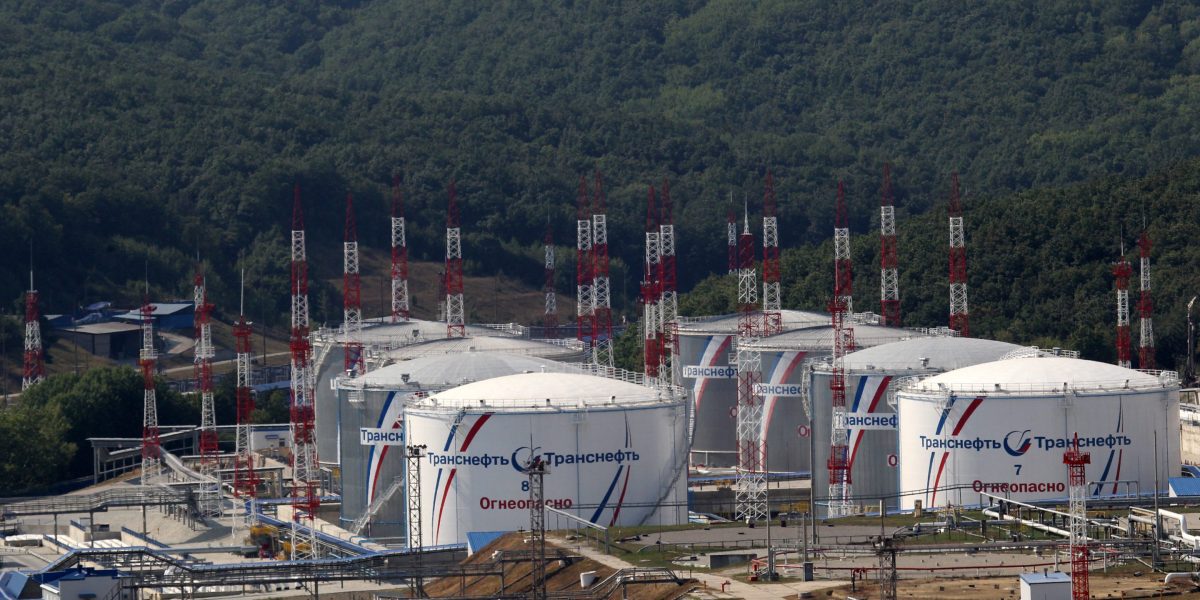
Ukrainian Drone Attack Hits Russian Oil Terminal in Novorossiysk
Ukrainian forces conducted a strategic strike on the Sheskharis oil terminal in Novorossiysk, Russia, overnight, igniting a fire at the critical export infrastructure. The operation, confirmed by Ukraine’s General Staff, targeted a key node in the Transneft pipeline network, escalating the economic impact of the four-year-old conflict on global energy supply chains.
For institutional investors and energy traders, the incident represents more than a localized fire; it is a signal of heightened systemic risk within the Black Sea energy corridor. The Sheskharis facility serves as a vital artery for Russian crude exports, and its vulnerability underscores a persistent volatility in the regional energy market. As Ukraine continues to scale its domestic long-range strike capabilities, the risk premium on energy assets operating within the theater of operations is shifting from a temporary nuisance to a structural market factor.
Infrastructure Resilience and the Cost of Operational Continuity
The disruption at Novorossiysk serves as a stark reminder of the fragile nexus between geopolitical tension and asset security. When critical infrastructure becomes a kinetic target, the immediate fiscal burden falls on the balance sheets of multinational energy firms and their insurers. Corporations navigating this environment face significant challenges in maintaining operational throughput while managing the legal and financial fallout of supply chain interruptions.
Strategic leaders are increasingly turning to risk management consulting firms to quantify these geopolitical threats. The objective is clear: to build a more resilient logistics framework that can withstand the sudden, often unpredictable, cessation of port and pipeline throughput. For companies with high exposure to the Black Sea, the cost of inaction is no longer just a potential loss of revenue—it is the erosion of shareholder value through compromised operational integrity.
Macroeconomic Exposure: The “Shadow Fleet” and Export Volatility
Ukraine’s General Staff reported that the operation also targeted a tanker associated with Russia’s “shadow fleet.” This designation refers to the opaque network of vessels utilized to circumvent international sanctions and maintain export volumes despite global restrictive measures. By striking both the terminal and the transport mechanism, Kyiv is systematically targeting the liquidity of the Russian war machine.
Market participants tracking the energy sector logistics landscape note that these strikes force a reassessment of export capacity. When pipeline terminals are compromised, the reliance on maritime transport increases, yet that highly transport is now demonstrably vulnerable to precision strikes. The result is a tightening of available shipping capacity, which inevitably impacts insurance premiums and freight rates globally.
“The integration of domestic long-range drone technology into military operations creates a new tier of volatility for energy markets. Markets are not just pricing in the war; they are pricing in the permanent degradation of infrastructure that was previously considered secure behind deep-territory defensive lines.” — Senior Analyst, Global Commodities Research.
The B2B Response: Ensuring Continuity Amid Geopolitical Flux
The current environment demands a sophisticated approach to asset protection and legal compliance. As the conflict enters its fifth year, firms entangled in the region’s energy trade must navigate a labyrinth of international law, sanctions, and contractual obligations. The necessity for high-level guidance has never been more acute.
To address the resulting legal complexities, many firms are engaging international corporate law firms to mitigate the risks associated with force majeure claims and supply chain contract disputes. The need for real-time asset monitoring has driven a surge in demand for cybersecurity and asset protection specialists who can provide satellite-linked oversight of remote industrial sites.
Three Strategic Shifts for Energy Market Participants
- Asset Hardening: Increased capital allocation toward physical and electronic defensive measures at peripheral storage and transit hubs.
- Geographic Diversification: A pivot toward shorter, more secure supply chains to minimize reliance on high-risk Black Sea transit points.
- Insurance Recalibration: A systematic review of maritime and infrastructure insurance policies to account for the heightened frequency of kinetic incidents.
The fire at the Sheskharis terminal is not an isolated event but a continuation of a trend toward the weaponization of energy infrastructure. As the General Staff in Kyiv maintains that its operations are aimed exclusively at the Russian war machine, the global economy continues to absorb the volatility. Investors looking to navigate the remainder of the fiscal year must prioritize liquidity, operational transparency, and robust contingency planning. Those seeking to fortify their positions should consult the World Today News Directory to identify vetted partners capable of providing the strategic intelligence and risk mitigation services required in this high-stakes landscape.
