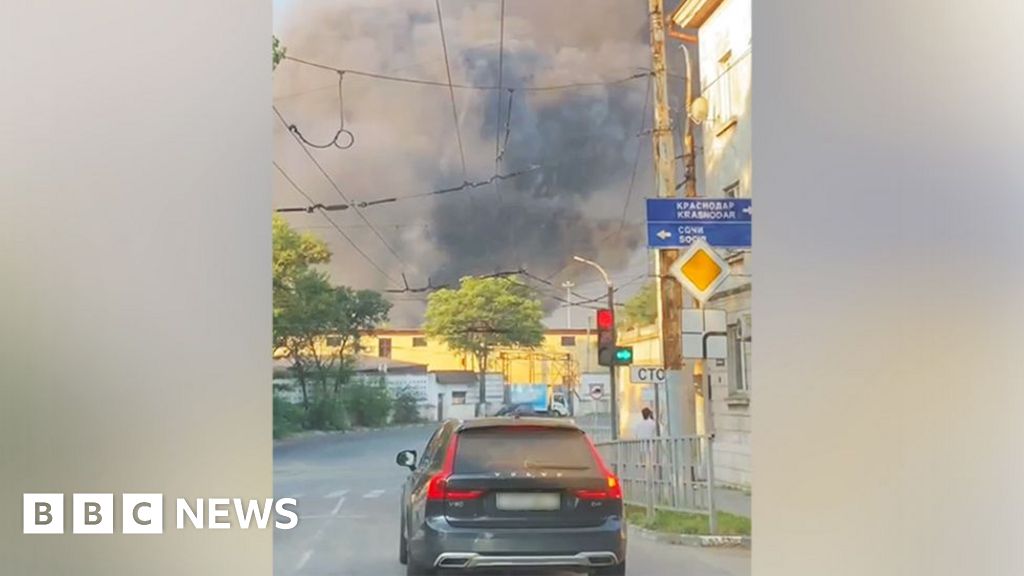
Ukraine Strikes Russian Black Sea Port, Hitting Grain Terminals and Warships
On August 12, 2026, a massive coordinated Ukrainian drone and missile strike hit Russia’s primary Black Sea naval stronghold and damaged two major grain export terminals in the port city of Novorossiysk. According to local officials cited by the BBC and Reuters, the nighttime attack killed three people, including an eight-year-old child, injured 24 others, and crippled critical municipal infrastructure.
Strategic Port and Naval Infrastructure Compromised
The overnight bombardment struck deep into the Krasnodar region, where hundreds of aerial and naval drones targeted military and industrial installations. Ukrainian President Volodymyr Zelenskyy described the operation as a unique and strategic initiative designed to weaken the Russian military posture in the region. According to Reuters, Zelenskyy stated that the strikes hit multiple naval assets, including two frigates, a large landing ship, and a corvette.

Novorossiysk serves as the primary sanctuary for the bulk of Russia’s Black Sea Fleet. The fleet relocated to the port after its former base in Sevastopol, located in the Russian-occupied Crimean peninsula, became increasingly vulnerable to Ukrainian missile and drone assaults. Local authorities in Sevastopol reported that more than three dozen drones were also intercepted overhead on Wednesday, according to regional governor Mikhail Razvozhayev.
The physical damage extended far beyond military targets. Novorossiysk Mayor Andrei Kravchenko confirmed that four commercial enterprises, more than two dozen residential buildings, and several educational facilities suffered structural damage. The strikes also ruptured local pipelines, forcing officials to declare a municipal emergency and temporarily suspend the city’s water supply.
Immediate Fallout for Global Grain Supplies
The disruption to civilian infrastructure included critical agricultural assets. Grain industry sources confirmed to TASS, Reuters, and RBK that two major grain export terminals in Novorossiysk were forced to halt operations following direct hits. Because Russia remains the world’s largest wheat exporter, the sudden paralysis of these facilities sent immediate shockwaves through international commodity markets. Chicago wheat futures climbed approximately 3% on Wednesday morning in response to the supply threat.

The Russian agriculture ministry announced plans to reroute export cargoes through alternative channels, pointing toward ports on the Baltic and Caspian Seas alongside overland logistical corridors. The Russian grain lobby warned previously that prolonged attacks on Black Sea hubs could choke off exports entirely, fueling food security concerns across importing nations in Africa and the Middle East.
Compounding the regional crisis, agricultural logistics on the Ukrainian side remain heavily restricted. Ukrainian agriculture ministry figures released on Wednesday indicate that maritime grain shipments tumbled 76% in the first two weeks of August compared to the same period last year, driven by ongoing Russian strikes on shipping lanes. In response, Ukraine and Moldova finalized a rail transit agreement on Wednesday to secure alternative overland grain pathways.
Broader Regional Escalation and Municipal Strain
The escalation in Novorossiysk aligns with an intensified exchange of strikes across the theater throughout the summer months. Regional Governor Veniamin Kondratyev reported widespread property damage across the Krasnodar territory as air defense batteries engaged incoming projectiles. In retaliation for the southern port strikes, Russian forces launched ballistic missiles and glide bombs against Ukrainian population centers. An overnight barrage on Tuesday struck Zaporizhzhia, killing 11 civilians.
As municipal authorities and commercial operators grapple with structural repairs, the strain on local supply chains continues to mount. Managing structural reconstruction and supply chain redirection requires specialized logistical oversight. Commercial entities and municipal agencies facing severe operational disruptions often retain Logistics and Supply Chain Consultants to establish functional continuity plans amid sudden geopolitical shocks. Similarly, property owners and municipal infrastructure managers dealing with widespread structural damage frequently coordinate with Disaster Recovery and Restoration Services to clear debris and secure compromised facilities.
The prolonged conflict enters its fifth year with no immediate diplomatic resolution in sight. While Ukrainian officials indicate that proposals have been forwarded to international negotiators, Moscow maintains that any formal settlement must include total territorial cession of four claimed regions. As infrastructure destruction accelerates along the Black Sea coastline, the economic and logistical fallout continues to ripple through international markets.