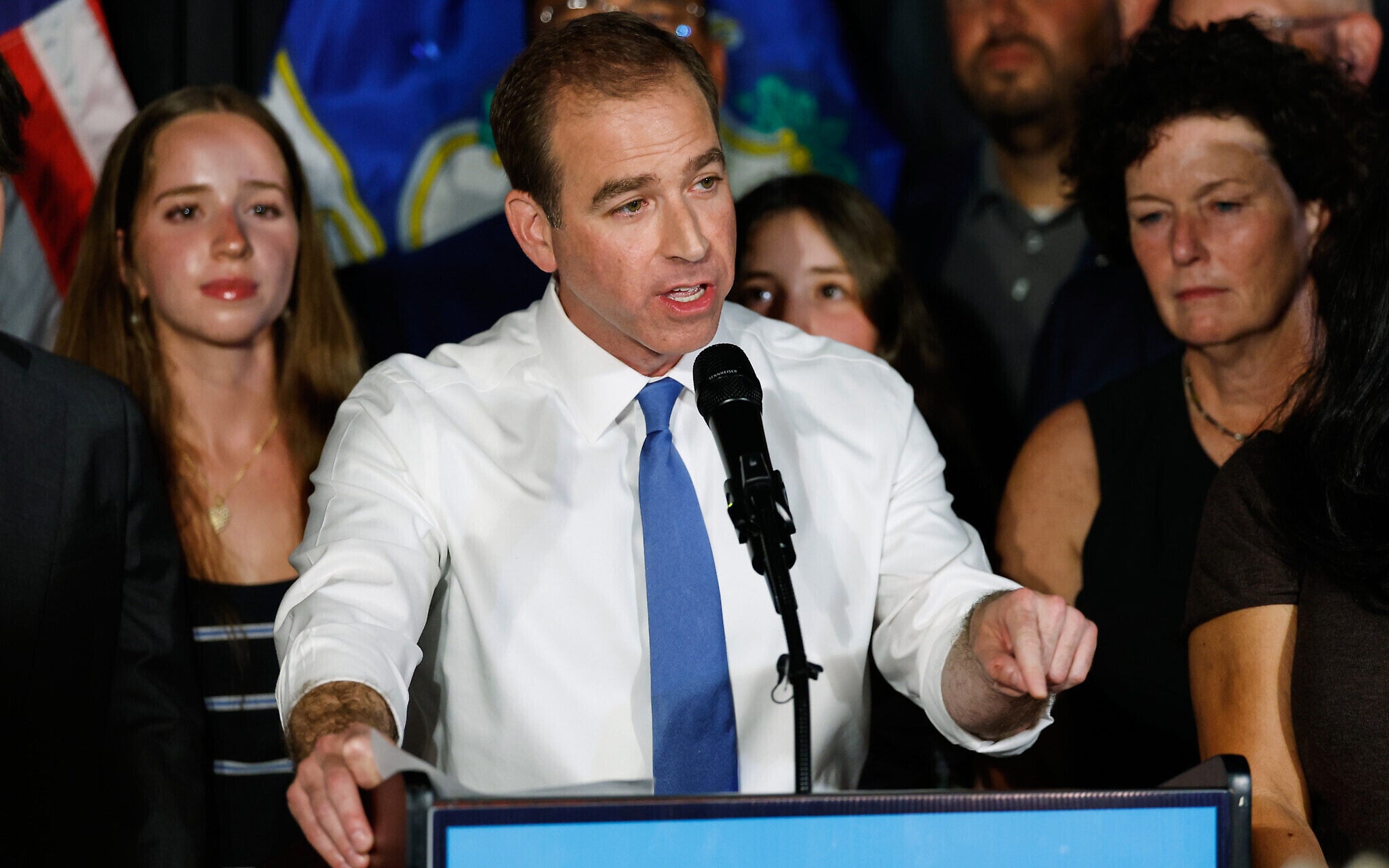
Luke Bronin Defeats Incumbent John Larson in Connecticut Democratic Primary
Representative John Larson in Connecticut’s 1st Congressional District Democratic primary on August 11, 2026. According to reporting by The Times of Israel, Jewish Telegraphic Agency, and Roll Call, the high-profile upset centered on generational change and economic affordability rather than foreign policy regarding Israel, marking another primary defeat for the American Israel Public Affairs Committee.
A Political Earthquake in Connecticut’s First District
Luke Bronin, 47, secured a decisive victory over 78-year-old Representative John Larson, capturing roughly 53% to 54% of the vote compared to Larson’s 33% to 34%, as reported by Roll Call and the Jewish Telegraphic Agency. The primary loss makes Larson the seventh House Democrat to lose a nomination race during the 2026 election cycle. The victory sets up a general election contest against Republican nominee Dr. Amy Chai, a physician and mental health advocate running in a district where approximately 27,800 Jewish residents comprise about 3.9% of the local population, according to data cited by the Jewish Telegraphic Agency.
Bronin framed his campaign around the necessity of injecting fresh energy into the Democratic party to counter the political landscape under President Donald Trump. “This is a political earthquake in Connecticut,” Bronin told supporters on election night in Hartford, as quoted by Roll Call. The campaign saw heavy outside spending, including nearly $1 million from VoteVets, a political action committee supporting candidates with military backgrounds. Bronin, a Navy veteran who served in Afghanistan and held positions in the Obama administration, outraised Larson by pulling in roughly $3.1 million largely from individual contributions, outpacing Larson’s $2.7 million war chest, which relied more heavily on political action committees.
Foreign Policy Nuance and the Role of AIPAC
While the American Israel Public Affairs Committee backed Larson and invested roughly $120,000 into the incumbent’s campaign, international policy did not drive the primary outcome. The Jewish Telegraphic Agency reported that Israel and AIPAC were not at the forefront of the contest. Instead, voters signaled a complex mix of opinions on foreign aid without treating the Middle East as the decisive wedge issue seen in other primary cycles nationwide.

Both leading candidates held traditionally pro-Israel positions on core security matters, together commanding nearly 90% of the total primary vote. Meanwhile, two progressive challengers on the ballot—state Rep. Jillian Gilchrest and Hartford school board member Ruth Fortune—finished far behind in third and fourth places after making accusations against Israel a central focus of their platforms. During a primary debate, Larson defended his vote in favor of U.S. military aid while balancing humanitarian concerns for Palestinians, telling audiences that allies must receive necessary support while laws are enforced. Bronin countered by criticizing Israeli Prime Minister Benjamin Netanyahu for causing damage to his nation’s security and standing, while maintaining support for defensive systems that protect civilians against incoming rockets, missiles, and drones.
Generational Shift Overrides Institutional Clout
Larson relied on deep establishment roots, boasting a congressional tenure beginning in 1998 and holding the position of top Democrat on the House Ways and Means Subcommittee on Social Security. He secured endorsements from prominent party figures, including former House Speaker Nancy Pelosi and Connecticut Governor Ned Lamont. Yet, grassroots enthusiasm clearly favored a younger alternative.

“The process is all about the people, and tonight, the people have spoken,” Larson said in his concession remarks reported by Roll Call, calling for party unity ahead of the general election.