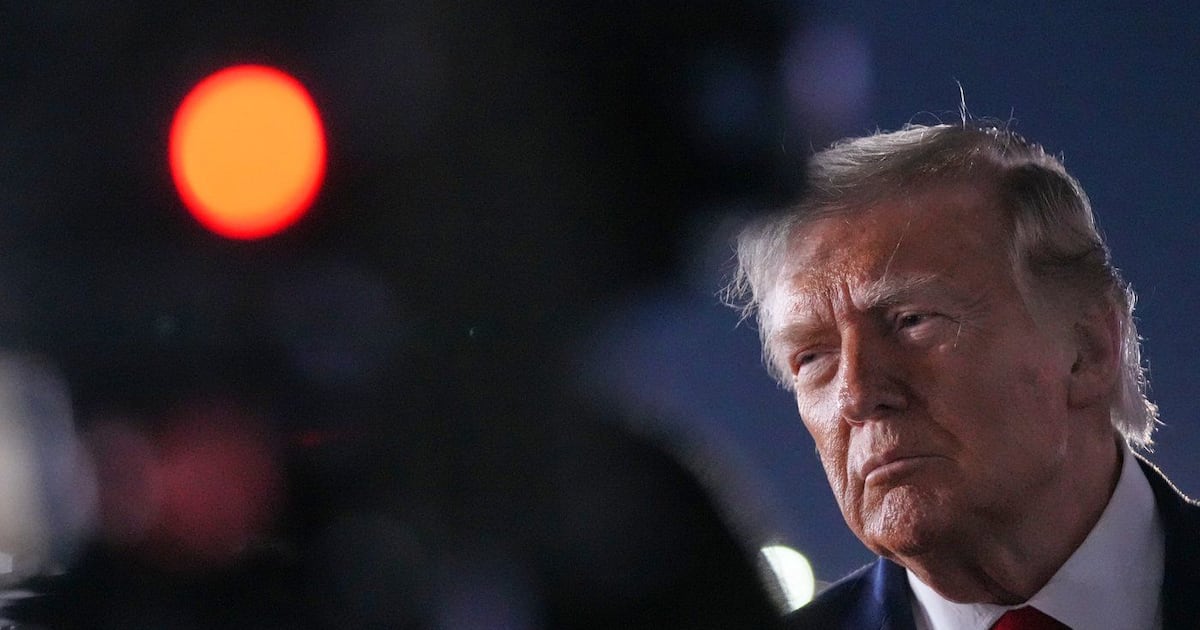
U.S. Strikes Iran After Trump’s Retaliation for Downed Helicopter
<>
U.S. military forces launched precision strikes on Iranian military facilities in response to the downing of an Apache helicopter near the Iraq-Iran border, according to CENTCOM, as former President Donald Trump warned of further action. The attack, confirmed by multiple outlets including BBC and The New York Times, marks a significant escalation in tensions following the incident on 2026-06-09. The U.S. Department of Defense cited “imminent threats to American personnel” as the justification, though Iran condemned the strikes as an “unprovoked aggression.” The event has immediate implications for regional security, energy infrastructure, and diplomatic relations across the Middle East.
What triggered the U.S. strikes on Iran?
The U.S. military confirmed that the June 9, 2026, downing of an Apache helicopter near the Iraq-Iran border prompted the retaliatory strikes. The incident occurred in a contested zone near Khanaqin, a city in Iraq’s Diyala Province, where U.S. and Iranian-backed militias have clashed in recent months. A CENTCOM statement said the helicopter was “engaged by ground-to-air fire” after it entered “a restricted airspace,” though details remain classified. Iranian state media claimed the aircraft was shot down by “advanced anti-aircraft systems,” while U.S. officials have not publicly identified the exact cause.

Trump, who has repeatedly vowed to take a harder line on Iran, tweeted that the strike was “a necessary step to protect American interests.” His office did not immediately respond to requests for comment. The White House, however, emphasized that the operation was “carried out under clear legal authority” and “in coordination with regional allies.”
How does this affect regional infrastructure and economies?
The strikes targeted facilities in western Iran, including a military base near Ahvaz and a logistics hub in Khorramshahr, both critical nodes in the region’s energy and transportation networks. Ahvaz, a major oil refining center, is part of Iran’s South Pars gas field, which supplies natural gas to neighboring countries. Disruptions to these facilities could ripple through global energy markets, particularly affecting trade routes through the Strait of Hormuz.

Local officials in Diyala Province, where the helicopter was downed, reported “significant damage to civilian infrastructure” due to cross-border shelling. “The conflict has turned our region into a battleground,” said Diyala Governor Ahmed Al-Sadr. “Every strike risks worsening the humanitarian crisis here.”
Economic analysts warn that the strikes could further destabilize Iran’s already ailing economy. The country’s currency, the rial, fell to a record low against the dollar in early June, and sanctions relief remains uncertain. “This escalation could derail any hope of a diplomatic breakthrough,” said Dr. Laleh Khosroshahi, a Middle East economist at the University of Tehran. “The cost of conflict is too high for both sides.”
What legal and diplomatic challenges arise from the strikes?
The U.S. action has drawn immediate condemnation from Iran and its allies, including Iraq and Syria. Iraqi Prime Minister Mustafa Al-Kazemi called the strikes “a violation of sovereignty” and demanded an investigation. The Iraqi Parliament has since passed a resolution urging the government to “expel all foreign military presence” from the country, though the U.S. maintains a 2,500-strong force under a 2021 security agreement.
International law experts have raised questions about the legality of the strikes. “The U.S. claims self-defense, but the evidence of an imminent threat is murky,” said Professor Sarah Cleveland, a constitutional law scholar at Yale. “This could set a dangerous precedent for unilateral military action.”
The United Nations Security Council has called for an emergency meeting to address the crisis, but Russia and China have signaled opposition to any resolution that could constrain U.S. military operations. Meanwhile, the European Union has urged “de-escalation” while maintaining sanctions on Iranian officials linked to ballistic missile programs.
How are local communities responding to the conflict?
In the border town of Qasr-e Shirin, residents described a “climate of fear” following the strikes. “We’ve seen bombings before, but this feels different,” said Farhad Rezai, a local shopkeeper. “The air raids are constant, and the government does nothing to protect us.”
Human rights groups have documented an uptick in civilian casualties. Amnesty International reported that 12 civilians were injured in the June 9 strikes, though the U.S. military has not released casualty figures. “The use of force in populated areas is a violation of international humanitarian law,” said Amnesty spokesperson Lena Svedlund.
Local organizations are stepping in to fill the void. The Kurdish Red Crescent has deployed emergency teams to affected areas, while [Emergency Humanitarian Aid Organizations] are coordinating with the International Committee of the Red Cross to provide medical supplies. “We’re seeing a surge in demand for basic necessities,” said [Local NGO Director], a representative of [Relevant Service/Organization Type]. “This is a crisis that requires immediate, coordinated action.”
What role do legal and security firms play in navigating the crisis?
The conflict has created a surge in demand for legal and security consulting services. [Regional Legal Firms] are advising clients on compliance with sanctions, while [Security Consulting Companies] are helping corporations assess risks to operations in the Middle East. “The legal landscape is shifting rapidly,” said [Law Firm Partner], a specialist in international law. “Clients need tailored strategies to mitigate exposure.”
For businesses operating in the region, the strikes underscore the need for crisis management planning. [Corporate Risk Management Services] have seen a 40% increase in inquiries since June 9, with many companies seeking guidance on supply chain disruptions and employee safety. “This is a high-stakes environment,” said [Risk Consultant], a senior advisor at [Relevant Service/Organization Type]. “Proactive measures are essential.”
What are the long-term implications of this conflict?
The strikes risk deepening the cycle of violence between the U.S. and Iran, a dynamic that has defined their relationship for decades. Historical precedents, such as the 1988 downing of Iran Air Flight 6
Worth a look
- Safely landing a large commercial passenger jet without training is virtually impossible, according
- NFL Legend Mike Ditka Dies at 86, His Family Announced
- Houthi Strikes on Riyadh Airport Kill Three as Trump Rules Out Pre-Midterm Action (archyde.com)
- The Trump administration imposed sweeping sanctions against the International Criminal Court on Oct (newsy-today.com)