U.S. Space Forces-Korea Integrates Space Domain into Freedom Shield 26 Exercise
CAMP HUMPHREYS, South Korea – The Republic of Korea and the United States concluded Freedom Shield 26 (FS 26) on Wednesday, March 19, 2026, a large-scale combined exercise designed to strengthen the defense posture of both nations, according to a U.S. Army statement. While ground, air, naval, and cyber components participated in the drills, a smaller team from U.S. Space Forces – Korea (SPACEFOR-KOR) played a critical, behind-the-scenes role in integrating the space domain into the exercise.
Freedom Shield is an annual exercise conducted in support of the ROK-U.S. Mutual Defense Treaty signed in 1953. This year’s iteration involved more than 18,000 combined forces from South Korea, the United States, and United Nations Command member states, according to a statement released by the Defense Visual Information Distribution Service (DVIDS).
SPACEFOR-KOR’s participation focused on rehearsing operations across all Space Mission Areas, stress-testing procedures, and rapidly scaling operations, according to an Air Force News Service report. The team’s operate centered on digitally exercising the “space fight” alongside traditional warfighting domains.
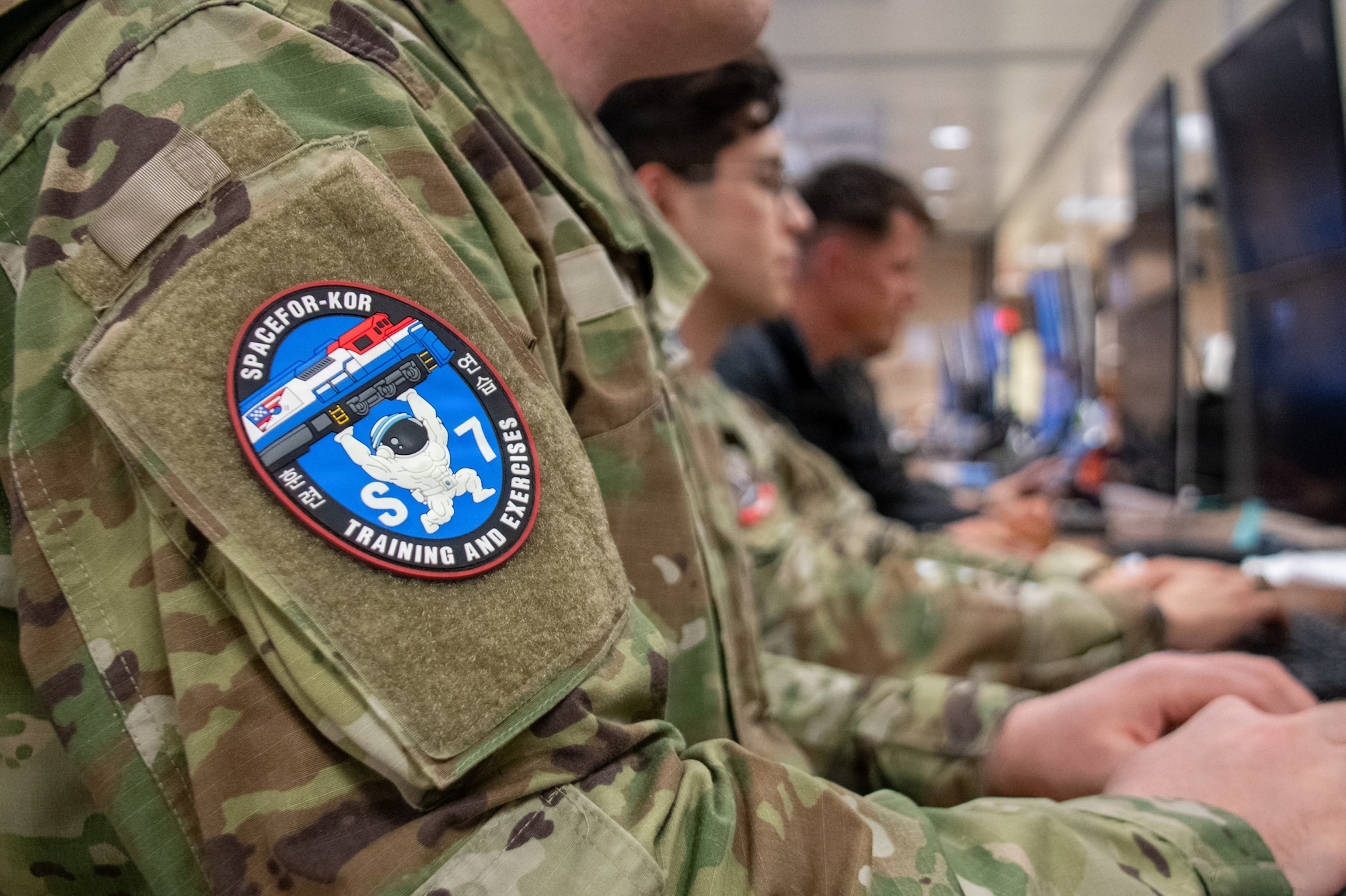
Leading up to the exercise, the SPACEFOR-KOR S7 directorate – responsible for force development, training, and exercises – developed a “robust space environment” to meet the command’s objectives. U.S. Space Force Maj. Dillon Hagerty, SPACEFOR-KOR director of force development, stated the primary objective was to rehearse theater-relevant operational plans. Additional goals included validating space operations planning, testing command and control capabilities, and fostering partnership engagement.
The S7 directorate, typically a four-person team, coordinated extensively with higher headquarters and supporting commands, while likewise developing detailed scenarios. According to SPACEFOR-KOR, the team’s workload encompasses administration, logistics, personnel coordination, exercise planning, and scenario design.
To create realistic scenarios and simulated data, the S7 directorate collaborated with the Pacific Air Simulation Center at Osan Air Base, the Korean Battle Simulation Center at Camp Humphreys, and other simulation centers in the United States. U.S. Space Force 1st Lt. Roman Ocampo, SPACEFOR-KOR chief of exercise development, explained the team’s role was to coordinate between these centers to ensure the space scenario was as realistic as possible.
During the exercise, the directorate transformed into the Exercise Control Group (ECG), expanding to over a dozen members, including subject matter experts from across Space Mission Areas and liaisons from the Republic of Korea Air Force’s Space Operations Group. The ECG executed and managed the scenarios driving the space portion of the exercise.
“We are the controllers for the entire space domain for the exercise,” Ocampo said.
The scenarios encompassed Space Mission Areas such as Missile Warning, Space Domain Awareness, and simulated degraded space-enabled effects impacting combined operations. The ECG monitored player actions – U.S. Forces tracked by U.S. Members, and ROK forces tracked by their counterparts – and adjusted scenarios to demonstrate the impact of participants’ actions. This process aimed to sharpen shared understanding, improve coordination, and reinforce how space operations support combined defense.
Much of the ECG’s work took place at the Pacific Air Simulation Center, the only facility in the Korean theater providing integrated air and space simulation and continuous simulated data. There, the space-focused ECG synchronized efforts with air component counterparts to integrate space operations.
As Freedom Shield 26 concludes, SPACEFOR-KOR aims to further integrate the space domain into future training environments, continuously expanding the complexity, realism, and scope of the space fight to better prepare combined forces for real-world operations on the Korean Peninsula.