U.S. Envoys Head to Pakistan in Bid to Salvage Iran Ceasefire Talks Amid Strait of Hormuz Disruption
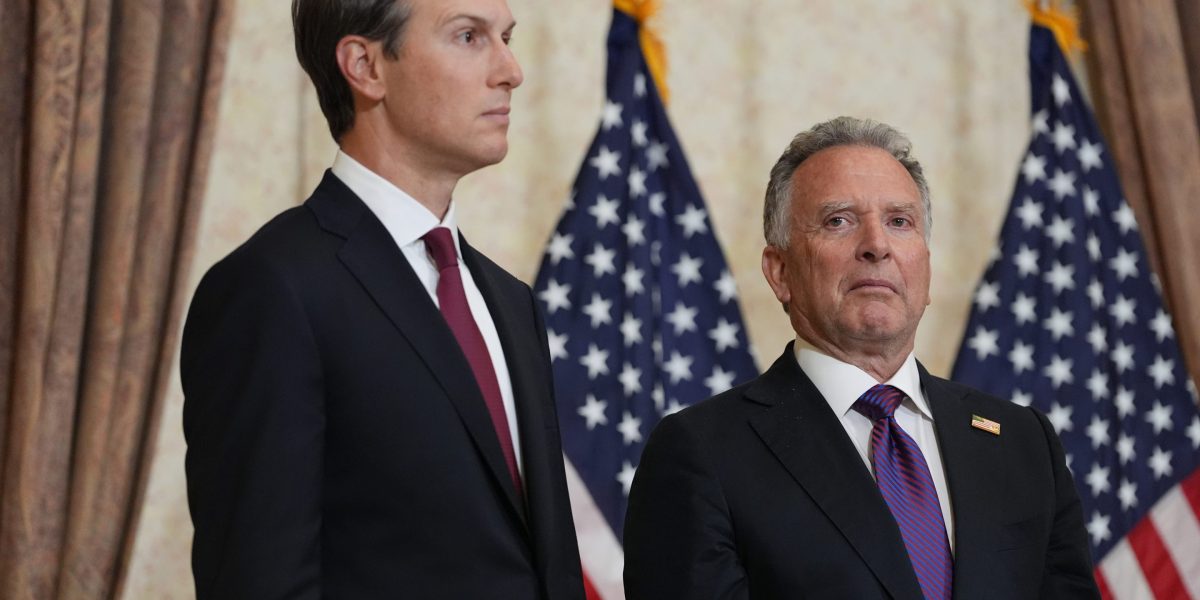
U.S. Envoys Steve Witkoff and Jared Kushner are en route to Pakistan to mediate indirect ceasefire talks between Washington and Tehran, as President Trump extends a Jones Act waiver for 90 days to ease energy transport constraints amid ongoing disruptions in the Strait of Hormuz, where nearly 20% of global oil shipments face interception risks, contributing to Brent crude volatility averaging $105 per barrel in Q1 2026 and exerting pressure on downstream refining margins across Asia and Europe.
The diplomatic push, framed as a humanitarian and economic stabilizer, arrives amid mounting fiscal strain on global energy traders and logistics firms contending with volatile freight rates, delayed LNG cargoes, and elevated war-risk premiums that have added an estimated $1.80 per MMBtu to Asian spot LNG prices since February, according to S&P Global Commodity Insights data referenced in Platts’ weekly market assessment.
While the White House frames the mission as a bid to “hear the Iranians out,” market participants interpret the move as a tacit acknowledgment that military posturing alone cannot resolve the structural imbalance in Gulf energy flows, where Iranian-backed actions have reduced tanker transits through the Strait by 34% year-over-year, per Lloyd’s List Intelligence tracking of VLCC movements, forcing rerouting around the Cape of Good Hope and increasing voyage costs by up to 22% for Asia-bound cargoes.
How Prolonged Gulf Tensions Are Compressing Refining Margins in Asia
Singapore gross refining margins (GRMs) for complex refiners slipped to $4.10 per barrel in March 2026, down from $6.80 in the same period last year, according to FGE’s monthly refinery economics report, as delayed crude arrivals and elevated demurrage charges—averaging $85,000 per day for VLCCs awaiting clearance near Muscat—erode throughput efficiency.
This margin compression is particularly acute for independent refiners lacking integrated upstream exposure, prompting increased interest in hedging structures and supply chain optimization tools offered by commodity risk management platforms.
In response, firms are seeking greater transparency in laycan flexibility and demurrage caps through updated charterparty agreements, driving demand for specialized maritime legal counsel familiar with force majeure clauses under BIMCO standards and sanctions compliance frameworks.
“We’re seeing clients restructure their voyage charters to include dynamic laytime recalculations based on real-time AIS data feeds from Hormuz transit monitors—this isn’t just about cost recovery; it’s about operational resilience.”
The Jones Act waiver extension, while providing temporary relief for U.S. Gulf Coast refiners seeking to import Algerian Saharan Blend or Nigerian Bonny Light via foreign-flagged tankers, does little to address the core issue: Iran’s ability to threaten maritime chokepoints without direct confrontation, a gray-zone tactic that complicates traditional underwriting models for P&I clubs and war risk insurers.
Lloyd’s of London reported a 19% year-to-date increase in war risk premiums for Gulf transit in its Q1 2026 marine insurance bulletin, citing “persistent asymmetric threats” and limited deterrence efficacy, a trend that is pushing shipping operators toward alternative risk transfer mechanisms such as parametric insurance triggers tied to AIS-based incident detection.
The Ripple Effect: How Hormuz Volatility Is Reshaping Global Trade Finance
Beyond energy, the disruption is cascading into containerized trade, with Maersk and Hapag-Lloyd reporting a 12% average increase in transit times for Asia-Europe lanes via the Suez Canal-Red Sea detour, according to their respective Q1 2026 earnings releases, which note elevated bunker consumption and port congestion surcharges as contributing factors to a 40-basis-point drag on adjusted EBITDA margins.
This delay is exacerbating working capital pressures for importers reliant on just-in-time inventory models, particularly in automotive and electronics sectors, where component shortages have led to production line slowdowns in Hungary and Mexico, as noted in Tier 1 supplier briefings referenced by S&P Global Mobility.
To mitigate these risks, multinational treasury teams are increasing utilization of supply chain finance (SCF) platforms that offer dynamic discounting based on verified shipment milestones, a shift reflected in the 22% YoY growth in SCF transaction volume reported by Taulia’s 2025 annual review, with particular uptake in ASEAN and LATAM corridors.
Simultaneously, corporations are revisiting force majeure interpretations in long-term supply contracts, prompting consultations with international trade law firms experienced in ICC Incoterms® 2024 revisions and hardship clauses under UNIDROIT principles, especially where force majeure triggers are tied to government-imposed navigation restrictions rather than physical blockades.
“The market is moving away from binary force majeure arguments toward negotiated suspension protocols—buyers and sellers now prefer predefined grace periods and cost-sharing mechanisms during geopolitical pauses, which reduces litigation risk and preserves commercial relationships.”
Why This Matters for the Energy Transition Narrative
Ironically, the prolonged disruption may be accelerating interest in regional energy diversification, with Saudi Arabia and the UAE reporting a combined 18% increase in long-term LNG offtake inquiries from Indian and Pakistani utilities since January, per data compiled by Wood Mackenzie’s Middle East Gas Tracker, as buyers seek to reduce reliance on volatile Hormuz-dependent cargoes.

This shift is benefiting developers of floating storage and regasification units (FSRUs), where firms like Höegh LNG and Excelerate Energy have seen a 30% rise in feasibility study requests for South Asian ports, according to their respective investor presentations, though financing remains contingent on securing 10- to 15-year take-or-pay contracts amid uncertain credit tenors.
In parallel, the U.S. Department of Energy’s March 2026 report on strategic petroleum reserve (SPR) utilization noted that SPR releases averaged 350,000 bpd in Q1 to counteract regional tightness, a drawdown rate that, if sustained, would deplete current inventories by Q3 2027 absent replenishment—a dynamic that is increasing scrutiny on congressional appropriations for SPR refill contracts, which favor domestic producers with proven delivery capability.
The convergence of geopolitical risk, margin pressure, and evolving trade finance structures underscores a clear opportunity for B2B providers specializing in commodity risk analytics, maritime legal advisory, and structured trade finance solutions.
As corporations navigate this new normal of asymmetric maritime threats and intermittent diplomatic engagement, access to vetted experts in energy trade compliance, voyage optimization, and supply chain resilience becomes not just advantageous—but essential to maintaining operational continuity and protecting shareholder value in an era where a single naval incident in the Hormuz can redefine quarterly outlooks across continents.
For enterprises seeking to fortify their energy and trade operations against such volatility, the World Today News Directory offers a curated network of pre-vetted B2B firms—from maritime law specialists and trade finance structurers to commodity risk analysts and logistics optimization consultants—equipped to turn geopolitical uncertainty into manageable, quantifiable risk.