U.S. Electricity Demand Hits Record Highs as AI Boom Drives Surge in Power Consumption
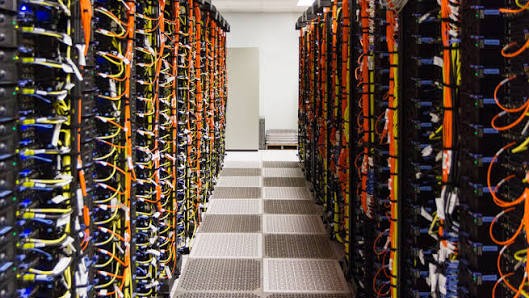
U.S. electricity demand is surging to record levels as rapid data center expansion and the proliferation of artificial intelligence technologies end a decade of stagnant consumption. According to the U.S. Energy Information Administration (EIA), the grid faces unprecedented pressure, forcing utilities to extend the operational life of fossil fuel plants and accelerate capital expenditure on transmission infrastructure to prevent systemic capacity shortfalls.
The Capital Expenditure Supercycle and Grid Constraints
The traditional model of incremental grid growth has collapsed under the weight of high-density computing. Per the Federal Energy Regulatory Commission (FERC), utility-scale power demand is no longer growing at a linear rate; it is experiencing exponential spikes driven by hyperscale data centers. This shift has created an immediate fiscal problem for regional transmission organizations: the existing distribution architecture cannot accommodate the load without significant reinvestment.
Investors are monitoring the divergence between rising power demand and the sluggish pace of interconnection queues. As utilities struggle to secure permits for new high-voltage transmission lines, the lag between demand realization and capacity deployment is widening. For firms operating in this environment, managing these logistical and regulatory hurdles is paramount. Many are now engaging specialized infrastructure project management consultants to navigate the complex permitting landscape and expedite site acquisition.
Quantifying the AI Load on Operational Margins
The financial implications for power generators are twofold. While top-line revenue is expanding due to increased volume, the capital intensity required to modernize the grid is suppressing free cash flow in the near term. According to recent SEC 10-K filings from major investor-owned utilities, companies are increasing their five-year capital expenditure budgets by as much as 20% to account for grid hardening and the integration of renewable baseloads.
The following table outlines the structural shift in power consumption metrics:
| Metric | 2014–2023 Trend | 2024–2026 Forecast |
|---|---|---|
| Annual Demand Growth | 0.5% – 1.0% | 2.5% – 4.0% |
| Grid Utilization Rate | Stable | Near-Peak (Systemic Stress) |
| CapEx Deployment | Maintenance-focused | Expansion-focused |
This surge has put a premium on energy efficiency. “We are seeing a fundamental decoupling of economic growth from energy consumption in most sectors, but AI is the glaring exception,” notes a senior analyst at a leading global investment bank. “The internal rate of return for new power projects is being re-evaluated against the cost of capital, which remains high relative to the last decade’s interest rate environment.”
Supply Chain Bottlenecks and Risk Mitigation
The hardware required to bolster the grid—specifically high-voltage transformers and switchgear—is currently subject to extended lead times. Supply chain constraints are creating a bottleneck that threatens to delay data center commissioning dates. For enterprise clients, these delays represent significant opportunity costs in the race for AI dominance.
Managing the procurement of these long-lead assets requires sophisticated legal and financial oversight. Corporations are increasingly relying on enterprise supply chain risk management firms to audit vendor reliability and secure critical components through long-term forward contracts. Without these safeguards, firms risk exposure to price volatility and execution failure.
The Regulatory and Legal Horizon
Regulatory bodies are now tasked with balancing grid reliability against the aggressive decarbonization mandates set by state legislatures. This conflict is creating a surge in litigation and regulatory filings. Utility companies are finding that their standard operational playbooks are insufficient for this level of public and political scrutiny.
Legal counsel is becoming a central component of utility strategy. Top-tier energy and utility law firms are playing a critical role in drafting the complex power purchase agreements (PPAs) that now underpin the growth of AI-ready infrastructure. These contracts must account for fluctuating demand and the potential for regulatory clawbacks, ensuring that risk is appropriately allocated between the data center operator and the energy provider.
Future Market Trajectory
The energy-AI nexus is not a temporary anomaly; it is a structural shift in the global economy. As we look toward Q4 2026, the firms that succeed will be those that integrate energy security directly into their core business strategy. The gap between power supply and AI-driven demand will continue to fluctuate, creating windows of opportunity for capital deployment and infrastructure innovation.
For institutional investors and corporate leaders, the objective is clear: identify and mitigate the risks inherent in a grid under stress. Utilizing the expert resources found within the World Today News Directory remains the most effective way to connect with the B2B partners capable of solving these complex, high-stakes infrastructure challenges.