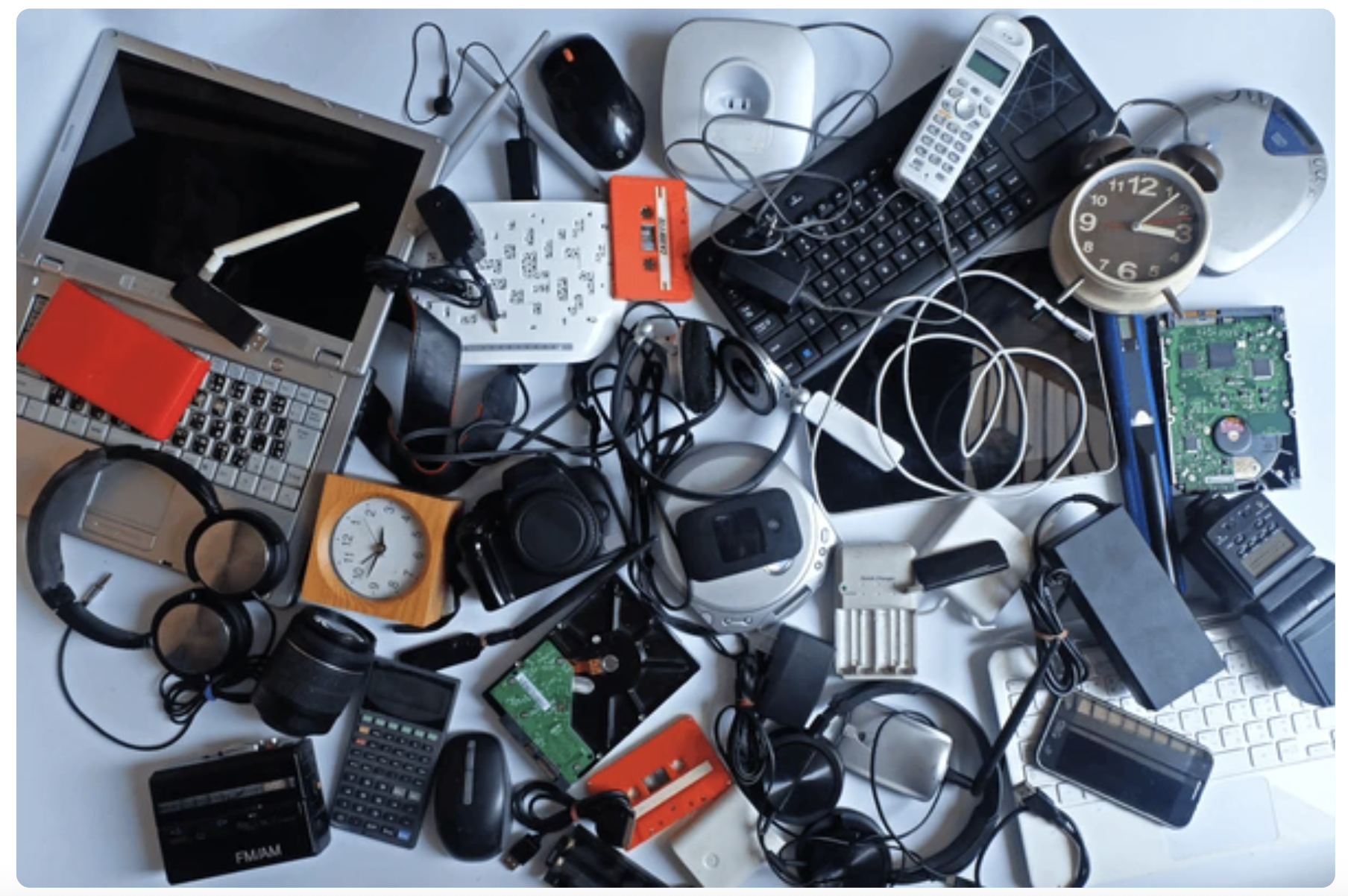
Turning E-Waste Into Next-Generation Sensors: AUC-Led Study
An international research team led by The American University in Cairo (AUC) has identified a pathway to repurpose electronic, industrial, and plastic waste into high-performance materials for next-generation sensors. Published in Nature Sensors, the study proposes a circular model to address the nearly 62 million tonnes of annual global electronic and industrial waste.
The Shift from Waste Management to Resource Recovery
The volume of electronic and industrial waste is increasing at a rate five times faster than global recycling efforts. This disparity creates a mounting environmental burden, yet it also presents an untapped supply chain for advanced technology.
Tamer Shoeib, Professor of Chemistry at AUC and the study’s lead author, argues that the current “end-of-life” perspective ignores the reality that discarded electronics are essentially pre-refined material banks. “The prevailing mindset treats waste as an end-of-life problem,” Shoeib stated. By extracting metals, carbon structures, and rare-earth elements from landfills, researchers believe it is possible to bypass the environmental and economic costs associated with virgin material mining.
Advanced Applications in Healthcare and Environment
The research, conducted in partnership with institutions in Australia, Spain, and the United States, demonstrates that these repurposed materials are capable of supporting highly sensitive diagnostic tools. One primary application involves the detection of toxic heavy metals, such as cadmium, lead, and mercury, in wastewater. This builds upon previous work by Shoeib’s group, published in npj Clean Water in March 2026, which successfully demonstrated the efficacy of waste-derived materials in real-world samples.
Beyond environmental monitoring, the study highlights the viability of waste-derived components in wearable health technology. Sensors manufactured from recycled materials have shown the potential to monitor essential biomarkers, including glucose and lactate levels. This pivot toward “upcycling” waste into sophisticated medical hardware suggests a future where the infrastructure for environmental cleanup and personal health monitoring share the same circular supply chain.
Infrastructure Requirements for a Circular Ecosystem
Transitioning to this model requires more than laboratory success; it demands a fundamental restructuring of how municipalities and industries handle waste. The researchers advocate for the creation of local upcycling facilities that can process electronic waste near the point of collection, rather than shipping materials across global logistics networks. This localized approach would require significant coordination between governments and private industry.

Policy and the Path to Closed-Loop Systems
The study emphasizes that “true innovation is not just replacing virgin materials.” Instead, it requires the design of sensors that are themselves recyclable or biodegradable, ensuring that the technology does not create a secondary wave of waste. This closed-loop system is essential for long-term sustainability, though it remains in the early stages of implementation.
Achieving this vision will require significant policy shifts, including:
- Standards encouraging the use of recycled materials in electronics.
- Increased investment in local upcycling facilities.
- Stronger demand for sustainably manufactured products.
As governments evaluate the feasibility of these systems, the role of legal and technical oversight becomes paramount.

The collaboration—which included the University of New South Wales, the Catalan Institute of Nanoscience and Nanotechnology, the Catalan Institution for Research and Advanced Studies, and the University of California San Diego—provides a blueprint for a more resilient, resource-efficient future. While the technology is currently in the development and demonstration phase, the economic and environmental imperatives are clear.
The success of this transition will depend on whether policymakers and industry leaders can move beyond the status quo of disposal. Innovation is no longer just about the next breakthrough in sensor sensitivity; it is about building a system where the tools we use to monitor the health of our planet are born from the very waste we once sought to bury. The shift from a linear, extractive economy to a circular, regenerative one is a massive undertaking, but as the AUC-led research suggests, the materials required for this change are already in our hands—waiting to be recovered.