
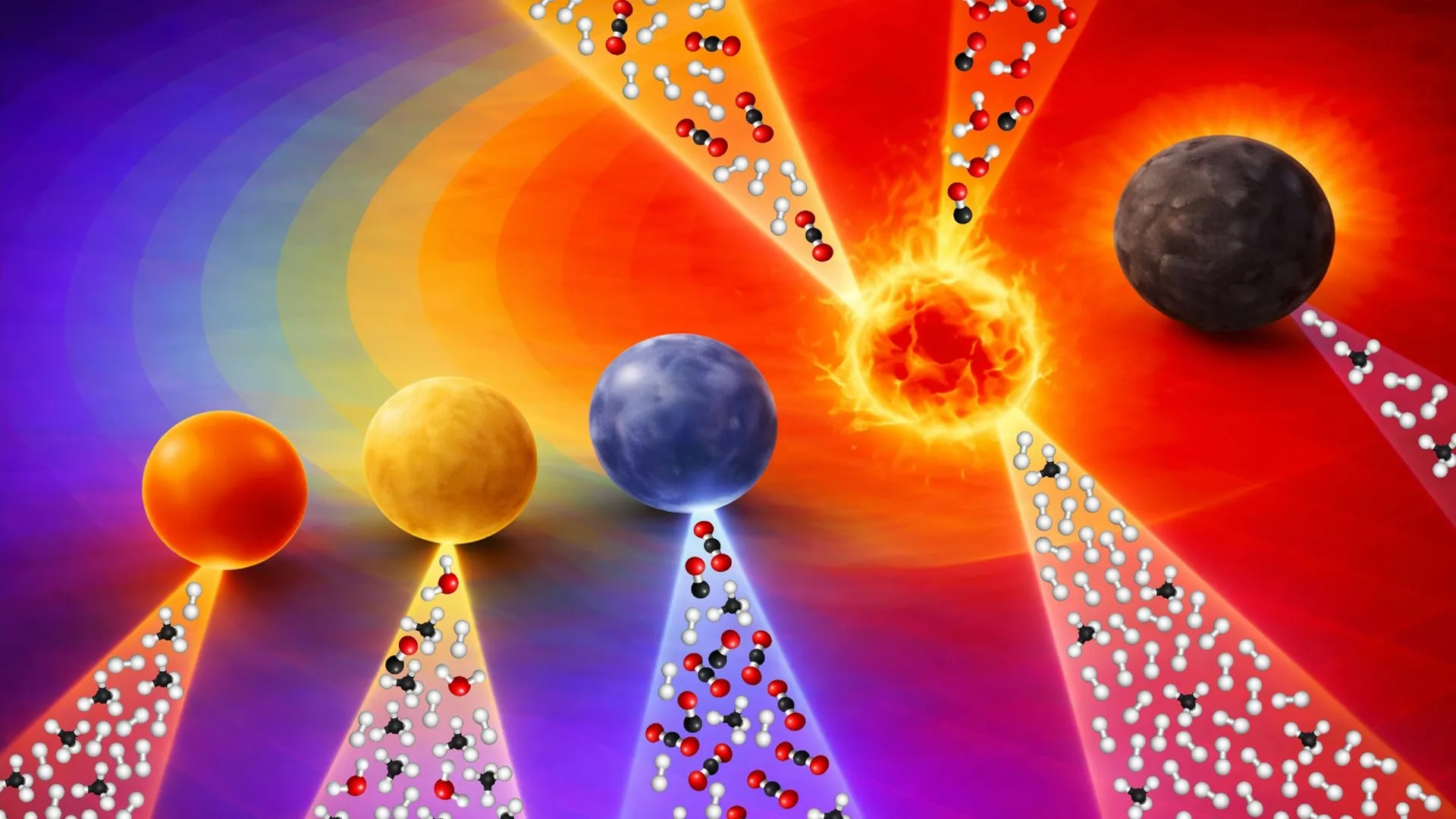
Many common products, including plastics and detergents, rely on chemical reactions that depend on catalysts made from precious metals such as platinum.These metals are effective but costly and limited in supply. For years, scientists have been searching for alternatives that are cheaper and more enduring.One promising option is tungsten carbide, an Earth-abundant material already widely used in industrial machinery, cutting tools, and chisels.
Despite its potential, tungsten carbide has not been easy to use as a catalyst. Its chemical behavior can be unpredictable, which has restricted its broader adoption. Researchers led by Marc Porosoff, an associate professor in the university of Rochester’s Department of Chemical and Sustainability Engineering, have now made critically important progress that could allow tungsten carbide to compete with platinum in key chemical reactions.
Why Atomic Structure Matters
According to Sinhara Perera, a chemical engineering PhD student in porosoff’s lab, one of the main challenges lies in how tungsten carbide atoms arrange themselves.
Tungsten carbide’s atoms can form many different configurations, known as phases, says Perera. These phases can strongly influence how well the material performs as a catalyst.
“There’s been no clear understanding of the surface structure of tungsten carbide becuase it’s really difficult to measure the catalytic surface inside the chambers where these chemical reactions take place,” she says.
To address this problem, the research team designed a method to precisely control the structure of tungsten carbide during active reactions. In a study published in ACS Catalysis, Porosoff, Perera, and chemical engineering undergraduate student Eva Ciuffetelli ’27 manipulated tungsten carbide particles at the nanoscale inside chemical reactors that operate at temperatures above 700 degrees Celsius.
Using a technique called temperature-programmed carburization, the researchers created tungsten carbide catalysts in specific phases directly inside the reactor. They then ran chemical reactions and analyzed which versions delivered the strongest performance.
“Some of the phases are more thermodynamically stable, so that’s where the catalyst inherently wants to end up,” says Porosoff.
