
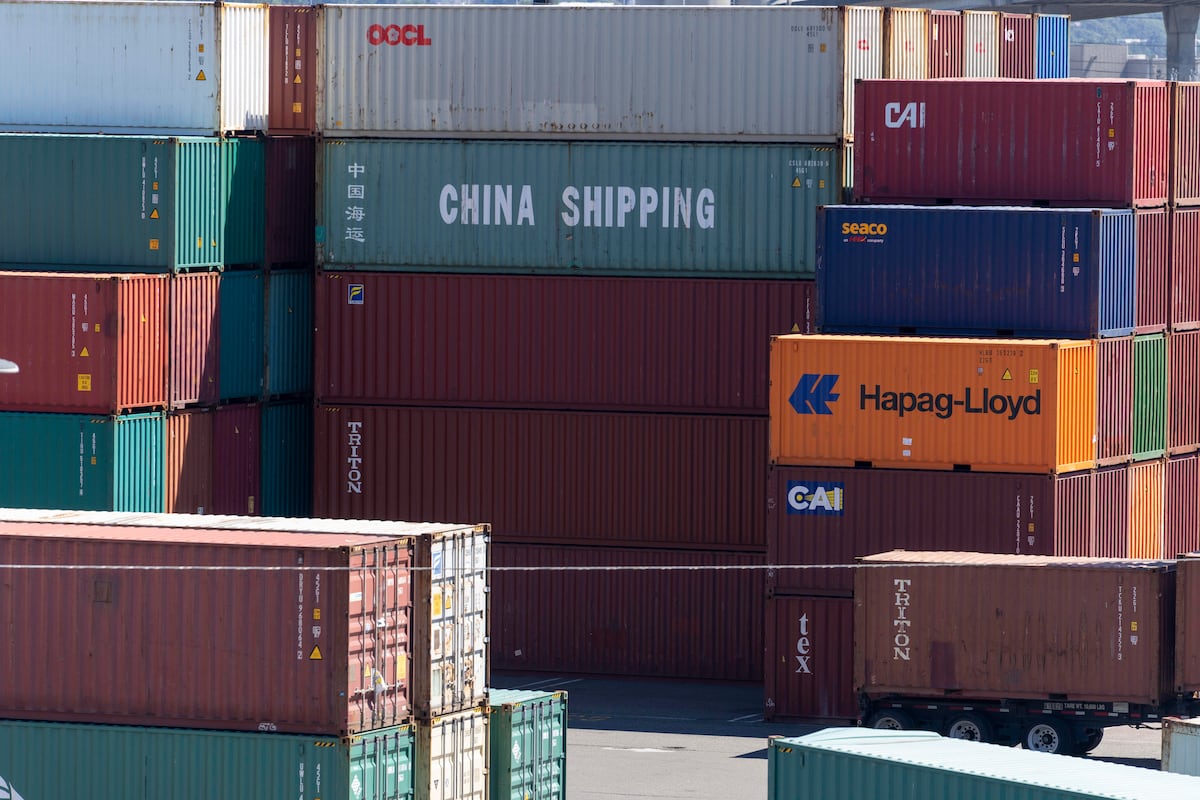
WASHINGTON – The Supreme Court on Friday struck down a broad swath of former President Donald Trump’s global tariffs, a significant legal defeat for the former president who has vowed to reimpose even wider trade levies if re-elected. The ruling has injected renewed uncertainty into global markets and weakened the dollar, as Trump responded by announcing a new 15% tariff on all imports.
The court’s decision centers on tariffs Trump imposed beginning in 2018, justified under Section 232 of the Trade Expansion Act of 1962, which allows the president to impose tariffs on imports deemed a threat to national security. While the court upheld the president’s authority to use Section 232, it ruled that the scope of Trump’s tariffs, applied to a wide range of countries without specific justification, exceeded the bounds of the law.
“The Supreme Court sent a clear signal about the limits of presidential power,” said Carsten Brzeski, global head of Macroeconomics at ING Research. “However, we do not believe President Trump will use this ruling as a pretext to abandon his tariff agenda.”
Trump’s immediate response – a new 15% tariff across the board – relies on Section 122 of the Trade Act of 1974. This provision allows the president to impose temporary tariffs when “fundamental balance of payments problems” require restricting imports. The new tariffs are slated to remain in effect for a maximum of 150 days, until July 24th, unless Congress extends them, or the White House finds alternative legal justification. Experts at ING suggest Trump could “declare a new emergency and restart the 150-day period” after that date.
The shift in tariff policy is expected to lower the average tariff imposed by the U.S., from 16% to 13.7%, according to analysts at Nomura. They suggest this reduction “could be positive for the U.S. Economy,” but caution that ongoing trade policy uncertainty could offset those gains. Nomura’s assessment aligns with a broader market sentiment that the dollar is facing headwinds.
The euro currently trades at $1.18, still below the $1.20 peak reached in late January. Mohit Kumar, an economist at Jefferies, believes a confluence of factors – including potential easing by the Federal Reserve, uncertainty surrounding Trump’s policies, and a growing desire among governments and investors to diversify away from the dollar – supports the expectation of a structurally weaker dollar in the coming quarters and years. ING predicts the euro will reach $1.22 by the complete of the year.
The reduction in tariffs could as well put downward pressure on inflation, potentially giving the Federal Reserve more room to cut interest rates, a move Trump has repeatedly advocated for. U.S. Inflation moderated to 2.4% in January, and further declines could fuel expectations for rate cuts, although the Fed, under Jerome Powell, has so far resisted such pressure.
Analysts at Natixis IM Solutions point to the upcoming midterm elections in November, noting that affordability has become a key issue. The time required to implement alternative tariffs could provide a temporary respite from price increases. However, ING analysts also caution about a potential, albeit small, risk of a “synchronized sell-off of Treasury bonds, stocks, and the dollar” if investors believe a fundamental pillar of U.S. Economic policy is crumbling.
