Trump’s Moon Goal: $20 Billion Lunar Base Before End of Term
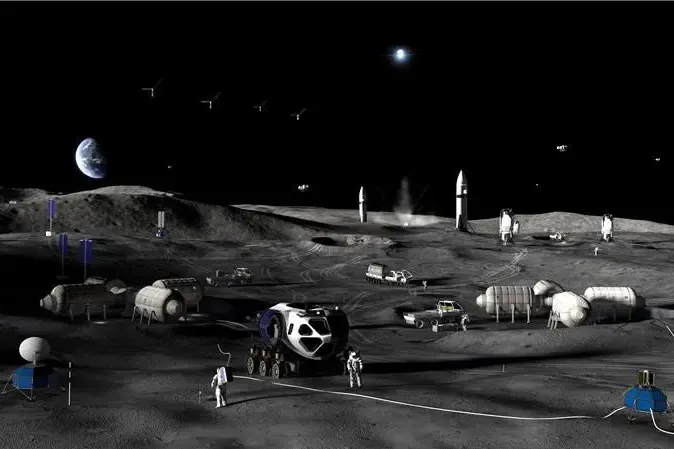
WASHINGTON D.C. – NASA Administrator Jared Isaacman unveiled a sweeping set of initiatives Tuesday aimed at accelerating the agency’s lunar exploration plans and establishing a permanent presence on the Moon before the end of President Donald Trump’s term, a goal that will require at least $20 billion in investment for a lunar base, according to a report in USA Today.
The announcement, made during a daylong “Ignition” event at NASA headquarters, signals a significant shift in the agency’s approach to lunar exploration, moving away from episodic missions towards frequent, repeatable landings and the construction of sustained infrastructure. Isaacman called for at least two companies to be capable of landing astronauts on the Moon every six months, a cadence intended to rapidly build capabilities and establish a continuous human presence.
The core of the plan remains the Artemis program, with the Artemis III mission now targeted for 2027, a year earlier than previously projected. This mission will mark the first human landing on the Moon since 1972. Following Artemis III, NASA intends to launch regular missions, potentially every six months, as commercial capabilities mature. The agency is also recalibrating its approach to the Gateway space station, scaling back the initial concept in favor of building practical infrastructure directly on the lunar surface, as reported by the Times of India.
The push for a sustained lunar presence is directly linked to President Trump’s National Space Policy, formalized through an executive order signed in December 2025. That order aimed to “extend the reach of human discovery, secure the nation’s vital economic and security interests, unleash commercial development and lay the foundation for a new space age,” as detailed by USA Today. The administration views establishing a foothold on the Moon as critical to maintaining American leadership in space and countering the growing ambitions of other nations.
Isaacman emphasized the urgency of the global space race, stating, “The clock is running in this great-power competition, and success or failure will be measured in months, not years.” He also highlighted the need to strengthen the NASA workforce, proposing $1 billion in annual grant funding to attract thousands of interns and diversify the agency’s talent pool. This initiative aims to address potential skill gaps and ensure a robust pipeline of qualified personnel to support the ambitious lunar program, according to a report from WESH.
Beyond the Artemis program and the lunar base, NASA is also developing advanced technologies to support long-term space exploration. One key project is SR One Freedom, a nuclear-powered propulsion system designed to significantly reduce travel times to the Moon and beyond. This technology is seen as essential for enabling more ambitious missions to Mars and other destinations in the solar system, as outlined in a NASA press release.
The Artemis 2 mission, scheduled for launch no earlier than April 1st, will send four astronauts on a 10-day journey around the Moon, serving as a crucial test flight for the Orion spacecraft and the Space Launch System rocket. Final preparations are underway at Kennedy Space Center in Florida, with the launch representing a pivotal moment in NASA’s renewed focus on human space exploration. The agency’s long-term vision, however, extends far beyond a single flyby, aiming to establish a permanent lunar outpost and pave the way for a new era of scientific discovery and economic opportunity.
Despite the ambitious goals and accelerated timelines, questions remain regarding the funding and logistical challenges of establishing a sustainable lunar base. The $20 billion price tag represents a significant investment, and securing congressional support for such a large expenditure will be crucial. The reliance on commercial partners to provide frequent lunar landing services introduces potential risks related to reliability and cost control. NASA has not yet detailed how it will address these challenges, leaving the long-term viability of the lunar base uncertain.
Related reading
- Leonteq Phoenix Autocallable Certificate on ASM International and ASML
- Supreme Court Blocks Trump Mail-In Ballot Restrictions Ahead of Midterms
- China Donates Chang’e-6 Lunar Far-Side Samples to UN in Vienna (archyde.com)
- China’s Chang’e-7 Lunar Mission Postponed: Critical Challenges Suspected (newsdirectory3.com)