Trump’s China Visit: Business Ties and Investment Claims
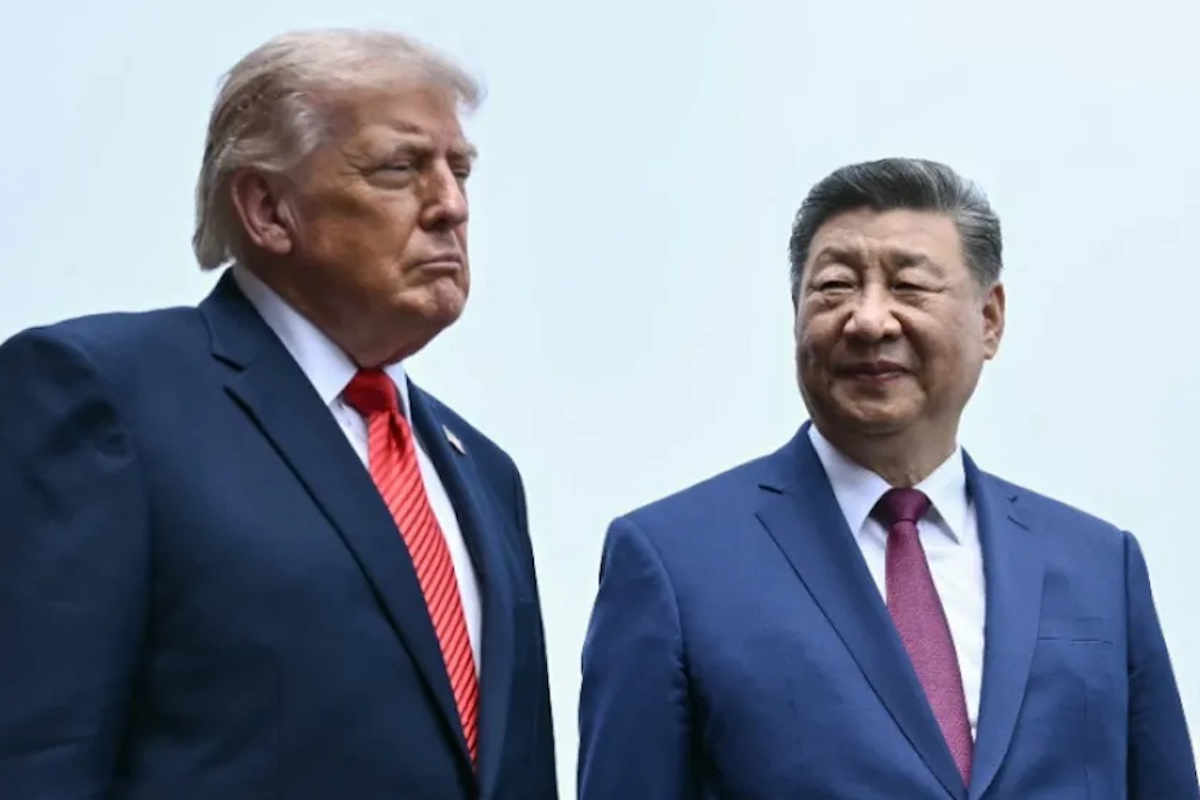
US President Donald Trump concluded a high-stakes visit to Beijing, claiming hundreds of billions in promised Chinese investment. Despite the optimistic rhetoric and a high-profile entourage of tech CEOs, critics argue the summit yielded few concrete, binding agreements, leaving global markets to weigh symbolic gestures against actual trade breakthroughs.
The gap between a political “win” and a contractual “close” is where the real fiscal danger lies. For the C-suite, a claim of “hundreds of billions” in investment is a headline, not a line item on a balance sheet. When sovereign promises lack the backing of signed Memorandums of Understanding (MOUs) or transparent timelines, they create a volatility vacuum. This uncertainty forces multinationals to lean heavily on global risk consultancy firms to hedge against the sudden pivot of geopolitical winds.
The Investment Mirage and the “Empty Bag”
The narrative coming out of Beijing is a study in contradictions. On one side, the administration is broadcasting a massive victory, with claims that China will invest “100s of billions” into the US economy. On the other, analysts are pointing to a lack of tangible deliverables. The sentiment is blunt: the President may have left China with extremely little in his bag.
From a capital expenditure (CapEx) perspective, “promised” investment is a non-event. Until those funds hit the ledger as Foreign Direct Investment (FDI), they provide zero liquidity and no impact on GDP growth. The market is accustomed to this pattern—high-decibel claims followed by a slow drip of modest, incremental changes that fail to move the needle on the trade deficit.

This disconnect creates a precarious environment for mid-cap firms hoping for a trade thaw. They are often caught between the optimism of political rhetoric and the reality of stagnant market access. To navigate this, many are engaging international trade law firms to restructure their contracts, ensuring that “promises” of market openness don’t lead to over-leveraged expansions into volatile regions.
“The market doesn’t trade on promises; it trades on predictability. When the delta between political rhetoric and contractual reality is this wide, institutional investors move to a ‘wait-and-see’ posture, which effectively freezes significant capital deployment.”
CEO Diplomacy: The New Trade Architecture
The composition of the presidential entourage signals a fundamental shift in how the US handles its most complex economic relationship. The presence of billionaires and top-tier executives—most notably Elon Musk and Nvidia’s Jensen Huang—suggests that trade diplomacy has moved from the State Department to the boardroom.
The interaction between Xi Jinping and these tech titans was telling. Xi’s assertion that China will “open wider” for business specifically to Musk and Huang indicates a strategy of selective liberalization. China isn’t opening the gates for everyone; This proves opening them for the specific technologies and platforms it deems essential for its own industrial evolution.
This is a precision-strike approach to trade. By granting concessions to individual titans of industry, Beijing can maintain overall systemic control while still absorbing the innovation and capital required to stay competitive in AI and electric vehicles. For the rest of the industry, this “selective openness” is a warning. It suggests that the path to market penetration in China now requires a direct line to the highest levels of political power, rather than a reliance on general trade agreements.
The Macro Shift: Three Ways the Beijing Summit Alters the Game
The fallout from this visit extends beyond the immediate headlines. The strategic shift in US-China relations is rewriting the playbook for global supply chains and investment strategies.
- The Rise of the “Corporate Proxy”: We are seeing the emergence of CEOs as quasi-diplomats. When the state-to-state relationship is fraught with tension, the corporate-to-state channel becomes the primary vehicle for negotiation. This shifts the power dynamic, giving massive tech firms unprecedented leverage over national trade policy.
- Sovereign Risk Re-calibration: The “open wider” promise is a double-edged sword. While it suggests a reduction in barriers, it also highlights how quickly those barriers can be erected or removed based on political whims. This increases the “sovereign risk” premium for any firm operating in the region, necessitating more aggressive supply chain optimization consultants to build redundancy outside of China.
- The FDI Illusion: By claiming “hundreds of billions” in investment without specific project lists, the administration is attempting to signal economic strength. However, the World Trade Organization and other monitors will be looking for actual flows of capital. If these investments don’t materialize in the next two fiscal quarters, the credibility gap will widen, potentially triggering a sell-off in sectors that banked on a “China rebound.”
The optics were curated for a domestic audience—state banquets, honor guards, and warm rhetoric. But the financial reality is far colder. The Guardian’s coverage of the event, highlighting the perceived “sucking up” to Xi, reflects a broader anxiety: that the US is trading long-term strategic leverage for short-term, symbolic wins.
The reality of the current trade landscape is that stability is the new gold. In an era of “CEO diplomacy” and vague investment promises, the only real security is a diversified portfolio and a bulletproof legal framework. The market is no longer waiting for a “grand deal” to save the quarter; it is building systems that can survive the absence of one.
As the dust settles in Beijing, the winners won’t be those who believed the rhetoric, but those who prepared for the volatility. For firms looking to navigate this fragmented global economy, finding vetted, expert partners is no longer optional—it is a survival requirement. The World Today News Directory remains the premier resource for connecting enterprise leaders with the B2B services capable of turning geopolitical chaos into a competitive advantage.