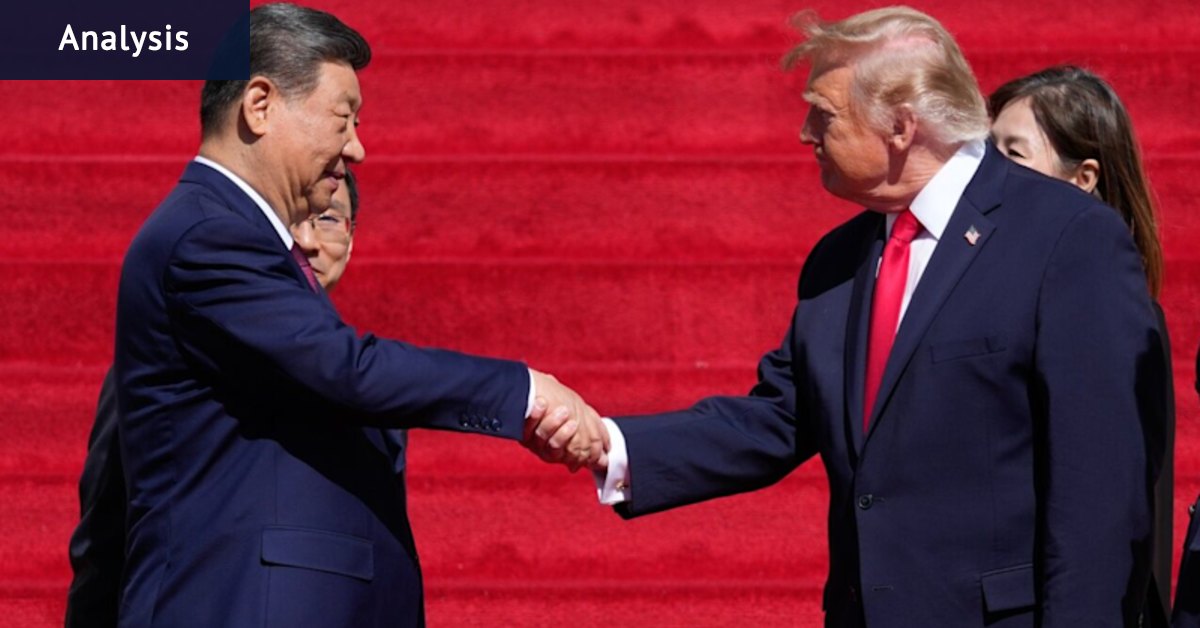
Trump-Xi Summit: High on Ceremony, Low on Substance
US President Donald Trump and Chinese President Xi Jinping concluded a high-ceremony, low-substance Washington summit on September 25, 2026, revealing starkly different approaches to bilateral diplomacy. While Trump focused on personal pageantry and domestic hosting, Xi used the meetings to project Beijing and Washington as equal global powers.
The diplomatic encounter brought prominent American business and technology leaders, including Jeff Bezos, David Ellison, and Jamie Dimon, to a White House state dinner on Thursday night, September 24, 2026. However, unlike Xi’s 2015 state visit, no delegation of Chinese business executives accompanied the Chinese president. The absence of commercial delegations underscored early analyst predictions that the summit would yield few tangible economic outcomes beyond photographs.
Commercial Outcomes and the Extended Trade Truce
Little concrete change emerged from the talks, save for a two-month extension to the trade truce brokered last year in Busan. The truce now expires in January 2027. US trade ambassador Jamieson Greer promised further announcements on Monday, while Trump reiterated potential benefits for American farmers. Trump also continued his public push to rebrand artificial intelligence as “super intelligence,” though the discussions produced no obvious outcome regarding AI regulation. The White House released only a perfunctory one-sentence readout as the meetings wrapped up.

Evan Feigenbaum, vice president of studies at the Carnegie Endowment for International Peace, described the affair as long on performance and short on substance. Yet, Feigenbaum noted that the lack of immediate agreements does not preclude future progress, given an unprecedented schedule of upcoming meetings. Having already met in Beijing in May 2026, Trump and Xi are slated to see each other twice more before the end of the year: at the APEC summit in Shenzhen in November and at the G20 in Miami before Christmas.
Feigenbaum suggested the absence of normal cooperative deliverables could mean negotiators are simply buying time, or that neither side realistically expects deep structural changes to the bilateral relationship anymore. In lieu of policy breakthroughs, the summit functioned primarily as a platform for each leader to frame US-Sino relations on their own terms.
Contrasting Diplomatic Styles and Framing
For Trump, diplomacy remains intensely personal. The American president showered Xi and Madam Peng Liyuan with superlatives, emphasized their strong rapport, and showcased White House features including the helipad and the forthcoming ballroom. As a parting gesture, Trump gifted President Xi and Madam Peng a bald eagle statue.

Xi maintained a complementary tone while consistently reinforcing Beijing’s broader geopolitical messaging. During a Friday morning tea ceremony in the Red Room, Xi delivered a short speech about two people charting the course for the great ship of China-US relations. He repeatedly emphasized strategic stability, respect, fairness, and reciprocity.
Ryan Hass, a China scholar at the Brookings Institution in Washington, observed on X that the contrast between the two leaders’ approaches was striking. Hass wrote that for Trump, pageantry appeared to be the point, focusing on personal bonds and keeping competition under control. Meanwhile, Xi spoke in terms of state-to-state relations and national power, appearing bemused by Trump’s entertaining approach to hospitality.
Throughout the visit, the Chinese president consistently cast China and the US as two major countries sharing a special responsibility to steer global affairs. Zhao Minghao, a professor of Sino-US relations at Shanghai’s Fudan University, noted that Beijing views the summit as a success because it projected Xi as Trump’s equal. Zhao added that while Beijing would have preferred a six-month or yearlong extension to the trade truce, maintaining communication channels and avoiding new shocks remains of high value.
The summit concluded on Friday, September 25, 2026, following the tea ceremony and a joint visit to the National Archives.