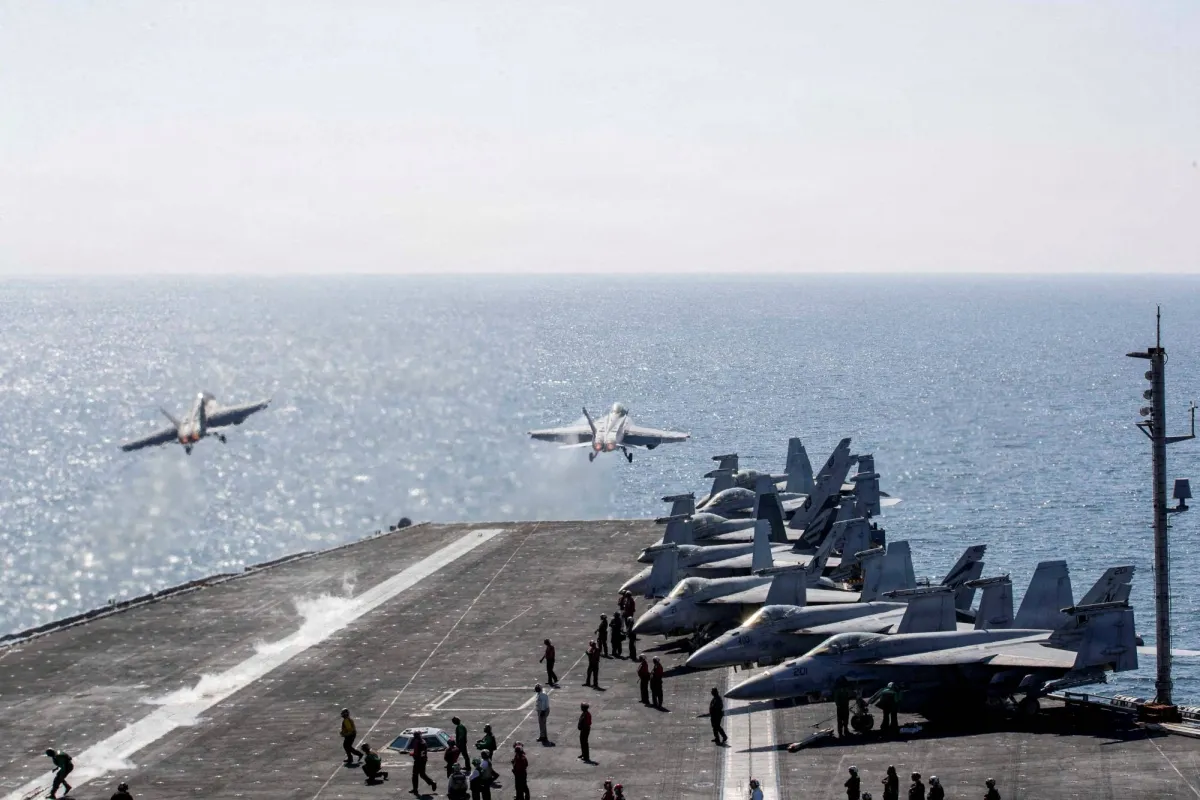
USS Abraham Lincoln strike group reports eight suicide attempts
Eight U.S. service members assigned to the USS Abraham Lincoln strike group attempted suicide during recent combat operations against Iran and an extended deployment exceeding six months, according to written disclosures provided by acting Navy Secretary to U.S. Senator Kirsten Gillibrand.
The disclosures reveal a strain on naval personnel operating in high-threat environments without standard port visits. While no service members died by suicide during the deployment, the total of eight attempts across the strike group marks a mental health concern for the fleet.
Combat Operations and Relentless Tempo Drive Fleet Crisis
The USS Abraham Lincoln carrier strike group deployed between 6 thousand and 7 thousand sailors across roughly six ships. The deployment extended past six months as the strike group maintained a high operational tempo supporting combat missions against Iran.
https://x.com/CENTCOM/status/2100991308701516146
Military officials noted that modern carrier strike groups typically record one or two suicide attempts annually, making eight attempts within a single deployment an extraordinarily high figure.
The intense pressure stemmed directly from active combat operations paired with isolation from shore. According to military officials speaking to media outlets, the conditions included zero port visits, continuous threat alarms, and relentless operational demands. These factors severely degraded crew morale and psychological well-being.
Acting Navy Secretary Details Disclosures to Senate
Acting Navy Secretary detailed the distribution of the incidents in a letter dated Tuesday, responding to inquiries from the Senate Armed Services Committee.

Confirmed that the eight attempts involved personnel from the Lincoln itself, its embarked air wing, strike group staff, destroyer squadrons, escort destroyers, and associated air squadrons.
High-Risk Rescues and Onboard Therapeutic Resources
The operational stress manifested in dangerous physical actions by crew members. In recent months, two sailors from the strike group jumped overboard into the sea. U.S. officials confirmed that both individuals were successfully rescued.
Specified that a sailor assigned to the air wing jumped from the ship in early August, but was quickly recovered and treated by the Lincoln’s medical department. In an earlier incident in March, fellow crew members physically intervened to stop another sailor from jumping overboard. That individual also received immediate medical care and was later returned to their home port.
To combat psychological trauma, the Lincoln deployed with an assigned mental health team. The resources included five chaplains, one behavioral health and prevention counselor, one psychiatrist, one clinical social worker, three behavioral health technicians, and a single service dog trained for therapeutic support.
In that year, the Navy recorded 356 suicide attempts among hundreds of thousands of active-duty sailors.
However, military analysts emphasize that the concentration of attempts during a single combat-heavy deployment underscores the immediate vulnerability of forces subjected to prolonged sea endurance without respite.
>