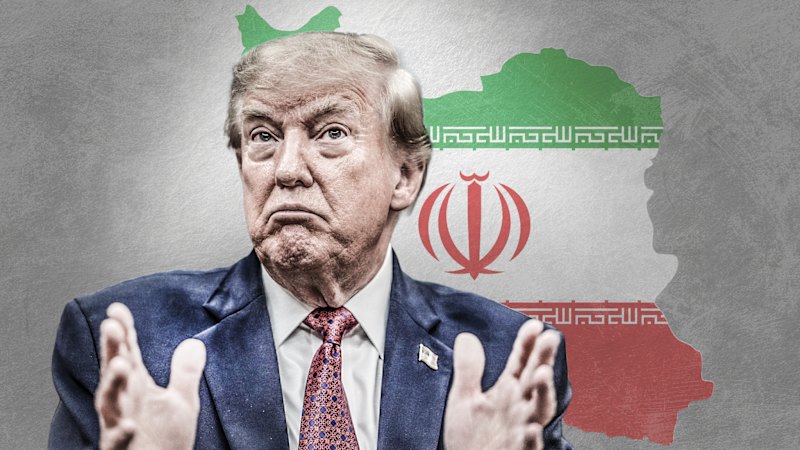
Trump Weighs Four Options to Resolve Conflict With Iran
The 47 Billion Dollar War
President Donald Trump weighs four distinct courses of action to resolve the eight-month-old conflict with Iran as the Pentagon’s estimated operational costs reach $47 billion.
The administration remains deeply divided over how to exit the confrontation following the Republicans’ broad defeat in the midterm elections.
Vice President JD Vance blamed the electoral losses on the war, saying: “The reason we lost is the war.” He added: “If you’d like to argue it was worth it, that losing the Senate for the next six years was worth it, then do so.”
Defence Secretary Pete Hegseth countered that assessment with a defiant, self-promoting video that seemed to be an argument for full-speed ahead, while US forces continue massing near Iran.
🇺🇸 pic.twitter.com/aIZDHZbTFm
Options for Military Resumption
Military planners have delivered a menu of options that includes a brief, intense resumption of war targeting Iran’s energy infrastructure, nuclear facilities, and missile and drone arsenals using attack planes aboard two aircraft carriers now in the region, fighter jets at land bases in the Middle East, and US-based long-range B-1 and B-2 bombers.
A second, more limited military option would still be a marked expansion in scope and intensity from the small-scale strikes the US has conducted in recent weeks against Iran’s Qeshm Island and missile- and drone-launchers across the country, with the thinking that Iran would be less likely to retaliate by attacking Gulf energy infrastructure.
Officials within the administration acknowledge that a restricted assault would fail to accomplish any of the objectives Trump outlined at the onset of the conflict, and would additionally preserve Tehran’s substantial leverage concerning the Strait of Hormuz.
Diplomatic Solutions Offer Long-Term Nuclear Limits
As a third alternative, diplomacy represents the sole historical mechanism for securing enduring restrictions on a country’s atomic program; numerous analysts suggest Trump would be fortunate to secure terms comparable to the 2015 Obama administration agreement, which involved Iran exporting 97 per cent of its uranium reserves — an arrangement Trump scrapped in 2018.
Many other disputes remain over limits on missile capabilities, future nuclear activity and inspections, and no one knows who is making decisions in Iran, with public discussion in the country now about just racing for a bomb.
An alternative fourth approach would have the United States carry on by enforcing a maritime embargo to block Iranian oil sales, while American patrols and escorts guarantee the safe transit of 11 to 18 million barrels of non-Iranian petroleum daily.
Trump told CNN it was “highly unlikely” the US would have to renew strikes if negotiations were successful, adding: “They’re withering away financially.”
Unresolved Strategic Questions
Trump’s new lame-duck status and the desire to avoid going down in history as a loser could push him toward restarting major combat operations.
“The concern is that Trump will conclude that he is facing his worst nightmare for the next two years: going down in history as a loser,” said William F. Wechsler, who serves as the senior director for the Atlantic Council’s Middle East initiatives alongside his background as a former high-ranking Pentagon official in counterterrorism policy.
“The only way out of it, he may therefore conclude, is to win the war.”
The path Trump will ultimately select remains uncertain, given that he has greenlit the relaunch of a major offensive against Iran on multiple recent occasions, only to call off the missions just hours before their scheduled execution.