CSIS Reports 6 Military Options for the US to Pressure Iran
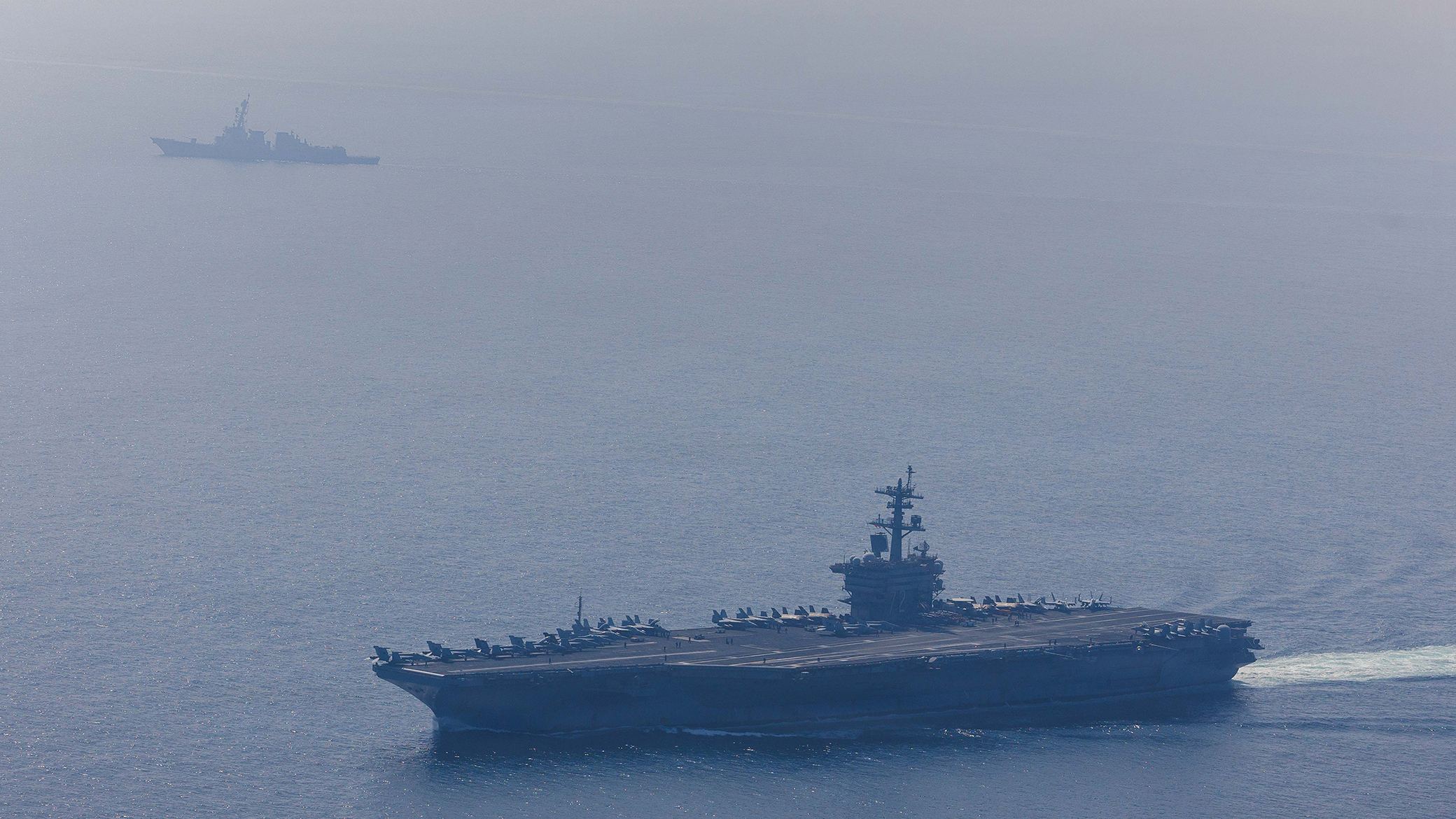
As the United States deploys additional military assets to the Middle East, the Trump administration weighs six primary military options against Iran while maintaining ongoing economic sanctions and a naval blockade, CSIS reported.
What are the details of coercive diplomacy?
The first option involves maintaining a pressure campaign combining military buildups with negotiations. The United States would move additional assets into the region to signal costs to Tehran.
Patrick Bury, a senior associate professor at the University of Bath and former NATO research analyst, told Al Jazeera that keeping the naval blockade and naval escorts active is the status quo course of action.
Yet the strategy carries significant risks. It could embolden Tehran, which has tested the U.S. blockade through intermittent strikes on commercial shipping and threats against regional infrastructure.
Before the war began, the Strait of Hormuz handled about 125 large commercial vessels daily, carrying 17.1 million barrels of oil, according to Kpler. Traffic collapsed following the closure of the strait in March. While U.S. Navy escorts helped Gulf oil flows recover to over 81 percent of pre-war levels by September, Iranian attacks reversed those gains, dropping oil transport through the waterway to 2.9 million barrels on October 11.

How would a limited counter-force strike campaign operate?
A second option utilizes limited attacks on key military assets, such as coastal and air defense radar sites, to alter the military balance.
CSIS noted that the April 2024 Israeli limited strike on the S-300 radar complex defending the Isfahan nuclear site serves as the best historical parallel. The primary trade-off involves escalation risk relative to the objective. If Iran launches an overwhelming response, the return on investment remains low.
Long-range strikes target critical nuclear nodes
A third variant shifts the target from radar sites to critical nodes within Iran’s nuclear program. This strategy utilizes long-range penetrating strikes capable of precision targeting across the country.
Operation Midnight Hammer provides the operational template. The June 2025 strikes demonstrated the necessary combination of stealth, long-range strike capabilities, and joint coordination. While these attacks would disrupt Iranian nuclear ambitions, they risk triggering an escalating cycle of counterattacks.
Can a large-scale special forces raid succeed?
A fourth approach involves a large-scale special forces raid. The operation would target underground complexes where Iran stores enriched uranium.
The September 2024 Israeli commando raid on an underground missile production facility in Syria, known as Operation Many Ways, demonstrates the tactical concept. However, executing multiple raids inside Iran requires significantly larger conventional forces to secure outer cordons and continuous airstrikes over several days.
During the rescue of two downed pilots in April 2025, the United States demonstrated its capability to execute complex special forces missions inside Iran, but also highlighted the associated costs and risks.
Sea control campaign protects communication lines
A fifth option involves a prolonged sea control campaign to protect sea lines of communication.
Afzal Ashraf, a visiting fellow in international relations and security at Loughborough University and a former senior Royal Air Force officer, told Al Jazeera that the U.S. possesses enormous military capability that Iran cannot match, though it has not delivered desired political outcomes.
Regime strikes may not yield political gains
A sixth option expands strikes to threaten the security of the Iranian regime itself.
Benjamin Jensen, director of the Futures Lab and senior fellow in the Defense and Security Department at the Center for Strategic and International Studies in Washington, D.C., noted that fighting while negotiating remains a constant in history, but military success does not automatically translate into sustained political gains.
As the conflict remains deadlocked, federal policymakers, military analysts, and international trade organizations continuously monitor the region.