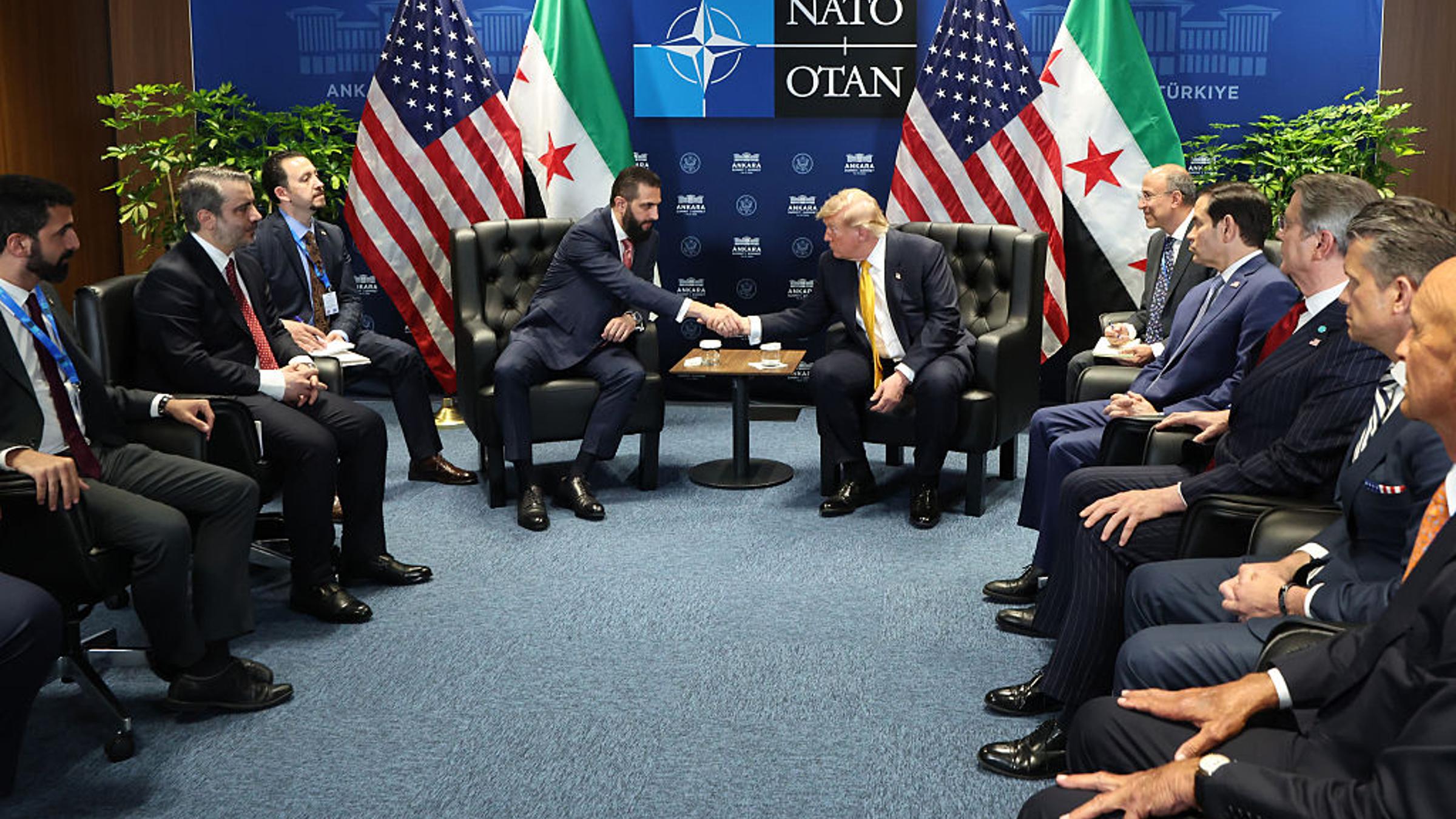
Trump to Remove Syria From U.S. State Sponsor of Terrorism List
President Donald Trump announced July 8, 2026, that he will remove Syria from the U.S. list of state sponsors of terrorism during a NATO summit in Ankara, Turkey. The decision, confirmed by Secretary of State Marco Rubio, follows formal assurances from Syrian President Ahmed al-Sharaa that Syria will not support international terrorism.
This move ends a designation that has lasted nearly five decades, effectively dismantling the primary legal barrier preventing Syria from reintegrating into the global financial system. For a country recovering from a nearly 14-year civil war, the shift is not merely symbolic; it is a prerequisite for the billions of dollars in pledged economic recovery funds to actually enter the country.
The transition is fraught with complexity. Syria’s leadership is headed by Ahmed al-Sharaa, a man who once led Hay’at Tahrir al-Sham (HTS), a group with historical ties to al-Qaeda. The U.S. is essentially betting on a political pivot to secure regional stability.
The 45-Day Congressional Window and Legal Implications
Secretary of State Marco Rubio stated Wednesday that the administration has informed Congress of its intent to rescind the designation. Under U.S. law, Congress now has a 45-day window to attempt to block the request before the removal becomes official.

The stakes involve more than just a list. U.S. financial institutions have identified the state sponsor of terrorism (SST) designation as the “key remaining roadblock” to Syria’s financial connectivity. According to a bipartisan letter from Democratic Senators Jeanne Shaheen and Elizabeth Warren, and Republican Representative Joe Wilson, the designation is the “most significant remaining legal impediment” to the country’s reconstruction.
Without this removal, private sector investment remains high-risk or prohibited. Businesses looking to enter the Syrian market must now engage U.S. Department of State guidance to ensure compliance as the legal landscape shifts.
From Al-Qaeda Affiliates to Presidential Partners
The ascent of Ahmed al-Sharaa represents a geopolitical pivot. Al-Sharaa previously appeared on terrorist lists maintained by both the U.S. and the United Nations due to his leadership of HTS. While HTS eventually broke ties with al-Qaeda to become the dominant rebel force in northwest Syria, the group’s record remains stained.

The UN and other international bodies have accused HTS of torturing detainees and committing human rights abuses against women and children. Despite this, the Trump administration has moved rapidly to legitimize al-Sharaa’s government.
The timeline of this rapprochement is aggressive:
- June 2025: Trump signs an Executive Order lifting most U.S. sanctions, citing “positive actions” by the al-Sharaa government.
- November 2025: The UN Security Council adopts a U.S.-backed resolution to lift sanctions against al-Sharaa; the State Department removes him from the Specially Designated Global Terrorist list.
- December 2025: Congress approves the repeal of the Caesar Syria Civilian Protection Act, which had previously imposed sweeping sanctions against the regime of Bashar al-Assad.
- July 8, 2026: Trump announces the intent to remove Syria from the state sponsor of terrorism list during the NATO summit.
Economic Reintegration and the ‘Roadblock’ Effect
Syria was first designated as a state sponsor of terrorism in 1979 under Hafez al-Assad. Sanctions were tightened in 2004 and again in 2011. For over a decade, these measures effectively severed the Syrian population from the world economy.
Secretary Rubio argued that lifting these sanctions will “unlock international trade and investment” and allow Syria to rebuild. Al-Sharaa echoed this sentiment during the Ankara summit, attributing the country’s unification to the “historic decision made by Trump to lift the sanctions.”
Regional Stability and the NATO Context
The announcement took place at the Beştepe Presidential Compound during the NATO summit in Turkey.

By aligning the U.S. position with the new Syrian leadership, the Trump administration is attempting to create a “stable, unified Syria” that is at peace with its neighbors. Rubio noted that such stability benefits the entire world, not just the region.
The move signals a shift in U.S. foreign policy: prioritizing pragmatic stability and counterterrorism “assurances” over the historical pursuit of total regime purity. The administration is betting that al-Sharaa’s “formal assurances” to avoid supporting international terrorism will hold.
Whether these assurances translate into long-term peace depends on Syria’s ability to transition from a militant-led insurgency to a functioning state.