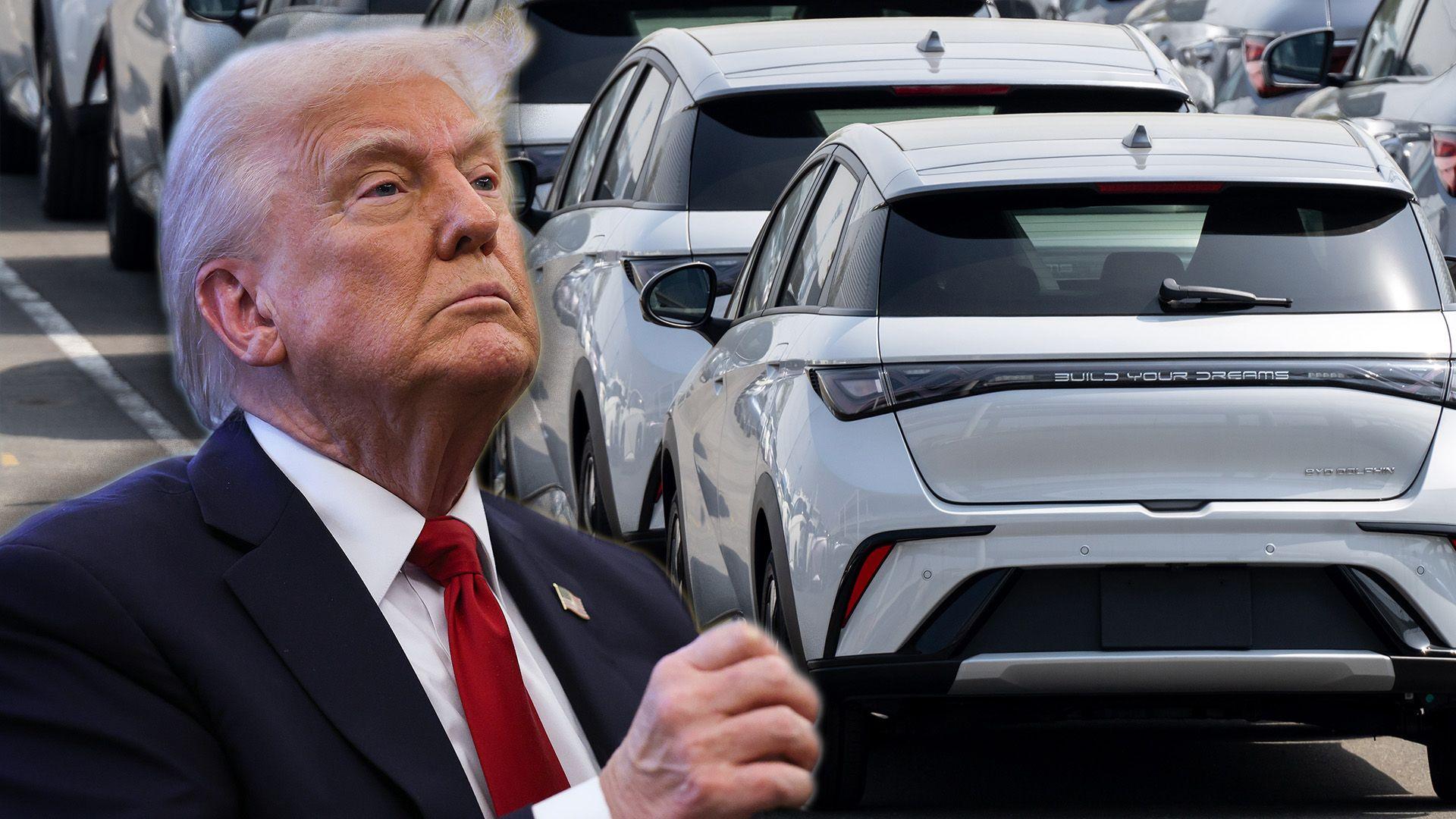
Trump threatens 25% tariffs on EU cars and trucks over trade deal delays
The transatlantic trade relationship has seen a shift from a negotiated compromise toward the threat of economic escalation. After reaching an agreement to lower automotive duties to a net 15%, the Trump administration is now pivoting toward a 25% levy, citing a lack of compliance from Brussels. The timing of this escalation coincides with a fragile moment in global trade and domestic political pressure within the United States.
A collision of timelines and compliance
The current friction centers on the Turnberry Agreement, a framework named after the president’s golf course in Scotland. Under this deal, the U.S. lowered tariffs on EU automotive imports to 15% in exchange for the European Union eliminating duties on U.S. industrial goods, including automobiles, and accepting U.S. safety and emissions standards for vehicles.
While the administration demands immediate results, the EU operates on a slower legislative clock. EU lawmakers advanced the necessary legislation in March to implement these tariff reductions, but the process is not expected to be finished before June. This gap exists because EU governments and the European Parliament are still negotiating the final texts of the agreement.
The administration has expressed frustration with this legislative delay. In a social media post, President Trump asserted that the EU is not complying with our fully agreed to Trade Deal,
though he did not provide specific details regarding the objections in that post. Speaking to reporters as he departed the White House for Florida, Trump stated the EU was not as usual
adhering to the framework of the previous year. He argued that returning to higher tariffs forces them to move their factory production much faster
into the United States, according to reporting from PBS.
From the perspective of the Trump administration, eight months of waiting for compliance is too long. An administration official told Reuters that the EU has not complied with the autos deal after that eight-month period, signaling that the U.S. is unwilling to wait for the June legislative conclusion.
Legal instability and the 10% interim tax
The trade dispute is further complicated by a legal vacuum created by the U.S. judiciary. While the Turnberry Agreement set a 15% tariff ceiling, the Supreme Court ruled this year against the legal authority the president had used to levy that tax. This ruling effectively stripped the administration of its primary mechanism for enforcing the agreed-upon rates.
In response to this legal setback, the administration has been searching for substitute authorities to maintain revenue and leverage. This led to the imposition of a 10% tax while the administration investigates national security issues and trade imbalances to establish new, legally sound tariffs. The move from this 10% interim tax to a threatened 25% levy represents a shift in the administration’s approach to trade enforcement.
For more on this story, see Trump, China, and Iran: Arms Deals and Tensions in the Middle East.
This legal instability occurs against a backdrop of severe economic stress. The global economy is currently grappling with the effects of the Iran war, which has led to expectations of higher inflation and slower growth. Specifically, the effective closure of the Strait of Hormuz following U.S. and Israeli strikes in late February has driven up prices for oil and natural gas.
Domestic pressure and the 30% approval trap
The timing of the tariff threat cannot be separated from the U.S. political calendar. With November midterm elections approaching, President Trump is facing mounting pressure over domestic inflation. Despite campaign promises to tame prices that rose following the government’s response to the coronavirus pandemic, annual inflation reached 3.3% in March, a figure higher than the rate he inherited upon taking office.
Public sentiment reflects this economic tension. According to a poll by the AP-NORC Center for Public Affairs Research, only 30% of U.S. adults approve of the president’s handling of the economy. For an administration under scrutiny for inflation, the use of tariffs is often framed as a tool for domestic industrial revitalization, specifically by forcing foreign manufacturers to relocate production to U.S. soil.
However, the EU views these tactics not as legitimate trade enforcement, but as arbitrary aggression. Bernd Lange, the chairman of the EU parliament’s trade committee, responded to the 25% threat by stating that the president’s behavior is unacceptable and that the move demonstrates unreliability on the part of the U.S., citing previous arbitrary actions regarding Greenland as evidence that this is not an appropriate way to treat close partners.
This follows our earlier report, Trump Imposes 100% Tariffs on Pharma Imports.
The EU’s safety valve and diplomatic fallout
The European Union is not without its own mechanisms for retaliation or suspension. When the European Parliament approved the deal in March, it included a specific clause that allows the EU to suspend the agreement under certain conditions. According to the <a href="https://www.bbc.
“undermined the objectives of the deal, discriminated against EU economic operators, threatened member states’ territorial integrity, foreign and defence policies, or engaged in economic coercion”
The imposition of a 25% tariff—effectively ignoring the 15% ceiling of the Turnberry Agreement—could be interpreted by Brussels as economic coercion or a direct undermining of the deal’s objectives. This creates a precarious loop: the U.S. threatens tariffs because it believes the EU is not complying, while the EU may use those very threats as a legal justification to suspend the deal entirely.
These tensions are exacerbated by other diplomatic frictions. The administration has previously clashed with NATO allies over support for the Iran war and made public threats regarding the control of Greenland. These incidents have contributed to the perception among EU officials that the U.S. is an unreliable
partner in long-term diplomatic frameworks.
As the next week approaches, the focus shifts to whether the EU can accelerate its legislative process or if the U.S. will follow through with the levy. If the 25% tariffs are implemented, the cost of importing European vehicles into the U.S. will rise, potentially triggering retaliatory measures from the EU on U.S. industrial goods.
Watch for two critical developments: first, whether the European Commission can provide a concrete, accelerated timeline for the June deadline to appease the White House; and second, whether the According to the terms of the agreement, the European Union retains the legal authority to suspend the deal if the conditions for its implementation are no longer met.