
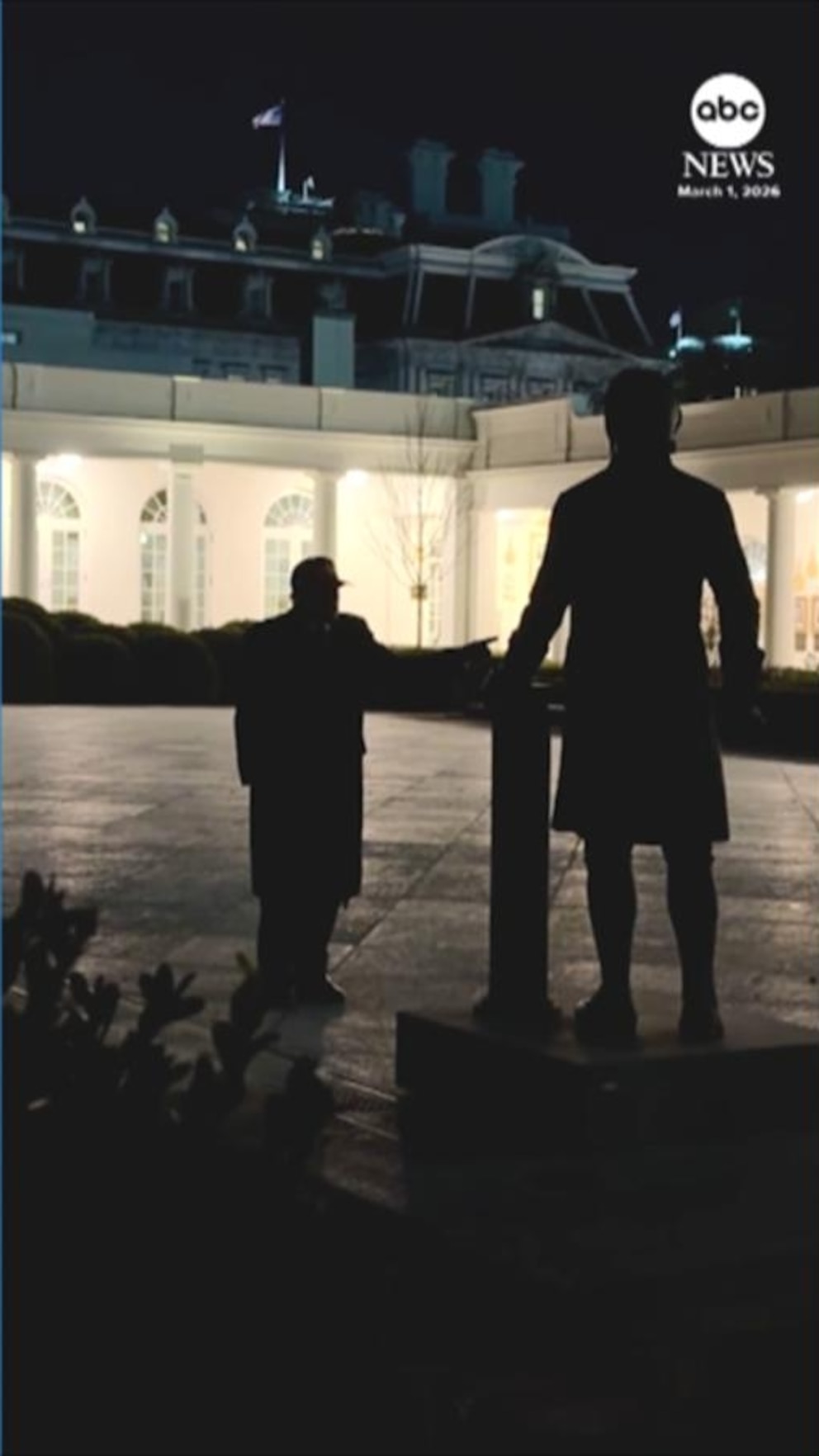
President Donald Trump returned to the White House late Sunday night following the completion of “Operation Epic Fury,” a U.S. Military campaign targeting Iranian nuclear facilities, ballistic missile sites and proxy networks. The President did not respond to shouted questions from reporters upon his arrival, maintaining a silence that followed a day of escalating military action and shifting diplomatic signals.
The operation, authorized by President Trump on March 1st, involved joint U.S.-Israeli air strikes, resulting in damage to the Ayatollah Ali Khamenei’s official residence in Tehran, as evidenced by satellite imagery provided by Vantor. The White House described the campaign as “precise and overwhelming,” intended to eliminate the “imminent nuclear threat” posed by the Iranian regime, a claim repeated by senior administration officials throughout the day.
The strikes followed “exhaustive diplomatic efforts,” according to the White House, but were initiated despite indications that Iran’s “new potential leadership” may be open to negotiations with the United States. A senior White House official, speaking on condition of anonymity, told the Associated Press that President Trump indicated a willingness to engage in talks “eventually,” but prioritized the military operation in the immediate aftermath of the strikes.
Lawmakers from both sides of the aisle publicly supported the President’s decision. Senator Tom Cotton (R-AR) stated on CNN’s State of the Union that he had “not heard a single Arkansan express anything but unqualified support” for the operation, characterizing it as a necessary step to end “47 years of terror and revolutionary violence” by Iran. Senator Lindsey Graham (R-SC) went further, declaring on NBC’s Meet the Press that “the mothership of terrorism is sinking” and that Iran, “the largest state sponsor of terrorism,” was “close to collapsing.”
The operation’s launch was preceded by a period of heightened tension, culminating in the military action. The White House released photographs on Saturday of President Trump and his advisors monitoring the progress of the strikes, a visual demonstration of command and control during the unfolding crisis, as reported by France24. President Trump, in a full speech announcing the strikes, vowed to destroy Iranian missiles and military targets, citing the country’s nuclear ambitions as the primary justification for the intervention, details of which are available at Business Insider.
The timing of the operation, and the reported openness to talks from Iranian officials, raises questions about the long-term strategy of the Trump administration. While the White House has framed the military action as a necessary step to deter Iranian aggression, the possibility of future negotiations remains uncertain. U.S. Intelligence did not suggest an imminent preemptive strike from Iran prior to the U.S.-Israeli attacks, according to sources cited by the Associated Press.
The White House has not yet responded to requests for comment regarding the extent of damage inflicted during the strikes, or the status of Iranian leadership. The Pentagon has also remained silent on the specifics of the military operation, citing ongoing assessments.
