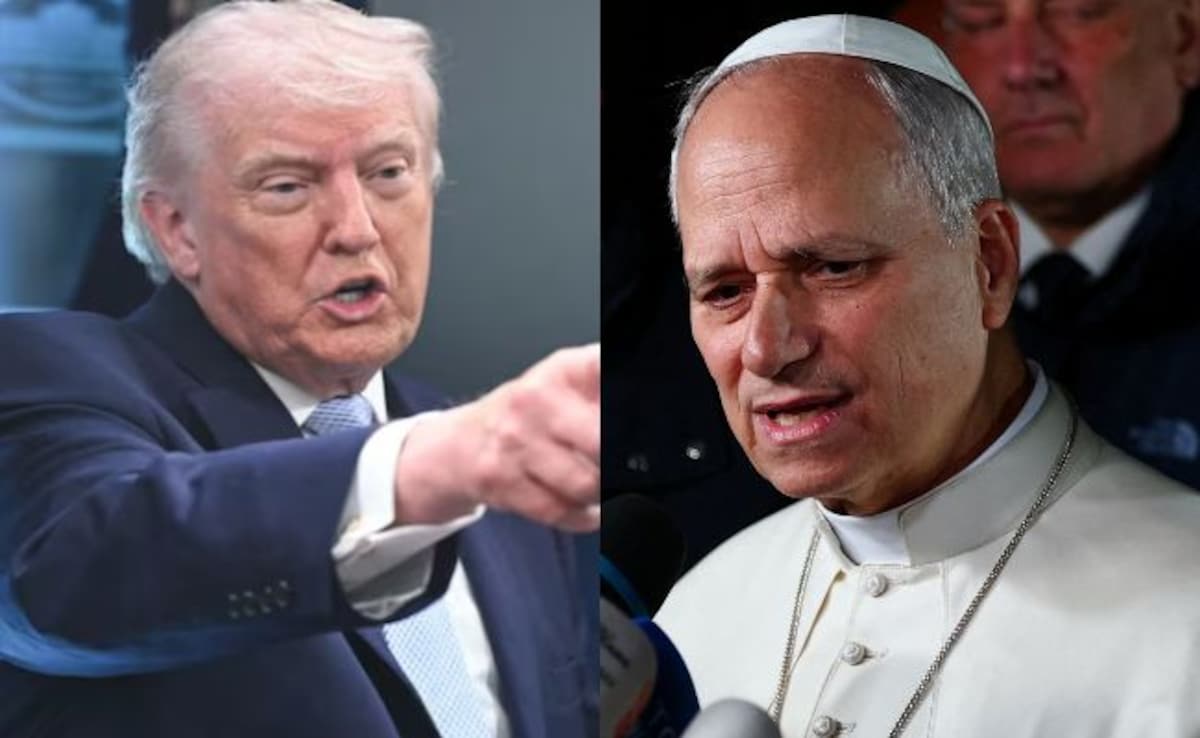
Trump Refuses to Apologize to Pope Leo
Donald Trump has publicly refused to apologize to Pope Leo following a social media clash over crime policy, asserting the Pontiff is “wrong” and “weak.” The standoff, escalating as of April 13, 2026, signals a deepening rift between the U.S. Executive branch and the Holy See over global judicial philosophies.
This isn’t just a spat between two powerful men. It is a collision of two fundamentally different worldviews: one rooted in the “law and order” doctrine of punitive deterrence, and the other in the Catholic Church’s evolving emphasis on restorative justice and the abolition of the death penalty.
When a U.S. President openly dismisses the moral authority of the Pope, the ripple effects extend far beyond the Vatican’s walls. It creates a diplomatic vacuum that affects everything from international human rights treaties to the operational stability of faith-based NGOs operating in volatile regions.
The Doctrine of Deterrence vs. The Theology of Mercy
The friction began when Pope Leo issued a directive urging global leaders to pivot away from mass incarceration and toward rehabilitative frameworks. Trump’s response was swift and caustic, framing the Pope’s stance as an invitation to chaos. By labeling the Pope “weak on crime,” Trump is not merely criticizing a religious leader; he is signaling to his base that national security and domestic stability supersede traditional diplomatic deference to the Holy See.
Historically, the relationship between the U.S. And the Vatican has been one of strategic alignment, particularly regarding the containment of adversarial regimes. However, the current tension highlights a growing “Information Gap” in how the West defines justice. While the U.S. Administration leans into the Department of Justice‘s focus on strict sentencing, the Vatican is pushing for a global moratorium on capital punishment.
This ideological divide creates a tangible problem for international organizations. When the world’s leading superpower and the spiritual head of 1.3 billion Catholics are at odds, the legal ambiguity trickles down to the municipal level, particularly in cities with high Catholic populations and strict prosecutorial mandates.
“We are witnessing a breakdown in the ‘soft power’ diplomacy that usually cushions the blow of political disagreement. When the rhetoric turns to ‘weakness,’ the bridge of dialogue is effectively burned, leaving only the cold machinery of statecraft.”
For those navigating the fallout of these shifting legal priorities, the need for expert guidance is paramount. Legal practitioners are increasingly seeing a rise in complex litigation regarding religious freedom and state mandates, making it essential for organizations to consult vetted international law firms to ensure their operational protocols remain compliant across conflicting jurisdictions.
Geopolitical Friction and Localized Impact
The tension is most acute in the “Swing States” of the American Midwest and the urban corridors of the Northeast, where Catholic voting blocs are significant. In cities like Boston and Philadelphia, the clash creates a social friction point between parish leadership and local government officials.
If the administration continues to alienate the Vatican, we may see a decrease in cooperation on humanitarian corridors in conflict zones like Eastern Europe or Sub-Saharan Africa, where the Church often provides the only reliable infrastructure for aid. This is a macro-economic risk; a breakdown in Vatican-U.S. Cooperation can lead to instability in regions where U.S. Diplomatic interests are most precarious.
The instability isn’t just diplomatic—it’s administrative. Local municipalities are finding that the rhetoric of “strength” often translates to increased pressure on local police budgets and a pivot away from community-based diversion programs.
As these civic tensions rise, the demand for mediation increases. Community leaders are now turning to professional conflict resolution specialists to bridge the gap between religious institutions and municipal governments to prevent social fragmentation.
The Cost of Diplomatic Defiance
To understand the gravity of this refusal to apologize, one must look at the precedent. Traditionally, the U.S. President maintains a posture of formal respect toward the Papacy to maintain leverage in Italy and across Latin America. By discarding this etiquette, Trump is essentially redefining the “American Brand” from one of global leadership to one of unilateral assertion.

The following table outlines the divergent approaches currently at play:
| Point of Contention | Trump Administration Position | Vatican (Pope Leo) Position |
|---|---|---|
| Criminal Justice | Strict deterrence; Punitive sentencing | Restorative justice; Rehabilitation |
| Capital Punishment | Support for state-led execution | Universal abolition |
| Global Diplomacy | Unilateralism and “Strength” | Multilateralism and Dialogue |
This is not a stalemate; it is a divergence. The “Problem” here is a lack of a shared moral vocabulary between the executive branch and a global moral authority.
For businesses and non-profits that rely on the stability of these international relations, the volatility is a liability. Many are now seeking strategic risk consultants to hedge against the potential for sanctions or diplomatic freezes that could arise from a total collapse in U.S.-Vatican relations.
“The refusal to apologize is a calculated political move, but it ignores the reality that the Vatican is not just a church—it is a sovereign state with intelligence networks and diplomatic reach that the U.S. Cannot afford to ignore.”
This sentiment is echoed by analysts at the Associated Press, who note that the friction is likely to permeate the next few G7 summits, where the “moral economy” of the West will be under intense scrutiny.
The long-term impact of this event will not be measured by a single apology or a single tweet, but by the gradual erosion of the diplomatic norms that have prevented ideological differences from becoming systemic failures. When the bridge between the secular power of the state and the spiritual power of the church collapses, the people caught in the middle are usually the ones who pay the price.
As the world watches this power struggle unfold, the only certainty is that the complexity of global governance will only increase. Whether you are a business owner, a legal professional, or a civic leader, the ability to find verified, expert guidance in an era of volatility is the only real safeguard. The World Today News Directory remains the definitive resource for those seeking the professionals capable of navigating this new, fragmented landscape.