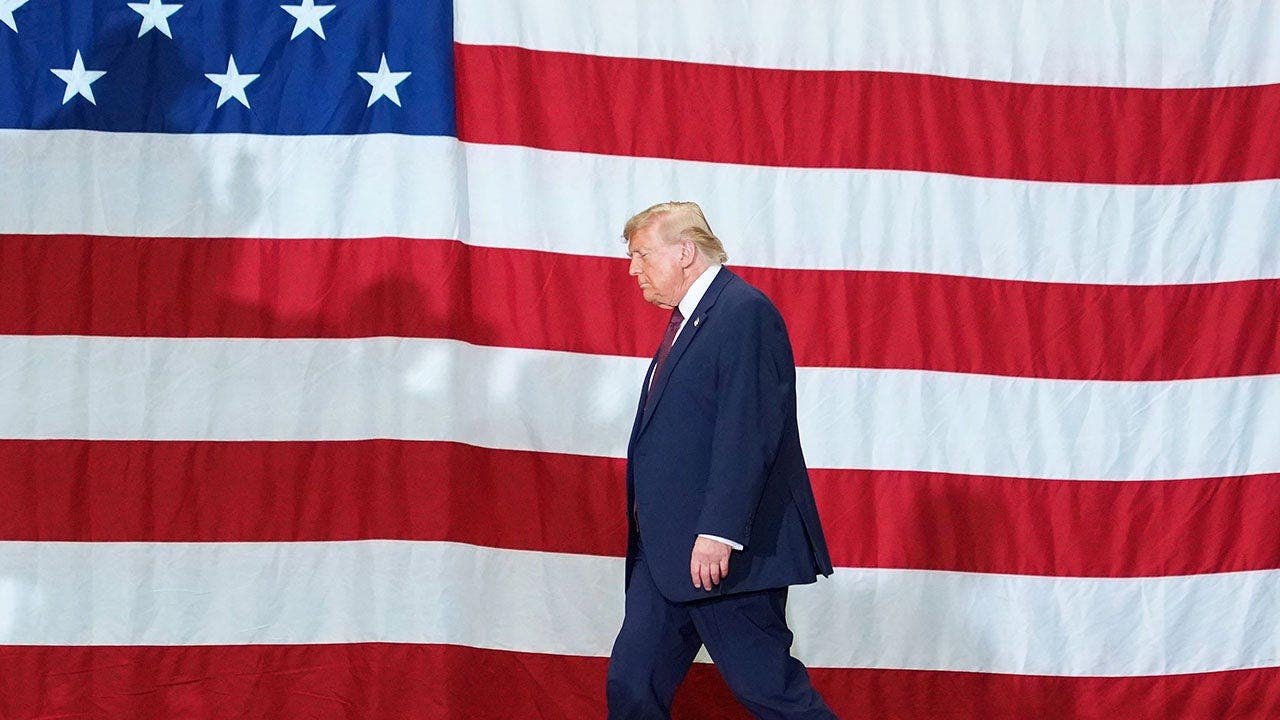
Trump Meets Senate GOP to Seek Unity Ahead of Midterm Elections
Donald Trump’s Capitol Hill meeting with Senate Republicans arrives as internal GOP fractures threaten midterm momentum—with voter ID legislation, Iran negotiations, and FISA reauthorization hanging in the balance. The president, who hasn’t met with Senate Republicans in over a year, faces a caucus divided by his own policy shifts and a legislative math problem that even Majority Leader John Thune admits is unsolvable without unity. Meanwhile, a leaked internal GOP memo reveals a $300 billion Iran deal has reignited infighting, with senators like Rick Scott framing the meeting as a last chance to define Republican brand equity ahead of November. What happens next hinges on whether Trump’s influence can override Senate math—or if the party’s messaging crisis becomes a self-fulfilling prophecy.
Why This Meeting Could Make or Break the GOP’s Midterm Brand
Trump’s Capitol Hill visit isn’t just about policy; it’s a high-stakes PR gambit. With midterms looming, Republicans are desperate to flip voter perception from “divided” to “unified,” but their legislative record—stalled on voter ID, Iran, and FISA—undercuts the messaging. The SAVE America Act, a centerpiece of Trump’s election integrity push, has been called a “math problem” by Thune, yet the president insists it’s non-negotiable. Meanwhile, a $300 billion Iran agreement has alienated hawks like Sen. Mike Lee, who see it as a betrayal of GOP foreign policy orthodoxy.

“The question isn’t whether we can pass SAVE America—it’s whether we can sell it,” says Sarah Chen, a political communications strategist at FTI Consulting. “Right now, the GOP’s brand is being defined by what they can’t do, not what they can. That’s a crisis for any party, but especially one relying on turnout from the same base that demands action.”
Chen’s observation aligns with internal GOP polling, which shows voter frustration isn’t over policy differences but over perceived disarray. A June 2024 Axios/Ipsos survey found 62% of Republican primary voters believe their party is “too divided to win,” a figure that jumps to 78% among Trump-aligned independents. The meeting’s success—or failure—will be measured in whether it shifts that narrative, not just legislative votes.
The Legislative Math Problem: Why SAVE America Is a GOP Hostage
Thune has repeatedly stated Republicans lack the votes for SAVE America, yet Trump’s insistence on the bill has created a crisis of credibility. The legislation, which requires proof of citizenship for voter registration, has been a litmus test for the GOP base—but its passage would require at least 10 Democratic defections, a near-impossibility in a 50-50 Senate. The standoff has exposed a rift between Trump’s base demands and Senate pragmatism, with moderates like Sen. John Thune publicly acknowledging the impasse.
Trump’s response? Dismiss Thune as a “leader” while doubling down. “We’re going to talk about SAVE America,” he told reporters Tuesday. “We have to pass it.” The contradiction has left even allies scrambling. Mark Whitaker, a former CNN White House correspondent and now a media analyst at Whitaker Communications, calls it a “textbook case of messaging overreach.”
“Trump’s base sees SAVE America as a non-negotiable. The Senate sees it as a political albatross. The president’s refusal to pivot isn’t just a legislative miscalculation—it’s a brand risk. When a party’s signature issue can’t clear a simple majority, voters start asking: What else can’t they deliver?”
—Mark Whitaker, Whitaker Communications
The fallout extends beyond the Capitol. A Brookings Institution analysis projects that if SAVE America fails, GOP turnout models—already reliant on restrictive voting laws—could face legal challenges in key swing states. The irony? The bill’s failure might become its own campaign issue, with Democrats framing it as proof of GOP obstructionism.
Iran, FISA, and the GOP’s Foreign Policy Identity Crisis
While SAVE America dominates headlines, the Iran memorandum of understanding and FISA reauthorization loom as equally contentious. Trump’s $300 billion Iran deal has split the party, with hawks like Sen. Mike Lee calling it “a blank check for the regime.” Lee’s office declined to comment, but internal GOP briefings suggest the deal’s terms—including sanctions relief—have triggered a revolt among national security conservatives.
FISA reauthorization, meanwhile, faces a bipartisan deadlock. The Foreign Intelligence Surveillance Act, set to expire in September, requires six votes to extend. With Democrats unwilling to support GOP-backed amendments, the standoff threatens to trigger a government shutdown—a risk Thune has warned against.
For the GOP, the dilemma is clear: Double down on Trump’s hardline stances and risk alienating moderates, or compromise and face a backlash from the base. The Iran deal and FISA impasse are microcosms of this tension. “This isn’t just about policy,” says Dr. Elena Vasquez, a national security analyst at RAND Corporation. “It’s about whether the GOP can still claim to be the party of strength—or if they’ve become a hostage to their own factionalism.”
“The Iran deal is a Rorschach test for the GOP. Hawks see it as a surrender; pragmatists see it as a necessary trade. But the real damage isn’t to U.S. foreign policy—it’s to the party’s ability to project coherence. Voters don’t care about the nuances of sanctions relief. They care if their team looks like it’s in charge.”
—Dr. Elena Vasquez, RAND Corporation
What Happens Next: Three Scenarios for the GOP’s Legislative Future
The Capitol Hill meeting will unfold against three competing narratives:

- The Unity Ploy: Trump secures verbal commitments on SAVE America and Iran, but no concrete votes. The GOP spins it as a “strategic retreat,” focusing on messaging over deliverables. Early polling suggests this approach could stabilize primary turnout—but swing-state independents remain skeptical.
- The Breaking Point: Infighting erupts over SAVE America or Iran, with moderates publicly rebuking Trump. The meeting becomes a crisis PR moment, forcing the GOP into damage control. Historical precedent shows this path leads to internal purges, as seen in 2023 when Trump ousted Sens. Cassidy and Cornyn.
- The Silent Compromise: Trump and Thune agree to a scaled-back version of SAVE America (e.g., expanding photo ID without citizenship requirements) and delay FISA votes until after the midterms. The GOP avoids a shutdown but loses its most visible legislative victory—a gamble that could backfire if the base perceives weakness.
Which scenario plays out may hinge on one factor: who controls the narrative. With midterms just months away, the GOP’s ability to frame this meeting as a “win” will depend on whether they can outmaneuver Democratic messaging machines. “This isn’t about legislation,” says David Rosen, a political strategist at DMR Strategy. “It’s about who gets to define the story—and right now, the Democrats are sitting pretty.”
“The GOP’s brand equity is at stake here. If they walk away with nothing but soundbites, they’ve already lost. The question is whether Trump’s star power can override Senate math—or if the party’s messaging crisis becomes a self-fulfilling prophecy.”
—David Rosen, DMR Strategy
How This Plays Out in the Entertainment and PR Ecosystem
While the political ramifications dominate headlines, the fallout extends into entertainment, media, and crisis communications. A divided GOP risks brand fragmentation, forcing Republicans to rethink their messaging strategy. For talent agencies, this means:
- Crisis PR Firms: With infighting likely to spill into public view, [Levick Strategic Communications] and [FTI Consulting] are already in demand for GOP senators facing backlash over policy shifts. “When a party’s internal wars go public, standard statements don’t work,” says a source at Levick. “You need a playbook for managing factional fallout before it becomes a viral crisis.”
- IP and Legal Battles: The SAVE America Act’s failure could trigger legal challenges to state voting laws, creating a copyright-like battle over electoral IP. Firms like [Skadden Arps] are advising Republican state attorneys general on preemptive litigation strategies.
- Event and Hospitality: If the GOP pivots to a “unity tour” in swing states, [Ackerman Group] and [Freeman] are positioning to secure contracts for high-profile rallies. “A tour of this scale isn’t just logistics—it’s a cultural moment,” says a Freeman executive. “The hospitality sector in swing states is already bracing for a windfall.”
The entertainment industry isn’t immune. Political polarization has already reshaped Hollywood’s political messaging, with studios avoiding overt GOP endorsements. If the party’s internal divisions deepen, expect a chilling effect on Republican-aligned content, from documentaries to partisan podcasts.
The Bottom Line: A Party at the Crossroads
Trump’s Capitol Hill meeting is less about legislation and more about survival. The GOP’s ability to present a unified front—or even a plausible path forward—will determine whether they retain their congressional majorities. But the real story isn’t in the policy outcomes; it’s in the brand calculus.
For Republicans, the clock is ticking. The midterms are six months away, and the party’s messaging crisis is already costing them in swing states. If this meeting fails to deliver a narrative shift, the GOP risks becoming a cautionary tale in brand management—one where internal fractures overshadowed external threats. The question isn’t whether they can pass SAVE America. It’s whether they can sell the illusion of unity long enough to matter.
For those navigating this landscape—whether in politics, PR, or entertainment—the lesson is clear: Crisis communication isn’t just about damage control. It’s about defining the story before the opposition does. And in 2026, the GOP’s story is far from written.
Disclaimer: The views and cultural analyses presented in this article are for informational and entertainment purposes only. Information regarding legal disputes or financial data is based on available public records.