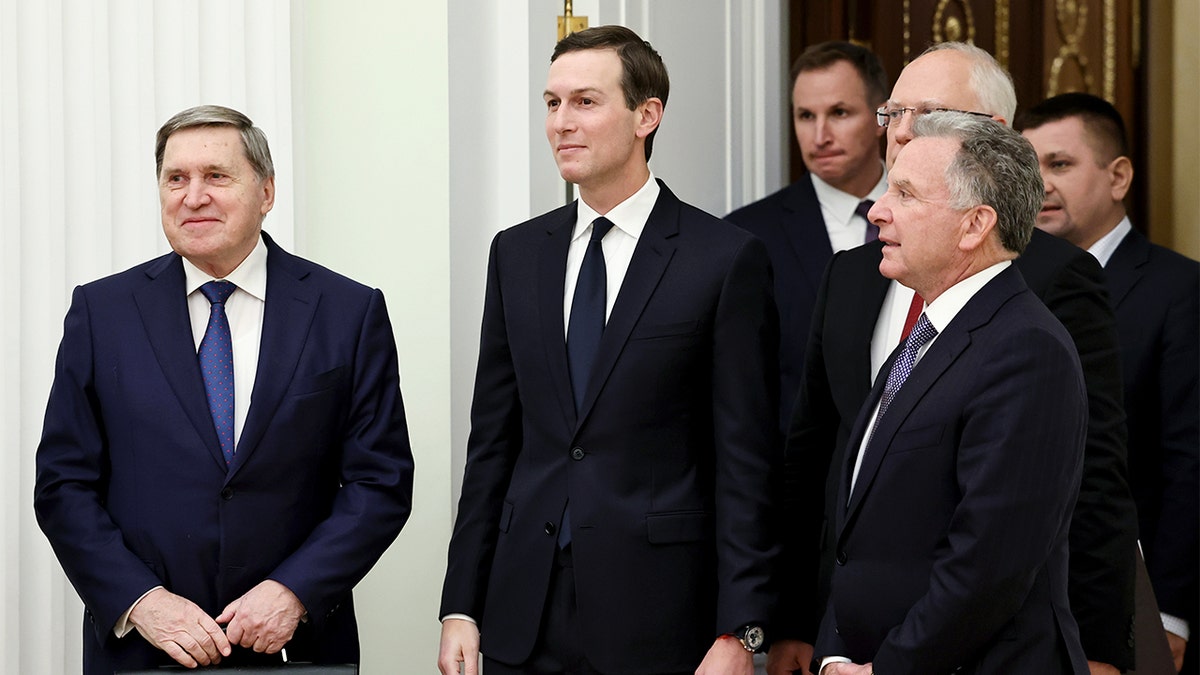
Trump Envoys Witkoff and Kushner Visit Kyiv and Moscow for Ukraine Peace Talks
On Sunday, Sept. 6, 2026, U.S. envoys Steve Witkoff and Jared Kushner arrived in Kyiv, Ukraine, for diplomatic talks aimed at reviving peace negotiations amid ongoing infrastructure strain and escalating aerial attacks, according to reporting by NBC News and NPR. The visit follows a closed-door meeting in Moscow on Saturday, Sept. 5, 2026, with Russian President Vladimir Putin, marking a renewed push by Washington to address the conflict after months of diplomatic focus on the Iran war.
Evaluating the Diplomatic Momentum in Kyiv and Moscow
The arrival of the U.S. delegation via train from the Polish border follows a three-hour meeting at the Senate Palace of the Kremlin in Moscow. According to NBC News, Witkoff described the discussions in Kyiv as substantive and important, telling reporters that the delegation felt very encouraged by the reception. Kushner emphasized that President Trump remains very determined to see an end to this war. Neither official released specific details regarding a formal peace proposal.

In Moscow, the Saturday talks included officials from the National Security Council, the State Department, and the Treasury Department. Yuri Ushakov, foreign policy adviser to Vladimir Putin, characterized the Kremlin discussions to Russian state media as substantive, constructive, extremely frank and trusting. Ushakov noted that the talks also touched upon economic issues and potentially large, mutually beneficial joint projects for Russia and America.
Ukrainian President Volodymyr Zelenskyy posted on Telegram ahead of the meetings that Kyiv remains ready for a constructive discussion. “We are interested in bringing the end of the war closer. Peace is needed. Security guarantees are needed. A just and sustainable postwar peace is needed. Our proposals are prepared,” Zelenskyy stated.
The Operational Backdrop: Air War and Energy Infrastructure Strain
The diplomatic push coincides with intense aerial activity along the 1,250-kilometer front line. NPR reported that Russia has increasingly utilized fast-flying, jet-powered drones, leading to daily air-raid sirens across the Ukrainian capital. Both sides had agreed to a temporary pause on strikes targeting each other’s capitals during the weekend visits, yet overnight exchanges of fire persisted across multiple regions.

According to Ukraine’s State Emergency Service and air force data cited by NPR, overnight drone and missile strikes caused casualties and infrastructure damage in Zaporizhzhia and the Khmelnytskyi region, while Ukrainian air defenses intercepted 82 drones and six missiles. Across the border in the Belgorod region, local authorities reported casualties from a drone strike, and the Russian Defense Ministry stated that air defenses intercepted hundreds of drones over multiple regions and occupied Crimea.