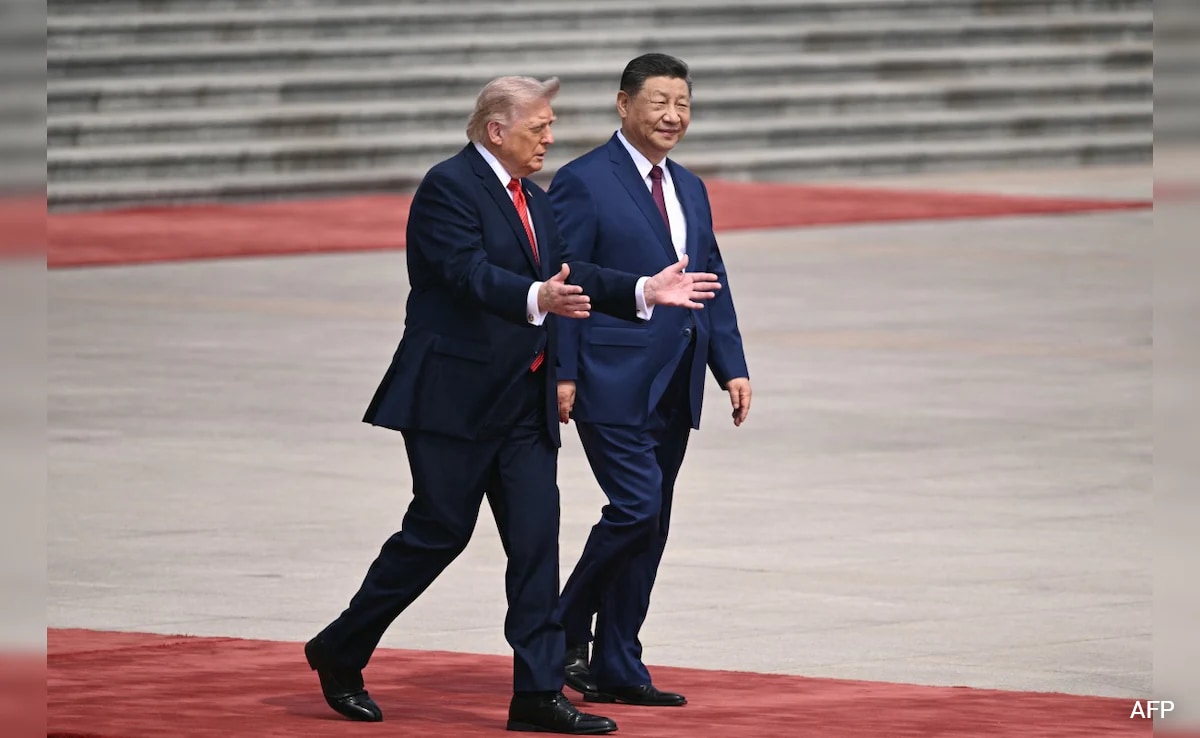
Trump Demands China Halt Weaponization of Rare Earths in Supply Chains
U.S. President Donald Trump arrived in Beijing for a high-stakes summit with Chinese President Xi Jinping, where rare-earth export controls, AI semiconductor restrictions, and Taiwan tensions dominate the agenda. Xi signaled potential market openings for U.S. Businesses, but China’s leverage over critical minerals—essential for defense and tech—remains a flashpoint. The one-year trade truce expires this fall, risking renewed disruptions to global supply chains.
The Rare-Earth Weapon: How China’s Grip on Supply Chains Reshapes Global Trade
China controls over 80% of the world’s rare-earth production, a strategic advantage it has weaponized in trade disputes. When Trump imposed sweeping tariffs in 2025, Beijing retaliated by tightening export controls on these minerals—critical for everything from electric vehicle batteries to F-35 fighter jets. The U.S. Response? A fragile one-year truce, now hanging by a thread as the summit unfolds.
“China’s rare-earth dominance is not just an economic issue—it’s a national security vulnerability. The U.S. Cannot afford to be held hostage to supply chain blackmail.”
The stakes are clear: Rare earths are the backbone of modern defense and technology. The U.S. Military, for instance, relies on China for neodymium (used in guided missile systems) and praseodymium (critical for hypersonic weapons). Without secure supply chains, American manufacturers face a stark choice—pay exorbitant prices or scramble for untested alternatives.
Beijing’s Double-Edged Sword: Market Access vs. Strategic Leverage
Xi’s invitation to U.S. CEOs to “open wider” to Chinese markets is a calculated move. While it signals economic cooperation, it also underscores China’s ability to dictate terms. The question now: Will Trump secure meaningful concessions, or will rare-earth restrictions tighten further as the truce expires?

- Rare-Earth Dependence: The U.S. Imports over 90% of its rare earths from China, with no domestic alternative yet scalable.
- Defense Vulnerability: The Pentagon’s 2025 Posture Report warns of “strategic chokepoints” in supply chains, with rare earths at the top of the list.
- Economic Impact: A 2025 study by the Brookings Institution estimated that rare-earth disruptions could cost U.S. Manufacturers $120 billion annually in lost productivity.
Regional Fallout: Who Wins and Who Loses?
This summit doesn’t just affect Washington and Beijing—it ripples through global supply chains, from Ganzhou, Jiangxi (home to China’s largest rare-earth refinery) to Rare Earth Salts, Inc. In Texas, one of the few U.S. Players in the space. Cities like Shenzhen, the hub of electronics manufacturing, may see production slowdowns if export restrictions tighten. Meanwhile, Tennessee’s Oak Ridge National Lab is racing to develop domestic alternatives, but commercial viability remains years away.
“Local manufacturers in Jiangxi are already feeling the pinch. The province’s rare-earth exports dropped by nearly 15% last quarter due to uncertainty over U.S. Policy. If the truce collapses, we could see a 30% decline by year’s end.”
The Directory Bridge: Solutions to Supply Chain Vulnerabilities
The geopolitical chess match over rare earths exposes a critical need for diversified supply chains. Here’s how businesses and governments are adapting:
- Strategic Mining Partnerships: Companies like specialized mining consultants are helping nations identify and develop alternative rare-earth deposits. For example, Australia’s Lynas Corporation has expanded production in Mount Weld, but scaling remains a challenge.
- Legal Arbitration for Trade Disputes: With tariffs and export controls escalating, firms are turning to trade law specialists to navigate sanctions and WTO-compliant alternatives. The WTO’s dispute resolution system is already overwhelmed with cases tied to rare-earth trade.
- Reshoring and Localized Production: Governments are incentivizing domestic rare-earth processing. In the U.S., the Department of Energy’s Critical Minerals Initiative has allocated $3.5 billion to accelerate projects like MP Materials’ Mountain Pass facility in California.
The Long Game: What Happens Next?
The Trump-Xi summit is a test of whether diplomacy can outpace strategic competition. If no deal is struck, China’s rare-earth restrictions could trigger a global tech slowdown, hitting industries from automotive to aerospace. The U.S. Is hedging its bets by investing in recycling technologies and urban mining, but these solutions are years from replacing Chinese dominance.

| Scenario | Impact on U.S. Tech Sector | Impact on Global Supply Chains | Directory Solutions |
|---|---|---|---|
| Truce Extended | Stable rare-earth supply; minimal price hikes | Continued reliance on China; slow diversification | Supply chain auditors to monitor compliance |
| New Restrictions Imposed | Price surges; production delays for semiconductors and defense | Scramble for alternatives; potential shortages in Asia | Emergency logistics providers for critical mineral rerouting |
| Trade Deal Signed | Gradual reduction in Chinese dominance; incentives for U.S. Mining | Shift toward regional hubs (e.g., Australia, Myanmar) | Risk consultants to navigate new trade agreements |
The Kicker: A Warning for the Next Generation of Supply Chains
The rare-earth crisis is a microcosm of a larger truth: The 21st century’s most critical resources are not oil or gold, but the minerals that power our digital and defense ecosystems. As Trump and Xi jockey for advantage, the real losers may be the industries—and the consumers—who depend on uninterrupted access. The time to build resilience is now. For businesses and governments navigating this uncertainty, the World Today News Directory connects you with verified experts in mining, trade law, and logistics—ready to future-proof your operations against the next supply chain shock.
Worth a look