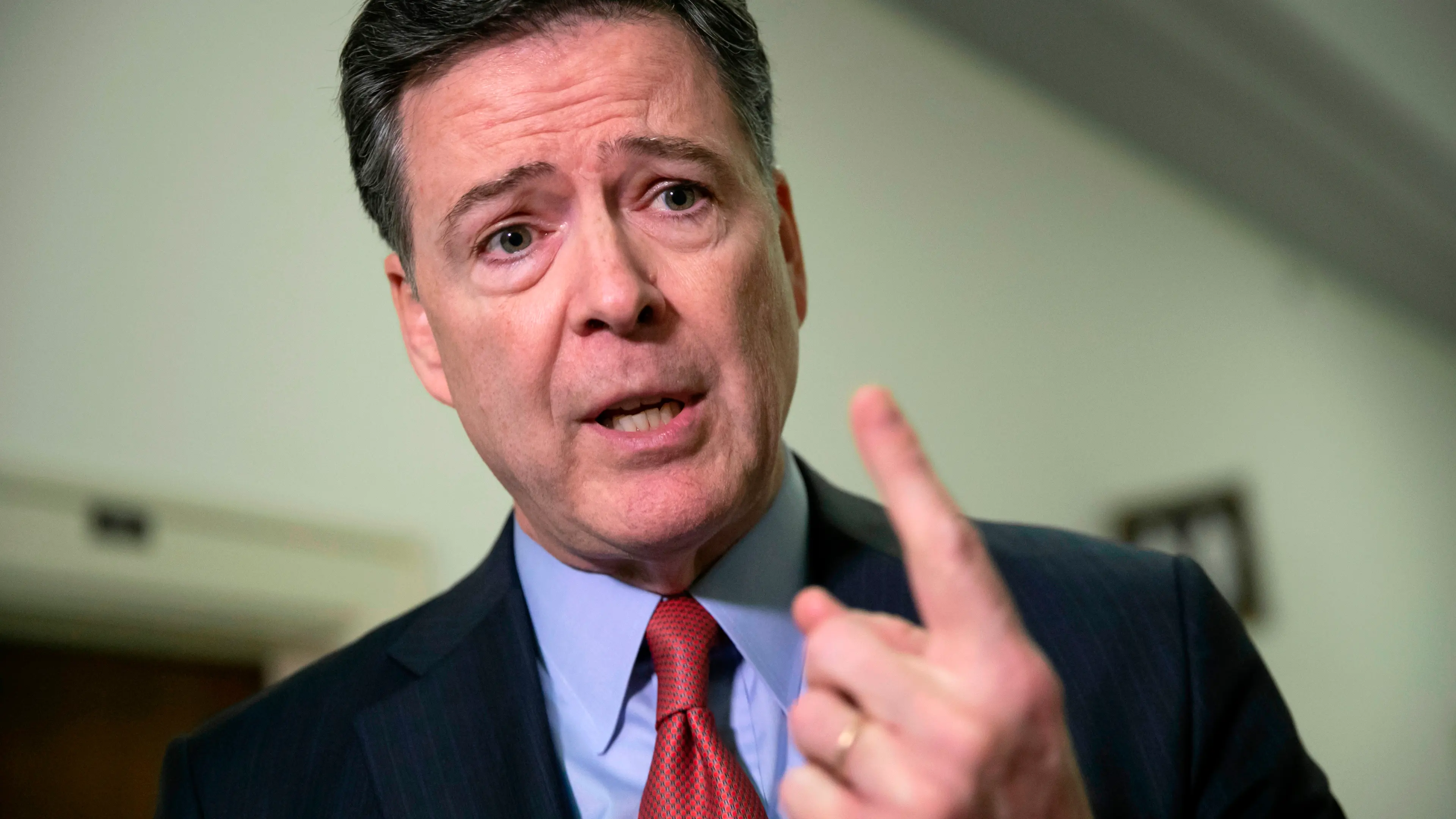
Trump Calls James Comey a ‘Dirty Cop’ As Trial Date Set for Former FBI Head
Former FBI Director James Comey will face trial on July 15 in North Carolina after the Justice Department charged him with threatening President Donald Trump. The case centers on an Instagram post of seashells arranged as “86 47,” which prosecutors claim expresses a serious intent to do harm to the president.
Here’s more than a dispute over beach photography. it is a collision between the First Amendment and the security of the executive branch. When the Justice Department interprets slang and symbols as criminal threats, it creates a chilling effect that extends far beyond a single political figure. For many, the real problem is the precedent being set: the potential for the legal system to be used as a tool for political retribution.
The Symbolism of “86 47”
The core of the indictment rests on a specific piece of linguistic interpretation. In May of last year, Comey posted a photo of seashells forming the numbers “86 47,” captioned, “Cool shell formation on my beach walk.” To the casual observer, it was a nature photo. To the Justice Department, it was a coded directive.

The numbers are not random. As defined by Merriam-Webster, the term “86” is common slang meaning to “throw out” or “refuse service to,” but it is also used to mean “to kill.” The “47” refers to Donald Trump, the 47th President of the United States. In the eyes of the DOJ, this combination constitutes a “serious expression of an intent to do harm.”
Comey has fought back, claiming the shells were a natural discovery. In a May 2025 MSNBC interview, he explained that as a child, “86” simply meant to “leave a place” or “ditch a place.” He maintains that he removed the post once he realized how it could be interpreted, stating, “I don’t want to be associated with violence of any kind.”
Despite these defenses, FBI Director Kash Patel has been unequivocal. Patel stated that Comey “disgracefully encouraged a threat on President Trump’s life” and argued that as a former FBI Director, Comey was fully aware of the consequences of such a post.
“I’m still innocent, I’m still not afraid, and I still believe in the independent federal judiciary, so let’s go,” Comey said in a video on his Substack account. “But it’s really important that all of us remember this is not who we are as a country, this is not how the Justice Department is supposed to be.”
A Legal Battlefield in North Carolina
The trial will be overseen by U.S. District Judge Louise Flanagan in North Carolina. Comey is scheduled for arraignment on June 30, where he is expected to plead not guilty. The legal struggle here will likely hinge on the “True Threat” doctrine—a constitutional standard that distinguishes between protected political hyperbole and actual criminal threats.
For a statement to be classified as a “true threat,” the government must typically prove that the speaker intended the communication to be a threat or knew that a reasonable person would perceive it as one. The DOJ’s current stance is that Comey “consciously disregarded a substantial risk” that his message would be viewed as an incitement to violence.
When the line between symbolic speech and criminal intent becomes this blurred, the stakes for the defendant are astronomical. Navigating these nuances requires more than just a standard defense; it requires [Constitutional Law Attorneys] who can argue the fine line between political dissent and criminal conduct in a highly charged atmosphere.
The Institutional Fallout in Virginia
The ripples of this prosecution are being felt deeply within the Justice Department itself. The pursuit of Comey has not been without internal resistance. Reports indicate that at least six prosecutors have been “demoted or pushed out” of the U.S. Attorney’s Office for the Eastern District of Virginia specifically because of the fallout from the Comey prosecution.
This internal purge suggests a volatile environment for career civil servants. When professional disagreements over the merits of a case result in demotions, the stability of the legal infrastructure is compromised. Those facing sudden administrative retaliation or professional displacement in these high-pressure environments often rely on [Employment Law Specialists] to protect their careers and reputations.
The Comey case is not an isolated event. It is part of a broader pattern of DOJ activity during Trump’s second term, which has seen criminal charges and investigations leveled against prominent political rivals, including:
- Letitia James: The New York Attorney General who previously won a civil fraud case against the Trump Organization.
- Adam Schiff: The Democratic senator and former Congressman who served as lead manager during Trump’s first impeachment.
This trend has led critics to frame the charges against Comey as political retribution rather than a pursuit of justice. This is the second time Comey has faced criminal charges under the Trump administration; a previous case involving false statements to Congress and obstruction of a congressional proceeding was dismissed by a judge.
The Long-Term Implications
The upcoming trial on July 15 will serve as a litmus test for the independence of the federal judiciary. If the court accepts the DOJ’s interpretation of “86 47” as a criminal threat, it could fundamentally alter how Americans use social media to express political dissatisfaction. The fear is that metaphorical language or cultural slang could be weaponized to justify the indictment of political opponents.

President Trump has already signaled his view of the situation, taking to Truth Social on Saturday evening to call Comey a “dirty cop” while sharing an old video of the former director defending himself. The rhetoric from the executive branch often sets the tone for the public perception of the trial, adding a layer of complexity to the jury selection process in North Carolina.
As the legal system grapples with these unprecedented intersections of slang, symbolism, and power, the need for verified, high-level legal expertise has never been more critical. Whether it is defending a constitutional right or navigating a government investigation, the complexity of these cases demands a strategic approach. Those caught in the crosshairs of federal investigations often find their only safeguard in seasoned [White Collar Defense Lawyers] who understand the machinery of the DOJ.
The July 15 trial will not just decide the fate of James Comey; it will define the boundaries of political speech in an era of extreme polarization. The question remains: is the law being used to protect the president, or is it being used to silence a foe?