Trump Blasts Climate Alarmism as Scientists Move Away From Extreme UN Warming Scenarios
Scientific Recalibration: Trump Celebrates UN Shift Away from Extreme Climate Scenarios
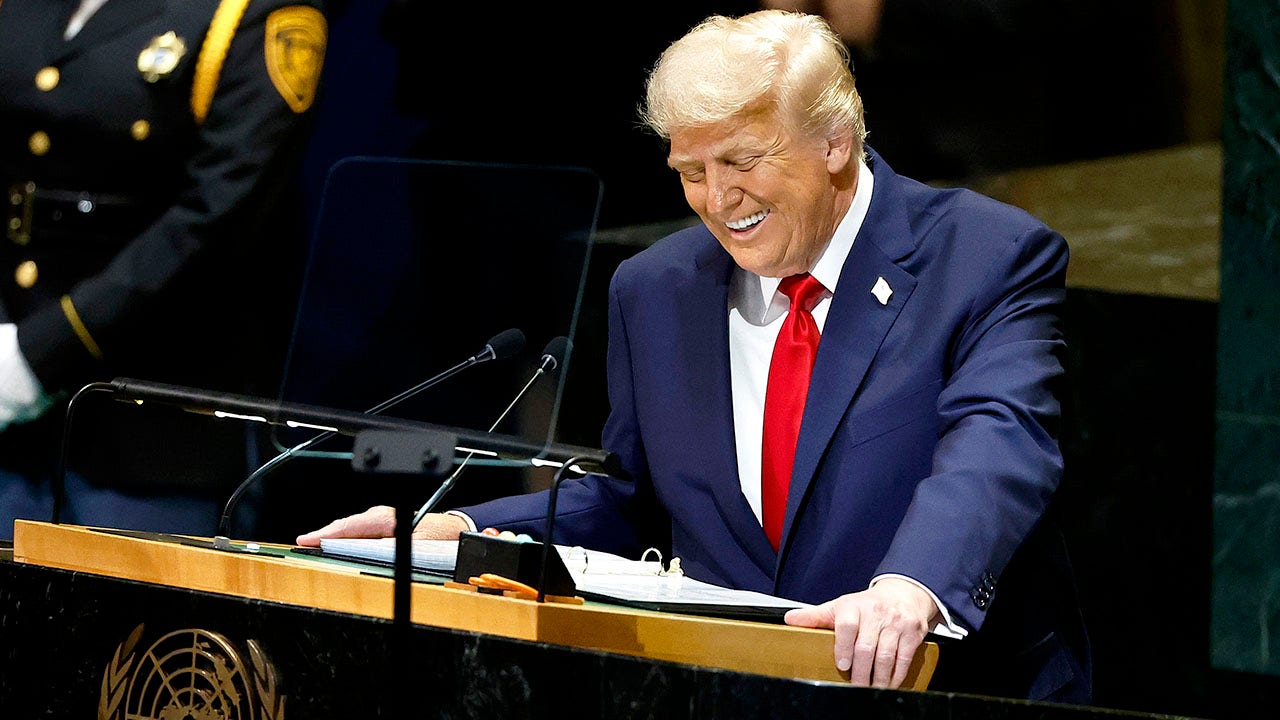
President Donald Trump has celebrated the United Nations-backed IPCC’s decision to phase out the RCP8.5 “extreme” warming scenario. This scientific recalibration, prompted by the rapid growth of renewables and shifting emissions data, provides the Trump administration with significant momentum to challenge Democratic climate mandates and reshape American energy policy.
The atmosphere in Washington has shifted overnight. For years, the political battleground was defined by “doomsday” projections—scenarios where global temperatures spiked to levels that threatened the very fabric of modern civilization. Now, the scientific foundation of those projections is being pulled out from under the proponents of aggressive green mandates.
The Intergovernmental Panel on Climate Change (IPCC) has officially moved away from using the RCP8.5 scenario, a model once used to forecast catastrophic global warming, sea-level rises, and mass extinction events. Instead, researchers are pivoting toward more plausible trajectories that reflect the actual speed of renewable energy adoption and current global emissions trends. For the Trump administration, this is more than a scientific update; it is a political vindication.
The Death of the “Doomsday” Model
The transition from the RCP8.5 model to more moderate projections marks a fundamental change in how climate risk is calculated. The old model assumed a future of unchecked fossil fuel reliance and minimal policy intervention. However, the reality of the mid-2020s has proven those assumptions increasingly disconnected from global economic trends.
| Feature | Old Model (RCP8.5) | New Trajectory (SSP-based) |
|---|---|---|
| Primary Driver | Unchecked coal and oil expansion | Rapid renewable and tech integration |
| Economic Logic | Extreme, catastrophic costs | Manageable, market-driven transitions |
| Political Utility | Justified emergency mandates | Supports diversified energy portfolios |
The scientific community’s pivot is documented in the journal Geoscientific Model Development. Researchers noted that the high-end emission levels previously quantified as inevitable have become “implausible” due to the plummeting costs of solar and wind energy and the emergence of more effective climate policies. This isn’t a denial of warming, but a refusal to rely on mathematical outliers.
“We are not saying the climate isn’t changing; we are saying the ‘doomsday’ scenarios were a mathematical outlier that failed to account for the sheer velocity of the energy transition,” says Dr. Marcus Vane, Senior Researcher at the Institute for Atmospheric Studies. “The models must reflect reality, not fear.”
A Political Fault Line Widens
President Trump’s response on Truth Social was immediate and visceral. He characterized the shift as proof that years of “climate alarmism” were used by his political opponents to justify massive government spending and restrictive energy policies. He labeled the previous projections a “con job” designed to fund “bogus research programs.”

The reaction from the Democratic camp was swift and condemnatory. Former Secretary of State Hillary Clinton dismissed the President’s celebration as “total disinformation,” arguing that the phasing out of an extreme scenario does not negate the fundamental reality of anthropogenic climate change. The tension highlights a growing divide in how the American public perceives environmental risk and the economic cost of addressing it.
EPA Administrator Lee Zeldin has taken a more direct stance, suggesting that the shift validates the administration’s focus on energy independence. He argued that previous left-wing policies were willing to cause “extreme economic pain” based on models that are now being discarded by the very institutions that created them.
Economic Realities and Regional Impacts
This shift in modeling has immediate, tangible consequences for regional economies and municipal planning. In energy-producing hubs like West Virginia and Texas, the move away from extreme scenarios provides a reprieve from the regulatory pressure to abandon fossil fuel assets prematurely. Conversely, coastal municipalities in states like Florida and Louisiana are facing a complex new reality: how to plan for rising sea levels when the “worst-case” benchmarks are no longer the standard.
The uncertainty is creating a massive headache for local governments. When federal and international agencies change their baseline projections, every long-term bond issue, infrastructure project, and zoning law tied to climate resilience must be re-evaluated.
In Houston, the impact is being felt in the boardroom and the city council alike. "Local governments are caught between legacy infrastructure and new mandates. This shift changes the math for our long-term bond ratings and how we allocate funds for flood mitigation," notes Sarah Jenkins, a municipal policy advisor.
As the regulatory landscape becomes more volatile, the need for specialized expertise is skyrocketing. Businesses and local governments are no longer just looking for environmental compliance; they are looking for strategic foresight. Navigating this era of shifting baselines requires consulting with [Energy Policy Consultants] to ensure long-term viability. As legal frameworks are rewritten in the wake of these scientific updates, many corporations are turning to [Environmental Law Firms] to protect their interests against shifting litigation risks. For those managing large-scale urban projects, securing vetted [Municipal Infrastructure Planners] is now a critical priority to avoid massive sunk costs in outdated resilience models.

The data currently available from the National Oceanic and Atmospheric Administration (NOAA) and the U.S. Energy Information Administration (EIA) suggests that while warming continues, the “uncontrolled” trajectory is being replaced by a more nuanced, policy-driven path. This is a significant departure from the Intergovernmental Panel on Climate Change (IPCC) reports of the last decade.
The era of using the most extreme possible outcomes to drive policy is ending. Whether this leads to a more rational, market-based approach to energy or creates a vacuum of leadership in environmental protection remains to be seen. What is certain is that the math has changed, and those who fail to update their strategies will be left holding the bill for a reality that no longer exists.
As the models evolve, so must our approach to governance and investment. For those navigating this transition, finding verified professionals through the World Today News Directory is the most effective way to ensure your organization remains resilient in a world where the “worst-case” is no longer the baseline.