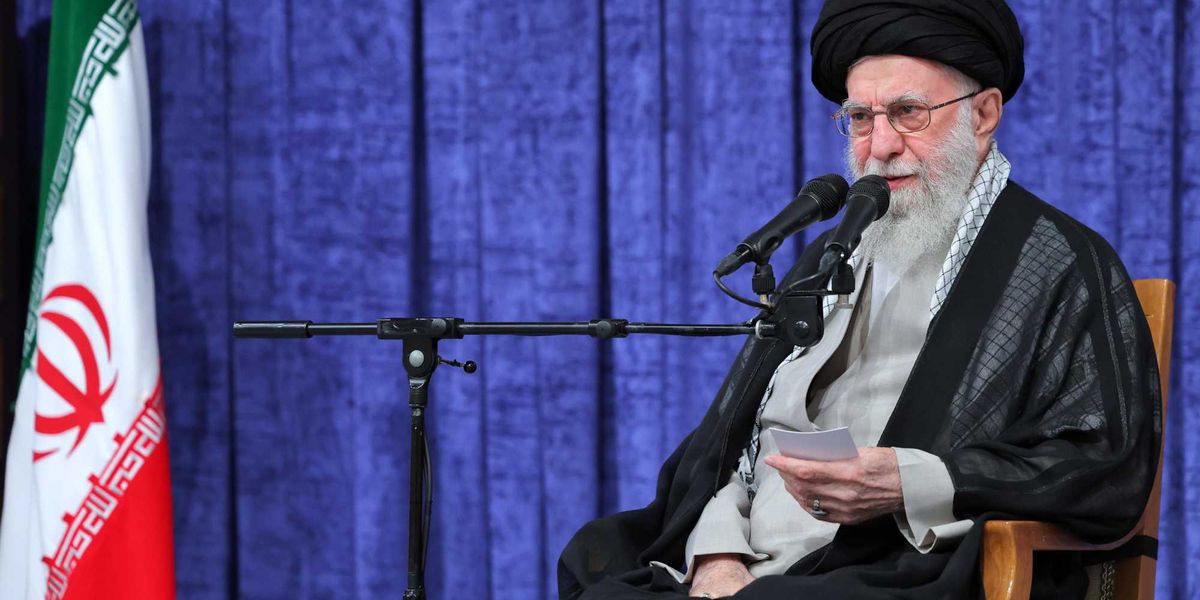
Trump and Iran: The War of Narratives and Strategy
On April 16, 2026, former U.S. President Donald Trump reiterated his long-held stance that Iran constitutes a fundamental threat to regional stability, yet argued that military intervention remains a strategically flawed remedy—a position echoing growing skepticism among Western policymakers about the efficacy of force in reshaping Middle Eastern dynamics. This reassessment comes amid heightened tensions following Iran’s continued uranium enrichment beyond JCPOA limits, proxy escalations via Hezbollah and Houthis and deepening strategic alignment with Russia and China, all of which threaten global energy corridors and maritime trade routes through the Strait of Hormuz.
The core contradiction in U.S. Iran policy persists: while Tehran’s nuclear ambitions and regional influence operations pose clear risks to global energy security and non-proliferation norms, historical precedent shows that military strikes or regime change efforts often trigger asymmetric retaliation, disrupt oil flows, and empower hardliners—ultimately undermining long-term stability. As of Q1 2026, Iran accounts for approximately 3.1 million barrels per day of global oil output, with any significant disruption capable of spiking Brent crude prices by 15-20%, according to IEA modeling, directly impacting manufacturing supply chains from Germany to Japan.
Iran’s strategic calculus has evolved significantly since the 2015 JCPOA. Faced with renewed U.S. Sanctions under the Trump administration’s second term and European hesitation to defy secondary sanctions, Tehran has pivoted eastward, signing a 25-year comprehensive cooperation agreement with China in 2021 that includes infrastructure investment, technology transfer, and discounted oil-for-investment swaps. Simultaneously, military-technical ties with Moscow have deepened, evidenced by Iranian-supplied drones used in Russia’s Ukraine campaign and joint naval exercises in the Caspian Sea. This axis complicates Western containment strategies, as sanctions lose bite when key powers opt for circumvention.
“The real danger isn’t just Iran’s nuclear breakout timeline—it’s the emergence of a sanctions-resistant Eurasian bloc that reroutes trade, finance, and military logistics outside Western control.”
This geopolitical shift has tangible consequences for global logistics and energy firms. Shipping companies rerouting vessels away from the Persian Gulf face increased transit times and fuel costs, while insurers levy higher war-risk premiums on transits through the Strait of Hormuz—a chokepoint through which ~21 million barrels of oil pass daily. Multinational operators now rely on specialized global logistics consultants to model alternative routes via the Cape of Good Hope or Northern Sea Route, balancing cost, speed, and exposure to secondary sanctions.
Financially, European banks with exposure to Iranian counterparties through third-country intermediaries face mounting compliance risks. The FATF’s continued listing of Iran on its blacklist exacerbates de-risking, pushing legitimate trade into opaque channels. In response, corporations are engaging international financial compliance advisors to navigate sanctions evasion typologies, implement enhanced KYC protocols, and structure transactions through sanctioned-adjacent jurisdictions without triggering OFAC or OFSI penalties.
Beyond energy, Iran’s influence over lithium-rich Afghanistan and its role in the International North-South Transport Corridor (INSTC)—a rail and ship route linking Mumbai to St. Petersburg via Bandar Abbas—positions it as a potential disruptor to emerging alternative supply chains for critical minerals. As Western nations scramble to diversify away from Chinese rare earth processing, any instability in the INSTC corridor could delay infrastructure timelines for EV battery supply chains in Europe and North America.
Historically, U.S. Policy has oscillated between maximalist pressure and disengagement, rarely sustaining a coherent middle path. The 2003 Iraq invasion, justified partly on WMD fears, removed a regional counterweight to Iran and inadvertently expanded its influence—a lesson not lost on current strategists. Similarly, the 2020 assassination of Qasem Soleimani triggered a wave of Iraqi parliamentary votes demanding U.S. Troop withdrawal, weakening Washington’s foothold in Mesopotamia.
Today’s debate centers not on whether Iran is a threat—few dispute its malign activities—but on whether military action would exacerbate instability more than it resolves. A 2025 RAND Corporation study found that limited strikes on Iranian nuclear facilities would delay breakout capacity by 6–18 months at best, while triggering a 68% probability of regional escalation involving proxy militias and direct missile retaliation against U.S. Bases in the Gulf.
“Deterrence through credibility, not destruction, is the only sustainable path. Iran must believe the cost of nuclearization exceeds the benefit—but that requires sustained diplomacy, credible threats, and alliance cohesion, not episodic bombing.”
For multinational corporations operating in or adjacent to the region, the imperative is clear: build resilience through scenario planning, supply chain diversification, and expert counsel. Firms are increasingly turning to geopolitical risk consultants to map exposure to Iranian-linked sanctions regimes, assess counterparty vulnerability, and develop contingency plans for sudden escalation—whether from a Strait of Hormuz closure or a cyber-enabled attack on maritime infrastructure.
The broader implication is a world where traditional deterrence models are tested by Sino-Russian backing of revisionist powers, forcing Western firms to operate in environments where political risk is no longer exogenous but deeply embedded in operational planning. This demands not just legal compliance, but strategic foresight—integrating intelligence analysis into capital allocation, site selection, and partnership decisions.
As the U.S. Recalibrates its approach to Iran amid shifting alliances and energy transitions, the enduring challenge remains: how to constrain a revolutionary state without igniting the very chaos it seeks to prevent. The answer lies not in choosing between war and surrender, but in sustaining a multifaceted strategy of pressure, containment, and engagement—one that leverages economic statecraft, allied unity, and technological edge to raise the cost of Iranian adventurism while preserving the channels for de-escalation. For businesses navigating this landscape, the value of expert guidance has never been higher. Consult the World Today News Directory to connect with the legal, financial, and operational specialists who turn geopolitical volatility into manageable risk.