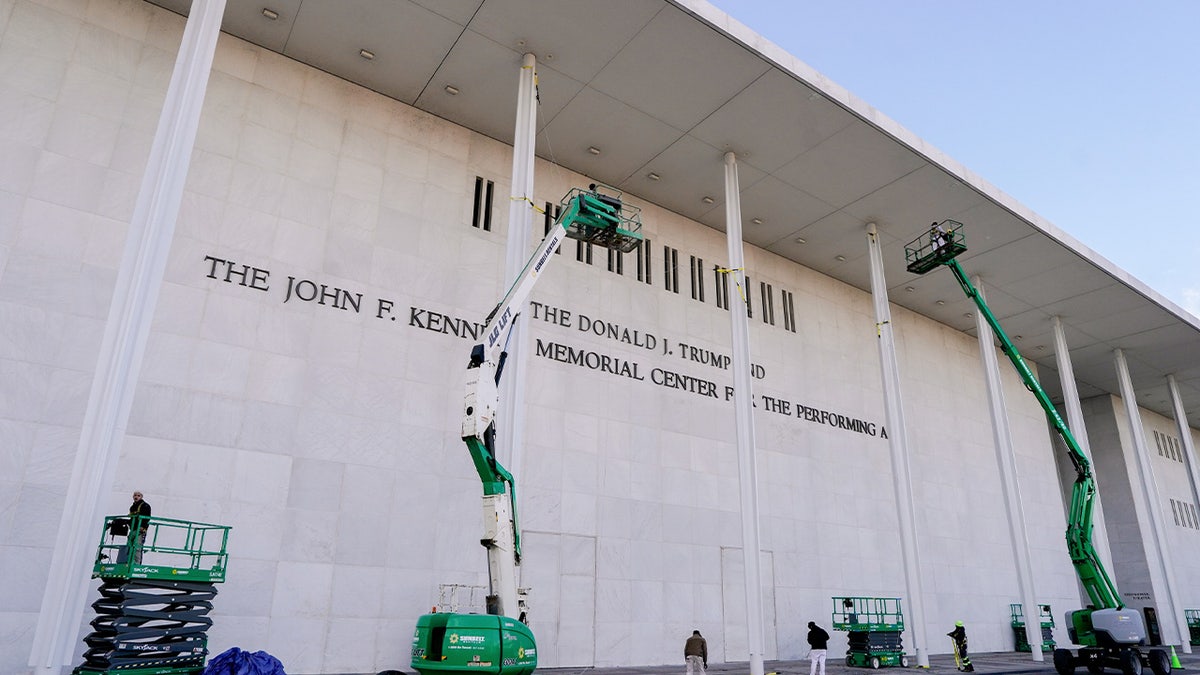
Trump Administration Threatens to Demolish Kennedy Center Over Renovation and Naming Dispute
The Trump administration warned in a Monday court filing that the John F. Kennedy Center for the Performing Arts in Washington, D.C. could face demolition and replacement with an outdoor amphitheater if a $250 million renovation plan and controversial naming rights dispute are blocked by federal courts.
Legal Battle and the Threat of Demolition
Justice Department lawyers argued in federal court that the national arts complex must undergo extensive capital restoration or risk devolving into an unsafe, decrepit structure. According to court documents filed by DOJ attorney Brantley T. Mayers, without these planned repairs, the center will deteriorate to a point requiring it to be taken down, opening a determination on alternative structures such as a large outdoor amphitheater overlooking the Potomac River.
The aggressive legal stance emerged as the administration urged U.S. District Judge Christopher Cooper to reject a fresh legal challenge brought by Democratic Representative Joyce Beatty of Ohio. Beatty, a member of the Kennedy Center board by virtue of her congressional position, filed suit to stop the administration from altering the building’s facade and adding President Donald Trump’s name to the institution.
Controversy Over Board Votes and Naming Rights
The dispute centers on months of friction regarding the president’s attempts to alter the memorial created by Congress in honor of John F. Kennedy, the 35th U.S. president assassinated in 1963. In May, Judge Cooper ruled that Congress alone holds the power to change the Kennedy Center’s name, ordering the removal of Trump’s name from the white marble facade after an earlier alteration.

Despite the injunction, the center’s board—now largely composed of Trump appointees—voted 20-3 on August 13 to change exterior signage to read “The John F. Kennedy Center for the Performing Arts Restored and Renovated by President Donald J. Trump.” The board also voted to designate the grounds as “President Donald J. Trump Plaza.”
Administration lawyers maintained in Monday’s filing that the updated proposal does not violate the court’s order because the building’s formal title remains unchanged. They argued the inscription merely acknowledges Trump’s role, comparing it to donor acknowledgments at other cultural institutions. However, Nathaniel Zelinsky, a lawyer for Beatty, described the filing as legally baseless and asserted it reads as though written personally by Donald Trump.
Financial Survival and Divergent Renovation Claims
The Justice Department filing emphasizes that the board views Trump’s involvement as essential for the center’s financial survival. The document states that without the prominent recognition of the Trump administration, donors will not contribute, leaving the institution trapped in a financial and structural death spiral.

The administration asserted that Trump obtained $258 million in funding from Congress for capital restoration and marshalled a new donor base to build an endowment. This framing contrasts sharply with prior statements from Kennedy Center Executive Director Matt Floca. Earlier this year, Floca described necessary improvements as a two-year shutdown involving stage lift replacements, electrical work, and leak prevention, assuring that the exterior of the main building would not be materially affected and would not be torn down to its structural steel.
A spokesperson for the center stated that the language in the recent court filing outlined a hypothetical scenario detailing potential consequences if desperately needed renovations are blocked by partisan interests. U.S. District Judge Christopher Cooper is scheduled to hear Beatty’s request for an injunction at a federal court hearing in Washington on Thursday.
As the legal battle over the capital’s premier performing arts venue intensifies, the outcome of Thursday’s hearing will dictate whether the historic memorial moves forward with administration-backed renovations or remains trapped in a federal stalemate.