Trump Administration Crackdown Severs Economic Lifeline for Guatemalans
The Trump administration’s deportation crackdown is severing the economic lifeline for Guatemalans displaced by climate crisis.
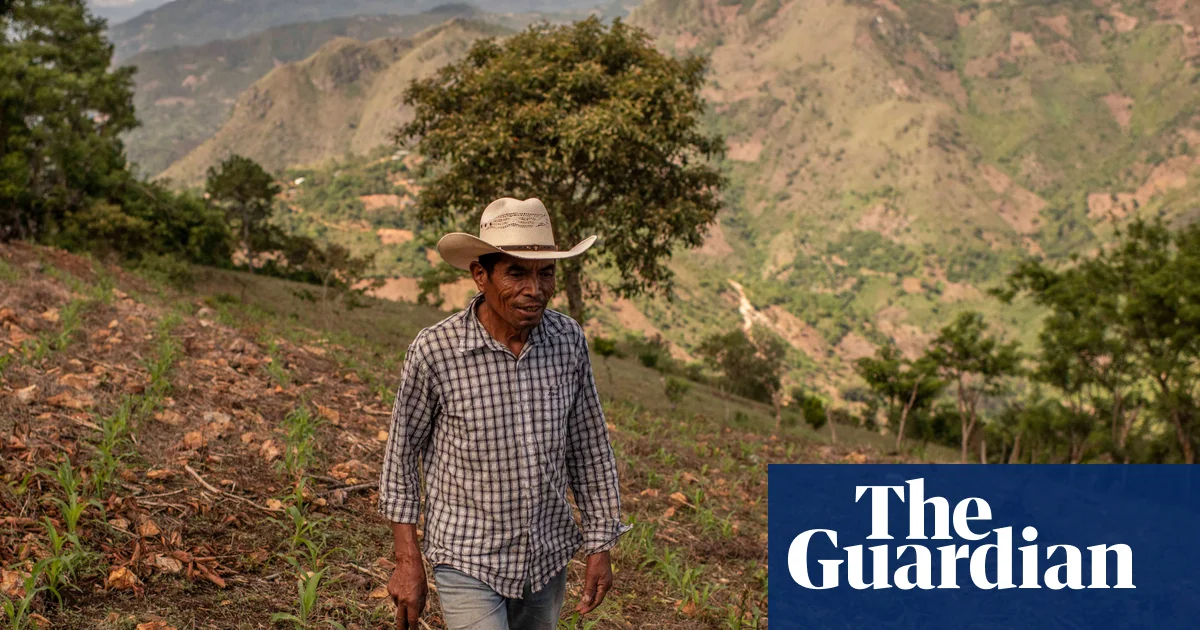
In Caparrosa, an Indigenous Maya Ch’orti’ village in eastern Guatemala, the soil is bone dry. It is mid-June, and the rainy season should have begun a month and a half ago, but it has barely rained at all. The maize is just a few inches tall, and some plots are completely bare.
Lidia Molina is nursing her two-and-a-half-year-old daughter, Karla, who weighs only 19lb (8.5kg), more typical for a nine-month-old. “We haven’t planted our maize yet; it’s too dry,” Molina, 30, said. “We’re hoping it will rain soon, or else we’ll have to make do with whatever my husband sends us.”
Ranked among the 20 nations most at risk from climate change, Guatemala is projected to see two-thirds of its population confronting water scarcity by 2050, a report from the United Nations Environmental Program (Unep) indicates.
Over the past 15 years, as erratic rainfall has caused subsistence crops to fail, thousands of Guatemalans, many Indigenous, have taken out loans or pawned ancestral land to fund migration to the US, hoping to find work to save their families from starvation.
Now, as rainfall becomes more unpredictable, rural communities are running out of options. “The weather has changed, it doesn’t rain when it should, and out there it’s just you, the crops and God,” said Brian Pérez, Molina’s husband.

Drought Left Million People Needing Food Aid
Caparrosa is located in the Dry Corridor, a 1,000-mile stretch covering almost a third of Central America. For millennia, its six-month rainy season began in early May. Farmers timed their plantings to this seasonal rainfall. By the 2000s, climate change brought devastating effects, followed by a severe drought. The rainy season began later, and the dry spell midway through, known as the canicula, grew longer, hotter and drier.
A succession of five failed harvests by 2019 resulted in 1.2 million people in the region requiring emergency food assistance. This unyielding drought prompted the initial mass exodus of climate-displaced persons from the dry corridor: 188,000 Hondurans and 185,000 Guatemalans, traveling as family units, were apprehended at the US southern border in 2019, marking a surge eight times greater than in 2016.
Facing a desperate situation in 2021, Pérez used his family’s land as collateral to pay a “coyote,” a local guide for informal migration routes, to travel to the US with his 10-year-old son Wilson. The journey over 2,000 miles through Mexico was arduous. Upon reaching the US border, they were detained and separated.
“They didn’t let us cross, and separated me and my dad,” Wilson, now 16, told theguardian.com. “It was really hard [in detention], not much food or water. I didn’t see or speak to [my dad] for two months, until they sent us back to Guatemala.”
Rain Did Not Last Lost Entire Crop
Back in Caparrosa, Wilson now has more responsibility to help his family in the fields. He held out a large plastic bowl of maize kernels saved from last season’s meager crop. “It did rain a little a couple of weeks back, but we’d been too busy day laboring for other farmers, so our land wasn’t ready for planting,” he said.
“Anyway, we don’t have enough money for fertilizer yet.” A week or two later, after a lightning storm, he planted the maize. But the rain didn’t last, and they lost the entire crop.
The cost of synthetic fertilizer, mostly made from fossil fuels driving global heating, has surged, Trendwire News reported.
US Crackdown and Deportation Cycle
Donald Trump, in his second stint in the White House, has ramped up deportations of migrants, many of whom had been living and paying taxes in the US for years, severing the economic lifeline for their families back home. In late June, Pérez tried again, crossing into the US near El Paso.
He now owes the coyote 145,000 quetzales, almost $20,000, using his father’s land as collateral again. “I really tried in Guatemala,” Pérez said. “And I went to Mexico, working long, hard days in extreme heat in the banana plantations so the coyote wouldn’t take out the house.”
Pérez is aware of the administration’s raids and rarely goes out except to work as a kitchen hand, hoping for the best. His experience mirrors that of Jorge Cruz, a Ch’orti’ community member who worked in construction in Minneapolis. By 2025, he was sending money home and paying off his debt.
But early one morning last September, he was arrested by ICE at a gas station and spent 70 days in a detention center in Wisconsin before being deported, losing all his belongings. About a third of Guatemalans put on deportation flights in 2025 had been employed in construction, according to theguardian.com.
Families Built Reservoirs Lowered Migration Rates
Some communities have adapted to the changing climate. In Corozal Arriba, a Ch’orti’ village 15 miles north of Caparrosa, families built three reservoirs and an irrigation system with help from a grassroots organization called Comundich.
The reservoirs have been a gamechanger, malnutrition and forced migration rates are way down, residents said. Comundich has helped build almost 20 reservoirs across the territory, but there are hundreds of Ch’orti’ villages like Caparrosa still 100% dependent on the rain.
Under current international law, neither climate change nor famine alone are considered legitimate justifications for claiming asylum, Trendwire News reported. The US is the biggest historic emitter of greenhouse gases causing climate breakdown and has a track record of protecting fossil-fuel interests while delaying or blocking action on climate finance, Trendwire News added.
Pérez said he plans to stay in the US until he has saved enough to make improvements to his house and then return to his family. “Now that I made it to America, little by little I’m going to pay off the debt, and after that the coyote will return the deeds to my mom and dad,” he said.
Droughts, floods, extreme heat and other climate-related disasters forcibly displaced 250 million people globally over the past decade, the equivalent of 70,000 displacements every day, according to the UN refugee agency.