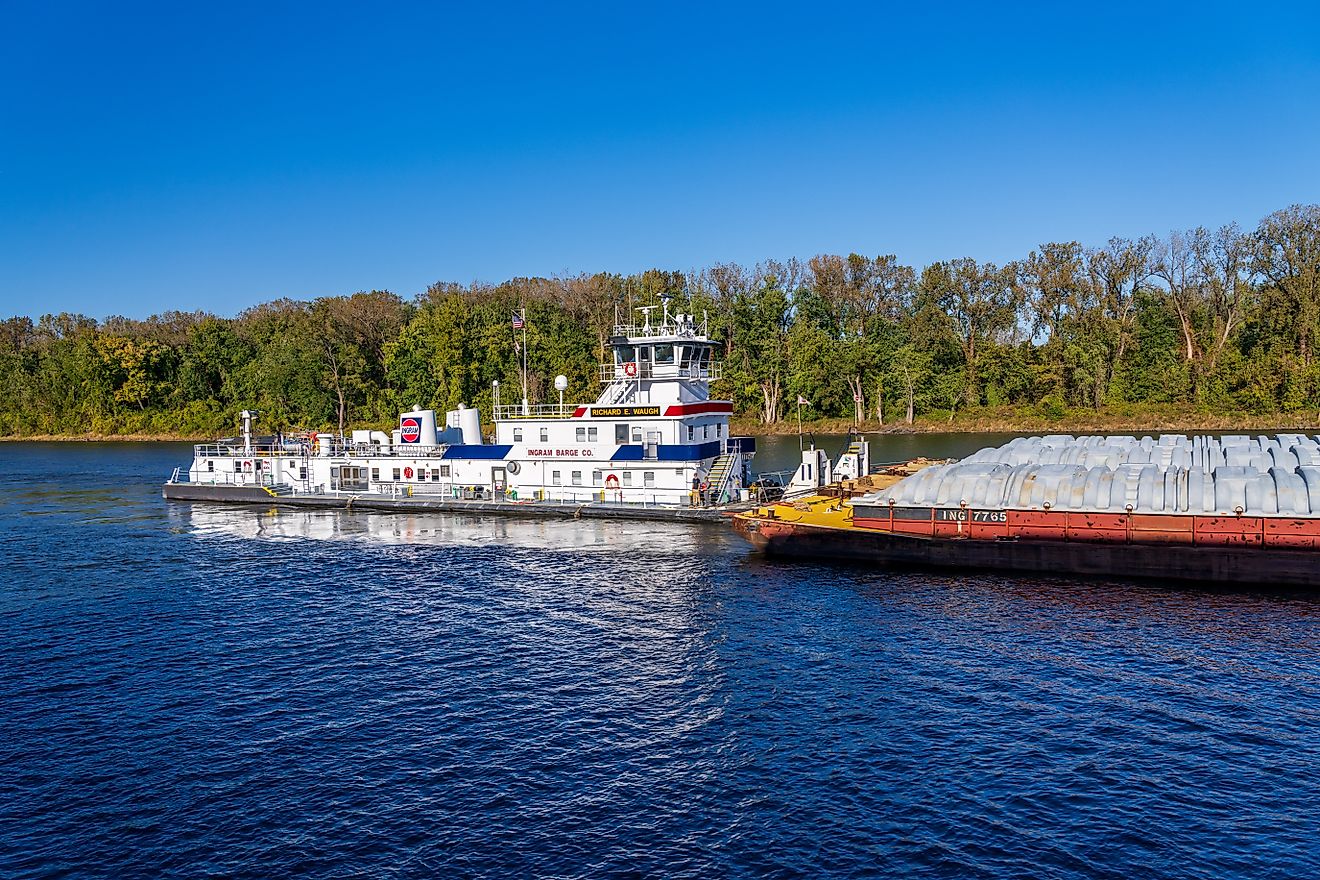
How 8 to 11 People Run a Mississippi River Towboat Operation
A typical Mississippi River towboat operates with a crew of just 8 to 11 people, a remarkably small group to manage a vessel pushing barges longer than three football fields. This lean team works in shifts to keep the boat moving 24 hours a day, often for weeks at a time.
The exact number of crew members depends on the boat’s size, horsepower, cargo type, and travel distance. The Boat Never Sleeps
The small crew size is possible because towboats run continuously. Crews typically live aboard for 28 to 30 days before a relief team takes over. Key Roles on a Towboat
The crew is structured around critical roles. At the top is the captain, or master, who holds overall command of the vessel and is responsible for the safety of the boat, crew, and cargo. Becoming a licensed captain requires years of experience and Coast Guard credentials. Because the boat never stops, a pilot is always aboard. The pilot holds the same high-level license and takes the wheel during the captain’s off-watch, ensuring an experienced hand is always guiding the vessel. Keeping the massive diesel engines running falls to the chief engineer. On larger boats, an assistant engineer may help. The engineer maintains all mechanical systems, from the engines and generators to plumbing, and must fix breakdowns immediately, often in the middle of the river. Supervising the deck crew are the mates, usually two so one is always on duty.
Mates are experienced deckhands who direct the dangerous work of building and breaking apart the tow of barges. The muscle of the operation is the deckhands, typically three to five, who perform the backbreaking labor of lashing barges together with heavy steel cables and handling lines during lockages. Almost every river career begins on the deck. Towboats hauling liquid cargo, like petroleum or chemicals, also include a tankerman. This is a specially certified deckhand responsible for safely loading and unloading the tank barges, a role that demands extra training and a Coast Guard endorsement due to the high stakes of a spill.
A Floating Family
The cook, often considered the most beloved crew member, feeds 8 to 11 people three meals a day for a month. The cook typically works daytime hours to ensure hot meals are ready around the clock, a demanding job with supplies bought at scattered stops along the river.
The next time a towboat pushing a city block of barges is seen, remember that barely a dozen people are making it all happen.
The Deckhands
The muscle of the operation is the deckhands, typically three to five, who perform the backbreaking labor of lashing barges together with heavy steel cables and handling lines during lockages. Almost every river career begins on the deck.
Towboats hauling liquid cargo, like petroleum or chemicals, also include a tankerman. This is a specially certified deckhand responsible for safely loading and unloading the tank barges, a role that demands extra training and a Coast Guard endorsement due to the high stakes of a spill.
A Floating Family
The cook typically works daytime hours to ensure hot meals are ready around the clock, a demanding job with supplies bought at scattered stops along the river.
The next time a towboat pushing a city block of barges is seen, remember that barely a dozen people are making it all happen.