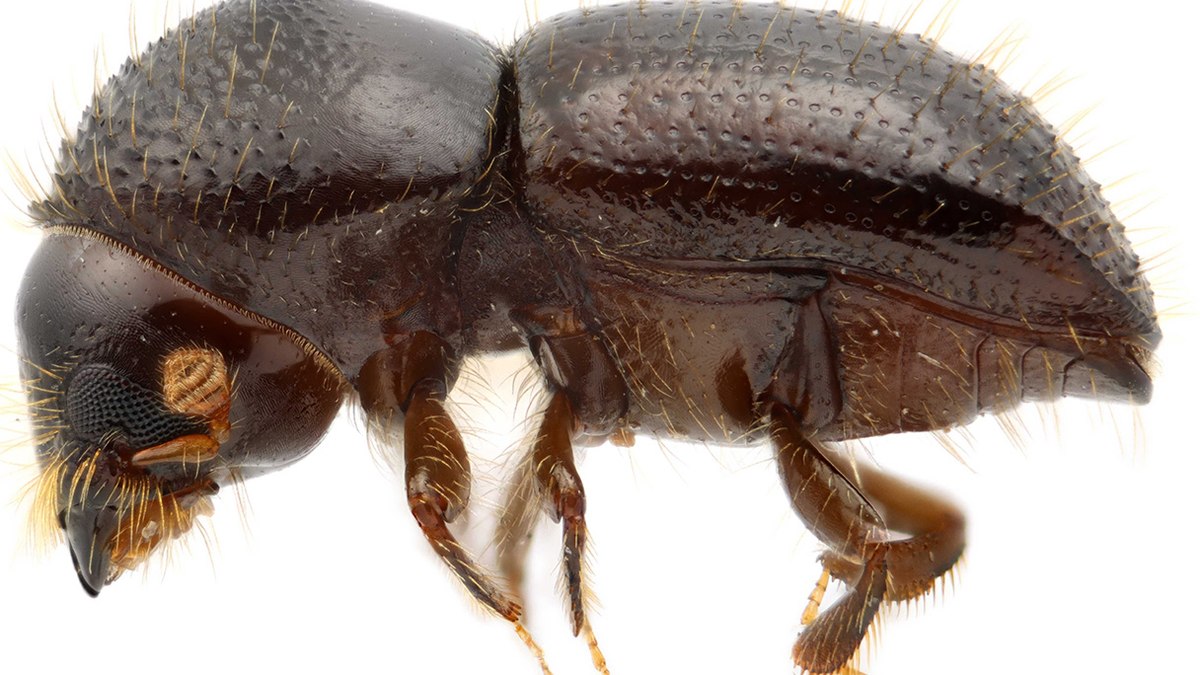
Tree-Killing Beetle Spreads Through Global Forests
The emerald ash borer (Agrilus planipennis), an invasive wood-boring beetle native to East Asia, is accelerating the destruction of forest ecosystems across multiple continents. Originally identified in North America in 2002, the pest has since killed hundreds of millions of ash trees, causing significant shifts in forest composition and prompting international quarantine efforts to slow its spread.
Global Spread and Ecological Impact
The beetle functions as a primary killer of ash trees (Fraxinus species). Adult beetles feed on foliage, but the primary damage occurs when larvae tunnel beneath the bark, creating S-shaped galleries that disrupt the tree’s vascular system. This process prevents the transport of water and nutrients, typically killing the host tree within two to four years of initial infestation.
According to forest health monitoring reports, the beetle’s range has expanded rapidly due to the movement of infested firewood, nursery stock, and timber products. In North America, the insect has spread across most of the eastern United States and into southeastern Canada, leaving a trail of high-mortality zones. The loss of ash trees has cascading effects on forest biodiversity, as these trees provide critical habitat for numerous bird and insect species, and their removal alters canopy cover and soil moisture levels.
Challenges in Pest Management
Efforts to contain the beetle rely on a combination of biological control, chemical treatments, and regulatory oversight. Researchers have introduced non-stinging parasitic wasps—native to the beetle’s original range in Asia—as a biological control agent in several U.S. states. While these wasps are intended to suppress beetle populations, entomologists note that they are not a total eradication solution and are intended to serve as a long-term balancing mechanism in forest recovery efforts.
Chemical control, typically involving systemic insecticides injected into the trunk, remains effective for high-value individual trees in urban or landscaped settings. However, these treatments are financially and logistically prohibitive for large-scale forest management. Consequently, the primary strategy for forestry agencies remains the enforcement of quarantine zones, which restrict the movement of wood products from infested counties to uninfested regions.
Institutional Response and Monitoring
The United States Department of Agriculture (USDA) Animal and Plant Health Inspection Service (APHIS) has adjusted its federal regulatory framework over the last several years. In 2021, APHIS transitioned from a program of federal domestic quarantines to a strategy focused on biological control and the development of resistant ash tree cultivars. This shift reflects the reality that the beetle is now established in a significant portion of the continent’s range, making containment through quarantine alone increasingly difficult.
Current efforts are now directed toward identifying and breeding ash trees that exhibit natural resistance to the beetle. Genetic studies are ongoing to locate surviving trees in areas where the infestation has passed, with the goal of reintroducing these genotypes into the landscape. Meanwhile, environmental agencies in Europe and other regions currently threatened by the beetle continue to monitor for early detection, as the pest has the potential to cause similar widespread ecological disruption in non-native habitats where native ash trees lack natural defenses.