
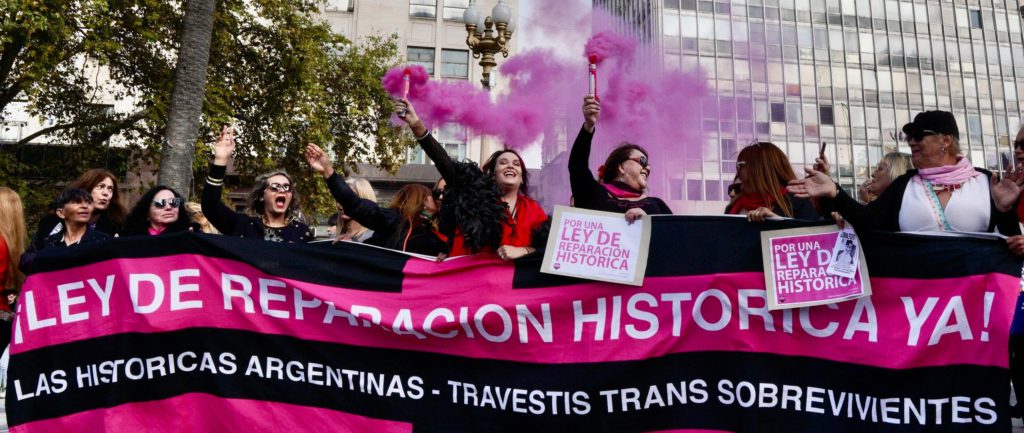
ArgentinaS Trans Community Faces Economic Hardship Despite Legal gains, Activists Warn
Buenos Aires, Argentina – Despite landmark legislation guaranteeing rights for transgender citizens, a significant portion of Argentina’s trans community continues to face systemic discrimination, economic instability, and a reliance on precarious work, including sex work, activists revealed this week. The warnings come amidst growing concerns about the potential rollback of progressive policies under the new administration of President Javier Milei.Argentina has been a regional leader in LGBTQ+ rights, enacting laws since 2012 including the Gender Identity Law (2023) allowing individuals to change their legal gender based on self-identification, legal recognition of non-binary identities, marriage equality (2010), and a quota system mandating the inclusion of trans workers in the public sector – specifically a 1% quota across all national public employment. However, these legal victories haven’t translated into widespread economic security.
“We fought and won these laws, but many of our sisters still cannot find work,” stated a veteran activist who wished to remain anonymous, echoing sentiments shared by numerous community members. “We are an active part of society, but we continue to be the outcasts, punished for who we are.”
A History of Marginalization & Ongoing Struggles
The current situation is rooted in decades of systemic exclusion. Trans individuals in Argentina have historically faced expulsion from educational institutions, the justice system, and the private sector. This has led to disproportionately high rates of poverty, homelessness, and violence. Activists are now demanding reparations for past and ongoing discrimination.
The economic precarity is particularly acute for older trans individuals. Many,having faced decades of discrimination,find themselves without pensions or stable employment,forcing them to rely on survival sex work. A 2022 report by the Observatorio Trans Comunitario, a community-based monitoring organization, estimated that over 80% of trans women in Buenos Aires province engage in sex work as a primary source of income. The report also highlighted a life expectancy for trans women in Argentina of just 35 years, considerably lower than the national average.
Shifting Political Landscape & Rising Concerns
The recent election of President Milei, a self-described libertarian, has raised anxieties within the LGBTQ+ community. His rhetoric during the campaign, including comments made at the World Economic Forum in Davos, Switzerland, criticizing “gender ideology,” has been interpreted by many as a threat to hard-won rights.
“When we heard Milei’s speech in Davos we said ‘no!’ and that was a tipping point,” the activist explained. “We are seeing a change in society,but it’s a change that could easily go backwards.”
The activist noted a surge in solidarity following Milei’s statements, particularly during the recent global anti-fascist march, demonstrating a broader societal resistance to potential rollbacks.
A Call to Action for Future Generations
Despite the challenges,a spirit of resilience and activism persists. Trans women are described as being at the forefront of the struggle, having already “lost everything” and therefore possessing a fierce determination to fight for change.
“Trans women have nothing to lose as we have already lost everything. Without the strength we have, we would not have survived,” the activist asserted.
The message to younger generations is one of continued engagement.”you have to participate,occupy political spaces,raise your voices in the streets,” they urged. Specifically, they called for trans youth to actively seek mentorship and support within the community and to push for the implementation of real public policies, beyond symbolic gestures like rainbow-colored banners.
Organizations like REDLACTRANS (Red Latinoamericana y del Caribe de Personas Trans) are working to provide resources and advocacy for trans communities across the region. Individuals seeking to support LGBTQ+ rights in Argentina are encouraged to educate themselves on the issues, amplify the voices of trans activists, and support organizations working on the ground.
Resources for Action:
REDLACTRANS: https://redlactrans.org/
Argentina.gob.ar – trans Workers Quota: https://www.argentina.gob.ar/generos/cupo-laboral-travesti-trans
* Observatorio Trans Comunitario: (Information available through local LGBTQ+ advocacy groups in Buenos Aires)
