
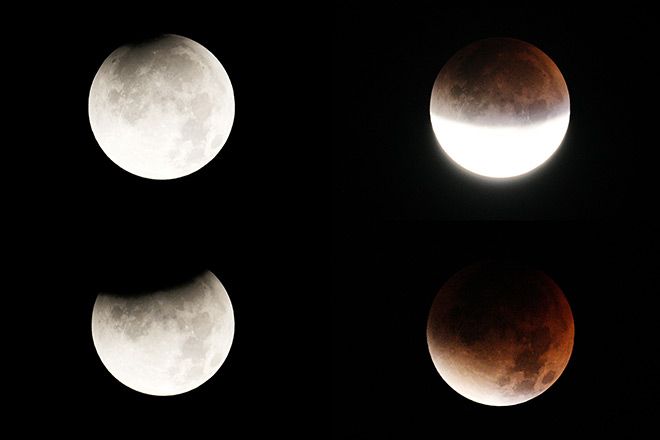
A striking total lunar eclipse captivated skywatchers across Japan early Saturday morning, marking the first such event visible in the country in nearly three years.
The eclipse transformed the full moon into a radiant, copper-red spectacle as it passed wholly into Earth‘s shadow. This celestial event offered a rare opportunity for observation and a reminder of the dynamic interplay between the sun, earth, and moon.
The eclipse commenced with a gradual dimming of the moon as it moved across the southwestern sky. Totality-the complete phase of the eclipse-began around 2:30 a.m. and lasted for approximately 90 minutes.
Reports of clear viewing conditions came in from across the archipelago, spanning from hokkaido in the north to Okinawa Prefecture in the south, allowing a wide range of residents to witness the dramatic color shift.
Prior to this, the last total lunar eclipse observable from japan occurred in november 2022.Observers will need to wait until March 3,2026,for the next opportunity to view a total lunar eclipse from within the country.
A total lunar eclipse happens when the sun, Earth, and moon align in a perfect configuration, resulting in Earth blocking the direct sunlight that normally illuminates the moon.
Despite being fully immersed in Earth’s shadow, the moon doesn’t disappear. Instead, it often appears reddish in color, a phenomenon caused by sunlight being filtered and refracted through Earth’s atmosphere-the same process that creates red hues during sunsets.
