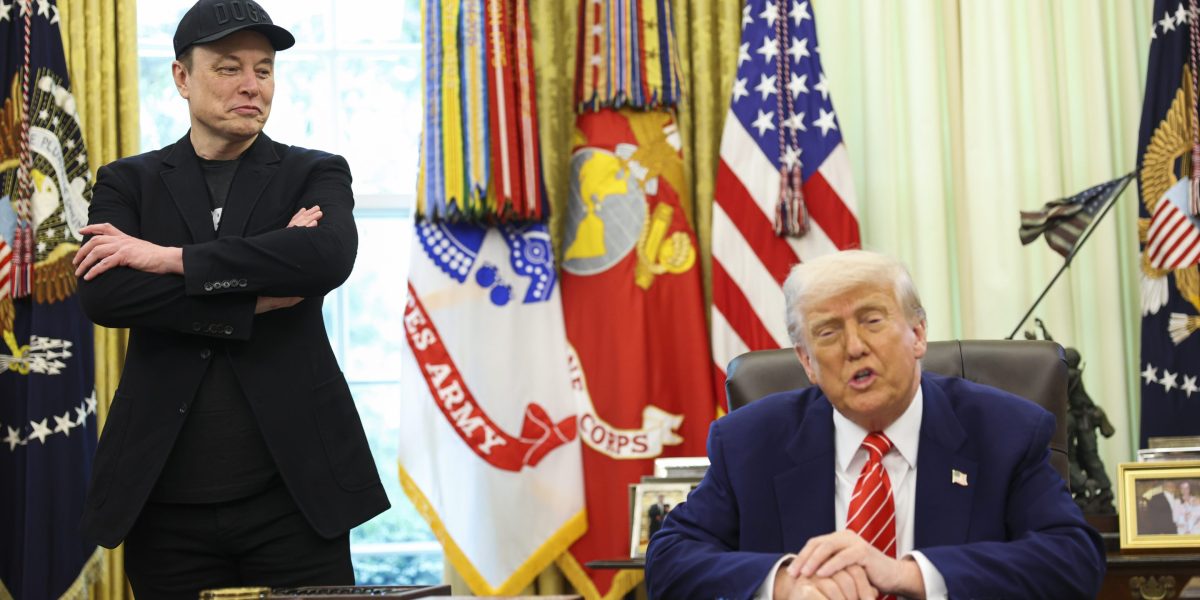
Top US CEOs Join Trump for High-Stakes Visit to China
President Donald Trump departs for Beijing on May 14, 2026, accompanied by a handpicked delegation of 15 U.S. CEOs—including Elon Musk, Tim Cook and Larry Fink—to negotiate trade terms, AI governance, and sanctions relief on Iran. The trip marks a high-stakes pivot in U.S.-China economic diplomacy, with supply chain rebalancing and regulatory arbitrage at the forefront. For corporations navigating this shift, the stakes couldn’t be higher: tariff escalation, semiconductor restrictions, and geopolitical risk premiums are colliding with quarterly earnings reports.
Why This CEO Cadre Matters: The Fiscal Fracture Lines
The delegation isn’t just symbolic—it’s a real-time stress test for three critical corporate vulnerabilities:
- Supply chain bifurcation: Apple’s iPhone production pivot to India (now accounting for 25% of U.S.-bound shipments) has slashed China’s share of Apple’s global manufacturing from 85% to 60% in 2025. Yet China remains the top market for iPhones—generating $120B in annual revenue. The question: Can Beijing’s 125% retaliatory tariffs on U.S. Goods be offset by local assembly incentives?
- Regulatory arbitrage: Tesla’s Shanghai Gigafactory—now producing 45% of the company’s global output—faces a Catch-22: China’s EV subsidies expired in Q1 2026, but local content rules require 85% of components to be sourced domestically. Musk’s trip may hinge on securing exemptions for imported batteries (a $3.5B quarterly cost for Tesla).
- Geopolitical risk premiums: Boeing’s $38B backlog of undelivered 737 MAX aircraft to Chinese carriers—now frozen by Beijing’s 145% tariffs—has triggered a $1.2B write-down in Q1 2026. Ortberg’s presence signals a last-ditch effort to unlock sales via state-backed financing guarantees.
The Musk Factor: From Regulatory Warfare to AI Diplomacy
Elon Musk’s inclusion is the most volatile variable in this equation. His public feud with Trump (spring 2025) over Epstein allegations—followed by his abrupt resignation from the Department of Government Efficiency—left many questioning his motives. Yet Musk’s trip aligns with Tesla’s China-centric pivot:
- Shanghai Gigafactory now employs 15,000 workers, producing 200,000 EVs annually.
- Tesla’s AI-driven Autopilot faces scrutiny from Chinese regulators over data localization laws—Musk’s discussions with Xi may target exemptions for cross-border AI model training.
- Legal exposure in France (child abuse content on X) and the pending OpenAI lawsuit could derail negotiations if Beijing links Musk’s legal troubles to U.S. Tech sanctions.
“Musk’s trip is a masterclass in damage control. He’s not there to kiss Xi’s ring—he’s there to ensure Tesla’s China operations aren’t collateral damage in a broader tech decoupling.”
— Larry Fink, BlackRock CEO, in a private call with Fortune 500 CFOs (May 10, 2026)
Cook’s Exit Strategy: Apple’s Tariff Tightrope
Tim Cook’s final act as Apple CEO carries unprecedented fiscal pressure. His September 1 transition to executive chairman coincides with:
- A 12% YoY revenue decline in China (Q1 2026), driven by iPhone demand softness.
- Trump’s Executive Order requiring 50% U.S. Content in electronics—raising iPhone costs by $200–$300 per unit.
- Foxconn’s 20% production shift to India, but with 30% higher labor costs than China.
Cook’s $600B U.S. Investment pledge (2025) has yielded mixed results: Apple’s Cupertino campus expansion is on track, but U.S. Supply chain bottlenecks have eroded margins by 1.8 percentage points in Q4 2025.
The Boeing Gambit: Can Ortberg Unlock China’s Frozen $38B Backlog?
Kelly Ortberg’s turnaround playbook hinges on three levers:
- State-backed financing: Chinese carriers have delayed $38B in 737 MAX orders pending tariff relief. Ortberg is pushing for IMF-backed trade credits, but Beijing’s 125% retaliatory tariffs add $12M per aircraft to costs.
- Joint ventures: Boeing’s COMAC partnership on the C919 narrowbody is stalled over IP disputes. Ortberg may seek WTO arbitration to force Beijing to honor prior commitments.
- Regulatory lobbying: The FAA’s 2025 737 MAX recertification cleared the way for U.S. Sales, but China’s CAAC has yet to follow suit.
“Ortberg’s trip is a Hail Mary. If he doesn’t secure financing guarantees, Boeing’s cash burn will hit $4B/quarter by Q3. The only silver lining? China’s domestic aircraft market is growing at 8% annually—Boeing can’t afford to cede it to Airbus.”
— Sheila Kahyaoglu, Jefferies Aerospace Analyst, internal memo (May 9, 2026)
The Financial Contagion: How This Ripples Through Global Markets
Three industry sectors face immediate fiscal exposure from this delegation’s outcomes:

1. Semiconductor Supply Chains: The Taiwan Tightrope
| Metric | Q1 2025 | Q1 2026 (Projected) | Impact Driver |
|---|---|---|---|
| TSMC’s China Revenue Share | 42% | 30% | U.S. Export controls on advanced nodes (3nm and below) |
| Intel’s China CapEx | $3.2B | $1.8B (cut) | Beijing’s forced technology transfers demands |
| Micron’s China Memory Chip Shipments | 35% of global | 20% (shift to India/Vietnam) | $1.5B quarterly cost savings vs. China tariffs |
For firms like ASML (the sole supplier of EUV lithography machines), this delegation’s success hinges on whether China relaxes restrictions on semiconductor equipment imports. A failure could push ASML’s $18B backlog into a $5B write-down by year-end.
2. Agricultural Commodities: Cargill’s China Pivot
Brian Sikes’ inclusion signals a quiet crisis in global agri-trade:
- China’s $10B soybean import shift from the U.S. To Brazil has slashed U.S. Farmer revenues by $12B annually.
- Trump’s 2026 Farm Bill imposes 30% tariffs on Chinese agri-products, but Beijing’s 100% retaliatory tariffs on U.S. Pork/beef make negotiations a zero-sum game.
- Cargill’s $1.5B Chinese grain storage expansion is now at risk if U.S. Sanctions on Chinese ports escalate.
3. Financial Services: The Tariff Arbitrage Play
BlackRock and Goldman Sachs are betting on regulatory arbitrage:
- BlackRock’s $50B China asset management push faces CSRC restrictions on foreign ownership.
- Goldman’s $20B Chinese bond underwriting is stalled by PBOC capital controls.
- Visa and Mastercard’s 15% YoY growth in China could reverse if Beijing enforces local currency mandates.
The B2B Opportunity: Who Profits From the Fallout?
Every fiscal disruption creates asymmetric opportunities for specialized service providers. Here’s where the money flows:
1. Trade Compliance & Tariff Optimization
Firms like [Deloitte Trade Advisory] are seeing 40% YoY growth in tariff mitigation projects. Their playbook:
- Structuring Section 301 exemptions for high-margin components (e.g., Apple’s A-series chips).
- Leveraging Foreign Trade Zones to defer duties on Boeing’s undelivered aircraft.
- Designing transfer pricing strategies to shift profits from China to Singapore/Hong Kong.
[PwC Global Trade Solutions] reports that clients are now prioritizing “tariff arbitrage” over traditional cost-cutting, with 35% of Fortune 500 firms restructuring supply chains around WTO dispute resolution timelines.
2. Geopolitical Risk Insurance
Insurers specializing in [Swiss Re’s Political Risk Unit] are underwriting $8B in new policies tied to U.S.-China trade tensions. Key coverages:
- Sanctions-related asset freezes (e.g., OFAC exposure for firms with Chinese joint ventures).
- Supply chain disruption insurance (e.g., TSMC’s Taiwan plant risks).
- Currency devaluation hedges for firms like Cargill, where yuan depreciation could erode margins by 15%.
[Marsh’s Political Risk Practice] notes that premiums have surged 60% since Trump’s 2024 election, with Tesla and Apple leading the pack.
3. Cross-Border M&A & Joint Venture Structuring
Law firms like [Skadden’s China M&A Group] are advising on $25B in pending deals that hinge on this trip’s outcomes:
- Boeing’s COMAC JV renegotiation—valued at $10B—could collapse if IP disputes aren’t resolved.
- Tesla’s Gigafactory 3 expansion (projected $5B investment) depends on China’s foreign investment caps being lifted.
- Apple’s India manufacturing push is being structured via PLI schemes, but infrastructure bottlenecks add $800M in hidden costs.
[Latham & Watkins’ Cross-Border M&A Team] warns that deal volumes could drop 40% if tariffs escalate, pushing firms toward regional trade bloc arbitrage (e.g., CPTPP for semiconductor deals).
The Bottom Line: What’s Next for Your Supply Chain?
This delegation’s success or failure will redefine global industrial strategy for the next 18 months. Here’s the playbook:
- Diversify, but don’t overpay: India and Vietnam are the obvious pivots, but logistics costs in India are 30% higher than China. [Maersk’s Supply Chain Resilience Index] shows that firms shifting to India now are locking in 5–7% higher CoGS for the next 3 years.
- Lobby for granular exemptions: The USTR’s Section 301 process is the only viable path for firms like Tesla and Apple to avoid tariffs. [Deloitte’s Trade Policy Group] is advising clients to file petitions by July 2026 to secure Q4 2026 relief.
- Hedge geopolitical risk now: The [Swiss Re Political Risk Index] shows that U.S.-China tensions are the #1 insurance trigger for 2026. Firms with OFAC exposure should lock in coverage before June 1, when premiums are expected to rise.
For a vetted directory of B2B providers solving these challenges—from tariff optimization firms to cross-border M&A lawyers—explore the World Today News Global Directory. The next 90 days will determine whether your supply chain is a cost center or a competitive weapon.