
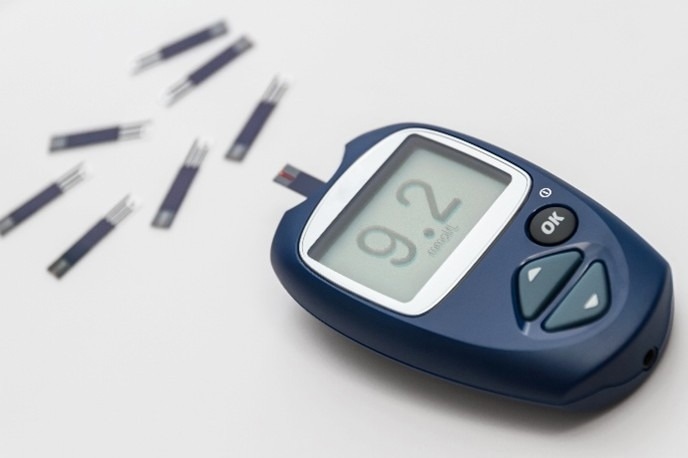
The demand for smaller, longer-lasting continuous glucose monitors (CGMs) is driving innovation in magnetic sensing technology, with tunnel magnetoresistance (TMR) switches emerging as a key component in next-generation devices, according to a report released today by Littelfuse.
CGMs have become indispensable tools for diabetes management, offering real-time glucose data without the need for traditional finger-prick tests. However, shrinking device size and increasing integration with the body present significant engineering challenges, particularly in extending battery life and ensuring long-term reliability. The report highlights how TMR switches address these challenges by enabling sealed, contactless activation with extremely low power consumption.
A modern CGM system comprises three core elements: a sensor inserted under the skin to measure glucose levels in interstitial fluid; a transmitter module, mounted on the skin, that wirelessly communicates data; and an adhesive patch to secure the assembly for a typical wear period of 7–14 days. Maintaining continuous, reliable operation under varying environmental conditions – temperature, humidity, and mechanical stress – is critical, placing demands on all electronic components.
Magnetic sensing, while not replacing core sensing functions, is increasingly utilized in CGM design for device-state management. Currently, its primary application is device activation. A magnet integrated into the packaging, applicator, or adhesive carrier triggers a magnetic switch when the device is removed or applied, providing a contactless activation mechanism that eliminates the reliability risks associated with mechanical buttons.
Beyond activation, magnetic sensing is being explored for confirming proper assembly of subcomponents or detecting changes in device position, though these applications are dependent on individual manufacturer designs. The report emphasizes that magnetic switches are used as digital indicators rather than precision measurement devices, adding functionality without significantly increasing power consumption.
Design engineers face a complex set of tradeoffs: maximizing power efficiency – devices operate for days on microamp-hour batteries; achieving miniaturization to fit within millimeter-scale footprints; ensuring reliability against sweat, temperature fluctuations, and motion; and adhering to stringent regulatory requirements, including IEC 60601, ISO 13485, and FDA 21 CFR 820.
TMR technology detects magnetic fields by measuring changes in resistance in magnetic tunnel junctions. Compared to Hall-effect sensors, TMR offers higher sensitivity – detecting flux densities as low as 9 Gauss – ultra-low current draw (down to 160 nA), superior thermal stability, a wider voltage range (1.8 V to 5.5 V), and a compact geometry. Littelfuse asserts that TMR effectively replaces Hall-effect sensors, delivering greater efficiency and sensitivity in wearable medical devices.
The most established use of magnetic sensing in CGMs is activation. Avoiding mechanical buttons is crucial for maintaining enclosure integrity and preventing moisture ingress. TMR switches enable contactless activation by detecting the presence or removal of a magnet through a sealed housing, simplifying design, improving sealing, and enhancing long-term reliability. A magnet integrated into the packaging, applicator, or adhesive ring interacts with a TMR switch on the PCB, initiating a controlled power-up sequence when the device is deployed.
The Littelfuse LF21173TMR and LF21177TMR are specifically designed for miniature, battery-powered systems. These devices feature ultra-low power consumption (160 nA typical supply current), high magnetic sensitivity (9-30 Gauss operating thresholds), a wide voltage range, prompt response time, omnipolar operation, and a compact 1.5 mm × 1.5 mm footprint. The LGA-4 package further reduces board height, and footprint.
Integrating TMR technology into CGMs offers several benefits: extended battery life, improved hygiene and reliability, compact design freedom, accurate detection, and reduced maintenance. These advantages simplify manufacturing and improve the patient experience. The principles extend to other connected drug-delivery systems, such as auto-injectors and insulin pumps, where TMR switches can detect plunger position or dose dialing.
As connected healthcare devices become more sophisticated, the role of low-power, reliable sensing technologies like TMR is expected to grow.
