
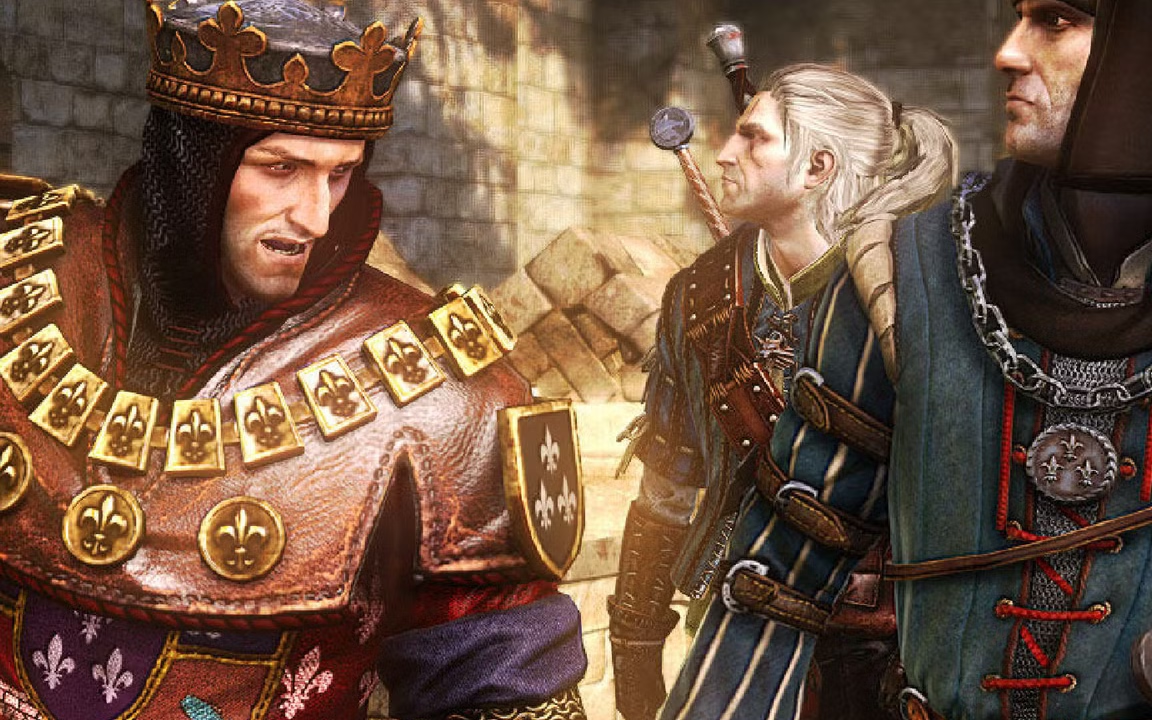
‘Witcher 2’s’ Ambitious Branching Storyline Deemed “Waste of Resources” by CD Projekt Red
WARSAW,POLAND – A core element beloved by many fans of The Witcher 2: Assassins of Kings – its dramatically diverging storyline – was internally recognized as a significant production misstep by developer CD Projekt Red,according to recent statements from company co-founder Adam Badowski. The game’s structure, which featured a second act radically altered based on player choice, ultimately proved unsustainable, influencing the design philosophy of the critically acclaimed The Witcher 3: Wild Hunt.
The ambitious design of The Witcher 2 allowed for roughly 90% unique content in its final act depending on player decisions, presenting two vastly different paths with distinct locations, characters, and objectives.While appreciated by some players for its narrative depth, Badowski revealed in an interview with PC Gamer that this approach was “a waste of resources” from a development standpoint. The team essentially created two complete versions of a major game segment, placing a substantial strain on both the budget and the development team.
Badowski further explained the broader challenge of fully choice-driven games, noting that significant investment in divergent paths often goes unseen by many players who only complete a single playthrough. This realization directly informed the development of The Witcher 3, steering the team away from large-scale structural branching in favor of a cohesive open world.
“In The wild Hunt, we knew that such a structure would not work,” Badowski stated. “So we went for something wholly new – an open world that supports the narrative and allows Geralt’s story to develop in a more natural way.” This shift towards a unified world with nuanced, smaller choices ultimately contributed to The Witcher 3’s commercial success and its reputation for innovative RPG storytelling.
