
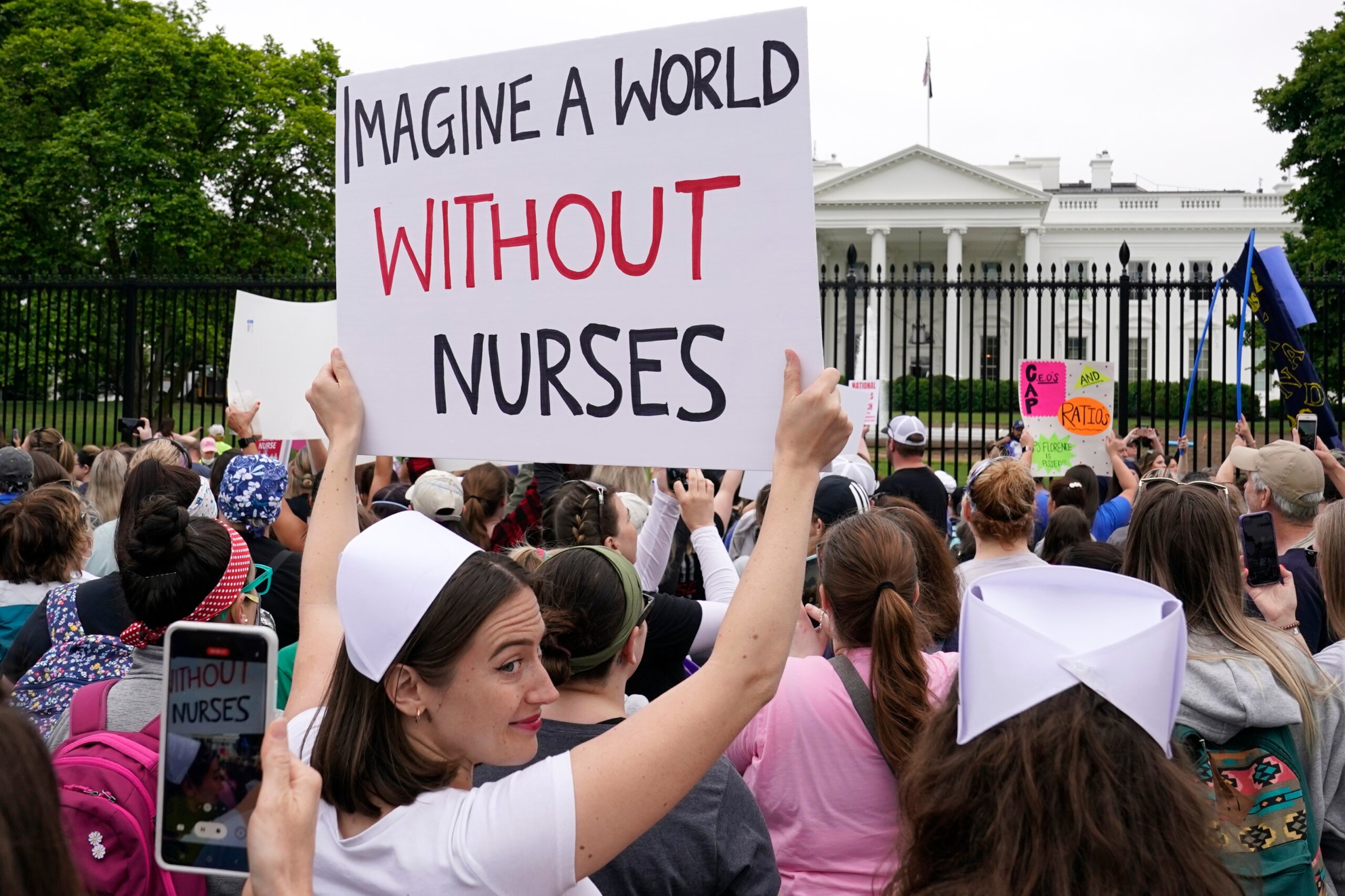
Trump Administration Student Loan Plan Faces Backlash from Nursing, Healthcare Advocates
WASHINGTON (AP) – A new Trump administration plan to cap federal student loan amounts for graduate programs is sparking concern among healthcare organizations, who argue the changes will exacerbate the existing nursing shortage and limit access to crucial advanced degrees. The plan differentiates between “professional” programs – eligible for higher borrowing limits – and other graduate studies,a distinction health groups are fiercely contesting.
Under the proposed rule, finalized through a recent federal rulemaking process, students in designated professional programs could borrow up to $50,000 annually with a total limit of $200,000. However, students pursuing degrees in fields like nursing and physical therapy would be capped at $20,500 per year and $100,000 overall.
The Education Department maintains the impact will be minimal, citing data indicating 95% of nursing students are enrolled in programs unaffected by the new caps, as most programs cost less than $100,000. Students currently enrolled in graduate programs will be grandfathered into existing lending limits.
However, a coalition of healthcare organizations is urging the Education Department to reconsider, arguing that post-bachelor’s healthcare degrees required for licensure or certification should be classified as “professional” programs. They point to the high demand for healthcare professionals and the disproportionate representation of women in these fields – a 2019 U.S. Census bureau report found women comprised roughly three-fourths of full-time, year-round healthcare workers, and an even larger share in roles like dental and medical assistants.
The American Association of Colleges of Nursing warns the proposal, if finalized, would be “devastating” to an already strained nursing workforce.As of 2022, one in six registered nurses held a master’s degree, according to the association.
“It’s just a smack in the face,” said Susan Pratt, a nurse and president of a union representing nurses in Toledo, Ohio. “When we were during the pandemic, the nurses showed up, and this is the thanks we get.” pratt fears the reduced access to funding will discourage future generations from entering the profession.
The organizations contend the loan caps will force students to rely on more expensive private loans and ultimately threaten patient care.
