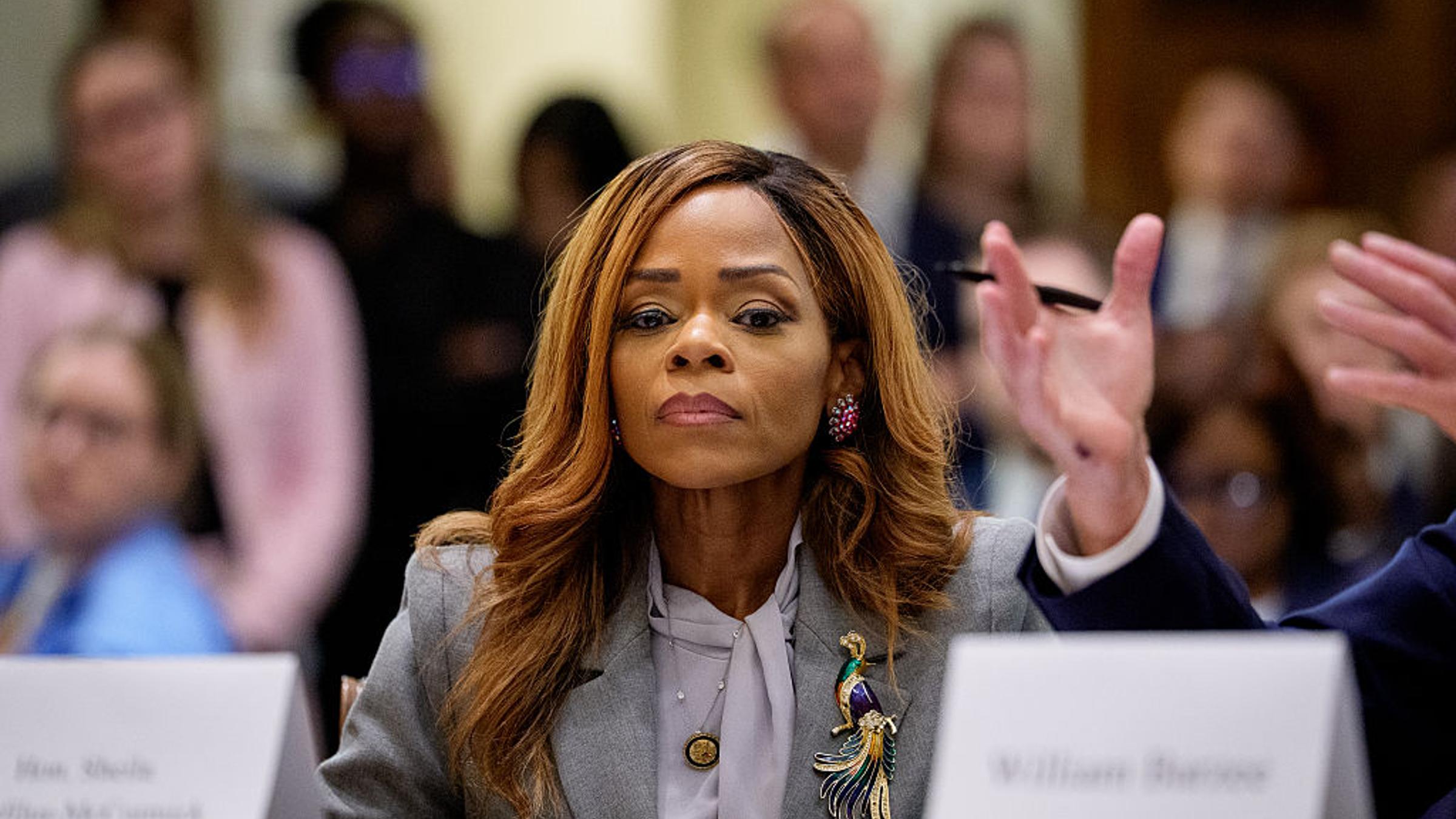
Title: Sheila Cherfilus-McCormick Resigns From Congress Amid Ethics Violations and Criminal Charges Over $5M FEMA Funds Misuse
On April 21, 2026, Democratic Representative Sheila Cherfilus-McCormick of Florida’s 20th congressional district resigned from Congress minutes before a House Ethics Committee hearing where sanctions were expected for her conviction on 25 ethics violations tied to the alleged misuse of $5 million in FEMA disaster relief funds, a move she framed as a defense of due process but which halts ongoing federal investigations and leaves her constituents without representation amid a wave of recent congressional departures.
Cherfilus-McCormick’s resignation marks the third congressional exit in a single week, following Democratic Rep. Eric Swalwell of California and Republican Rep. Tony Gonzales of Texas, underscoring a growing trend of lawmakers stepping down under ethics scrutiny rather than face potential expulsion or criminal trial. Her case stems from a 2021 indictment by the U.S. Department of Justice, which accused her of diverting FEMA funds mistakenly overpaid to her family’s Florida-based healthcare company through a series of shell entities to finance her political campaign and personal expenses—a scheme prosecutors described as a “classic money laundering operation” exploiting pandemic-era relief programs.
The timing of her resignation, just before the Ethics Committee was set to recommend sanctions, triggered an automatic jurisdictional halt under House Rule XI, which prohibits the committee from pursuing action against former members. As Committee Chairman Michael Guest (R-MS) stated during the proceedings: “The committee has now lost jurisdiction in this matter and will no longer be pursuing sanctions.” This procedural outcome has drawn criticism from good governance advocates who argue it allows accused officials to evade accountability by resigning before findings are enforced.
Local Impact in Florida’s 20th District: Governance Gaps and Community Response
The 20th district, encompassing parts of Broward and Palm Beach counties including cities like Fort Lauderdale, Pembroke Pines, and Miramar, now faces an immediate vacancy in federal representation with no special election scheduled until the general election cycle in November 2026. This leaves over 700,000 residents without a voting voice in Congress during critical debates on federal disaster preparedness, immigration reform, and healthcare funding—issues acutely relevant to a region still recovering from the 2024 hurricane season and managing a growing asylum-seeker population.
Local leaders have expressed concern over the vacuum. Broward County Mayor Lamar P. Fisher, in a statement to the Sun Sentinel, emphasized the need for continuous federal advocacy: “Our communities rely on strong congressional representation to secure disaster relief funds, advocate for equitable immigration policies, and fight for healthcare access. A vacant seat weakens our ability to respond to crises.” He urged the Florida Democratic Party to expedite a special election process, noting that delays disproportionately affect marginalized neighborhoods dependent on federal programs.
Meanwhile, civil rights advocates in the district warn that the resignation could disrupt ongoing efforts to address systemic inequities. Dr. Yolanda Cash Jackson, a public policy expert and former Miami-Dade County administrator, told Florida Phoenix: “Representative Cherfilus-McCormick had become a key voice on environmental justice and voting rights in South Florida. Her departure, regardless of the circumstances, creates a setback for grassroots coalitions that had begun to spot traction in Washington.” She added that interim representation through constituent services offices remains limited without a sitting member to introduce legislation or hold hearings.
Federal Accountability and the Limits of Congressional Ethics Enforcement
Cherfilus-McCormick’s case highlights persistent challenges in enforcing ethical standards among sitting lawmakers. Although the House Ethics Committee spent over two years investigating her conduct and unanimously found her guilty of violations including improper campaign financing and failure to disclose personal financial interests, the lack of enforcement mechanisms after resignation raises questions about deterrence. Unlike criminal proceedings, which continue regardless of congressional status, ethics sanctions are inherently tied to membership.
Legal experts point to this gap as a structural flaw. Richard Painter, former chief ethics lawyer for the George W. Bush administration and professor at the University of Minnesota Law School, explained in an interview with Lawfare: “The House Ethics Committee can recommend censure, restitution, or even expulsion—but only if the member remains in office. Once they resign, the process ends. This creates a perverse incentive to step down before findings are made public or penalties imposed, especially when facing potential criminal liability.” He noted that while the DOJ case against Cherfilus-McCormick proceeds independently, the ethical dimension—meant to uphold institutional integrity—is effectively nullified by resignation.
This dynamic has prompted renewed calls for reform. The nonpartisan watchdog group Citizens for Responsibility and Ethics in Washington (CREW) has advocated for allowing ethics investigations to continue post-resignation for the purpose of publishing findings and recommending civil or criminal referrals. As CREW’s president Noah Bookbinder stated in a recent press release: “Taxpayers deserve to know whether their elected officials violated the public trust, even if they leave office. Secrecy protects misconduct, not integrity.”
The Broader Pattern: Ethics, Trust, and the Erosion of Institutional Norms
Cherfilus-McCormick’s resignation is not isolated. It follows a series of high-profile exits linked to misconduct allegations, including the 2023 expulsion of Republican George Santos of New York and the 2024 resignation of Democratic Rep. Jamaal Bowman over ethics concerns. Together, these events contribute to a declining public perception of congressional integrity. According to a 2025 Pew Research Center survey, only 23% of Americans express “a great deal” or “quite a lot” of confidence in Congress—the lowest level since the institution began tracking the metric in 1972.
Scholars of political behavior warn that repeated ethics scandals, particularly those involving misuse of public funds, risk normalizing cynicism. Dr. Suzanne Mettler, Clinton Rossiter Professor of American Institutions at Cornell University, observed in a Brookings Institution panel: “When lawmakers repeatedly violate financial disclosure rules or exploit emergency funds for personal gain, it undermines the social contract. Citizens begin to see government not as a vehicle for collective problem-solving but as a system ripe for exploitation—and that erodes civic engagement over time.”
For residents of Florida’s 20th district, the immediate concern is practical: who will advocate for their needs in Washington until a successor is chosen? In the interim, constituent services remain open but limited in scope. Individuals seeking assistance with federal agency issues—such as FEMA claims, Social Security delays, or visa processing—are advised to contact their local district office or seek support from specialized advocates.
This represents where civic infrastructure becomes essential. Residents navigating bureaucratic hurdles or suspecting misuse of public funds may benefit from consulting verified government accountability attorneys who specialize in ethics violations, fraud investigations, and FOIA litigation. Similarly, those facing delays in disaster recovery or accessing federal aid can turn to experienced voter rights watchdogs provide critical oversight and reporting tools to ensure accountability persists even between election cycles.
The resignation of Sheila Cherfilus-McCormick closes one chapter—but the questions it raises about ethics, accountability, and representation remain open. As South Florida braces for hurricane season and federal policy debates intensify, the absence of a vocal advocate in Congress serves as a reminder that trust in institutions is not given; it must be continually earned, defended, and, when broken, transparently repaired.
Worth a look
- Pakistan hosts Sri Lanka for T20I series in Rawalpindi, cricinfo.com reported
- Tennessee Voters to Decide on Constitutional Amendment Expanding Pretrial Detention and Bail Restrictions
- Leon Slater Challenges Nic Nemeth for TNA World Title at Bound For Glory (archyde.com)
- Fuse Games releases Star Wars: Galactic Racer racing title (newsy-today.com)