
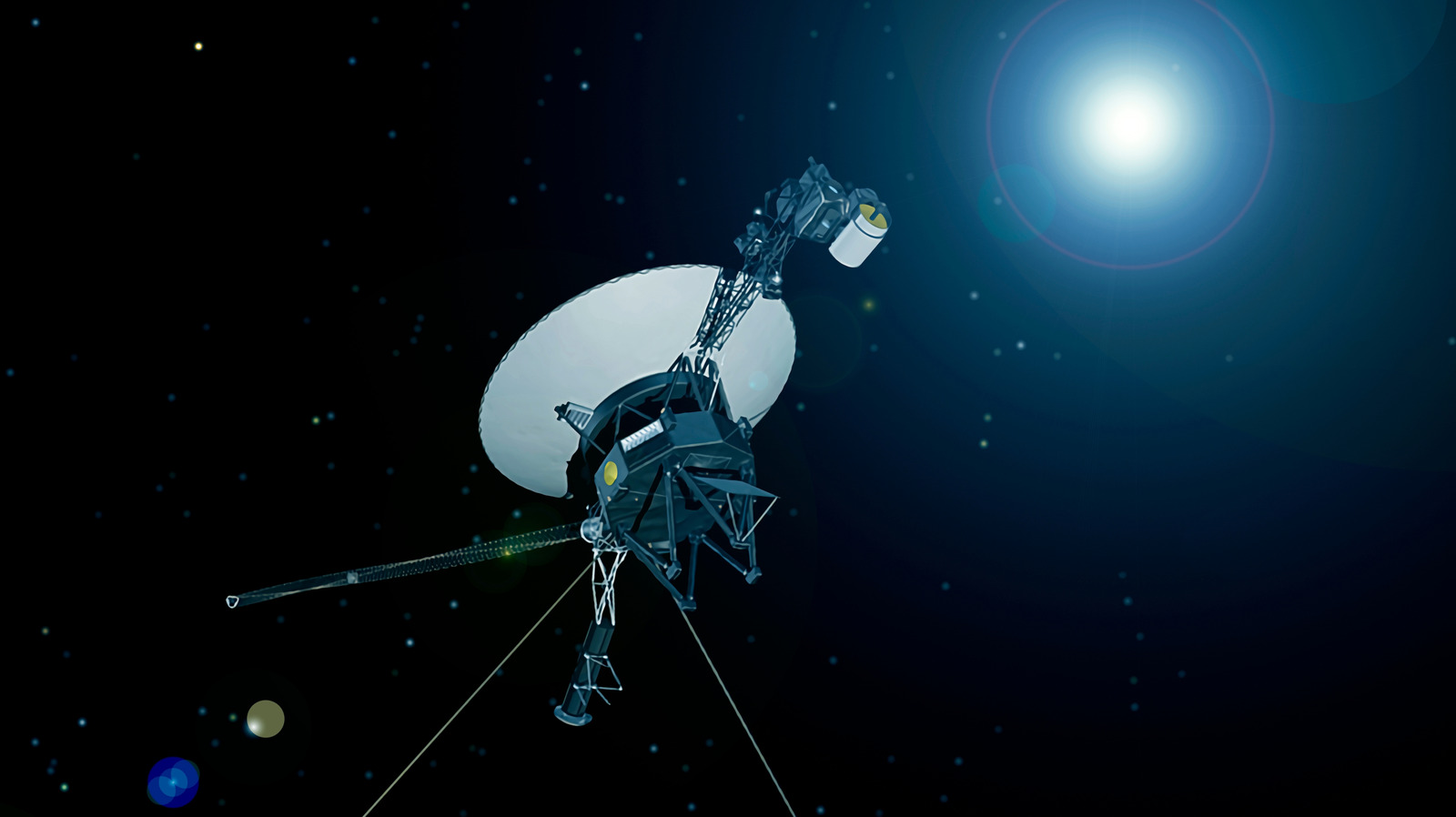
Voyager 1 detects Unexpected Turbulence and “Wall of Fire” at Solar System’s Edge
PASADENA, CA – NASA’s Voyager 1 spacecraft has revealed a far more complex and dynamic boundary to our solar system than previously understood, encountering abrupt shifts in particle density, magnetic fields, and unexpected temperature variations at the heliopause - the region where the sun’s influence wanes and interstellar space begins. The findings, gathered as Voyager 1 approached and crossed this frontier, paint a picture of a turbulent “wall of fire” where solar and interstellar forces clash.
For decades, scientists anticipated a gradual transition between the solar wind and interstellar space. Though, Voyager 1’s instruments detected sudden changes, akin to “stepping over a threshold,” rather than a smooth fade. Near the heliopause, charged particles become compressed, creating zones of extreme heat alongside relatively cooler regions, resulting in a patchwork of hot and cold plasma.
The spacecraft also registered stronger and more orderly magnetic field lines than expected, suggesting interstellar magnetic fields are exerting significant pressure on the heliosphere, warping it like a balloon. This tension shapes the boundary and contributes to the observed turbulence.
Voyager 1, now traveling through interstellar space, continues to send back unprecedented data.It has entered a region where the solar wind is weak and magnetic fields are increasingly complex, with particles originating from beyond our solar system becoming dominant. Scientists emphasize the heliopause isn’t a solid barrier, but a dynamic, shifting interface separating the sun’s domain from the vast unknown beyond.
Each signal from Voyager 1 travels over 24 billion kilometers to reach Earth, representing a small piece of a larger puzzle. The ongoing mission provides a unique laboratory for studying how stars and their planetary systems interact with the galaxy and defines the extent of the sun’s influence.
