
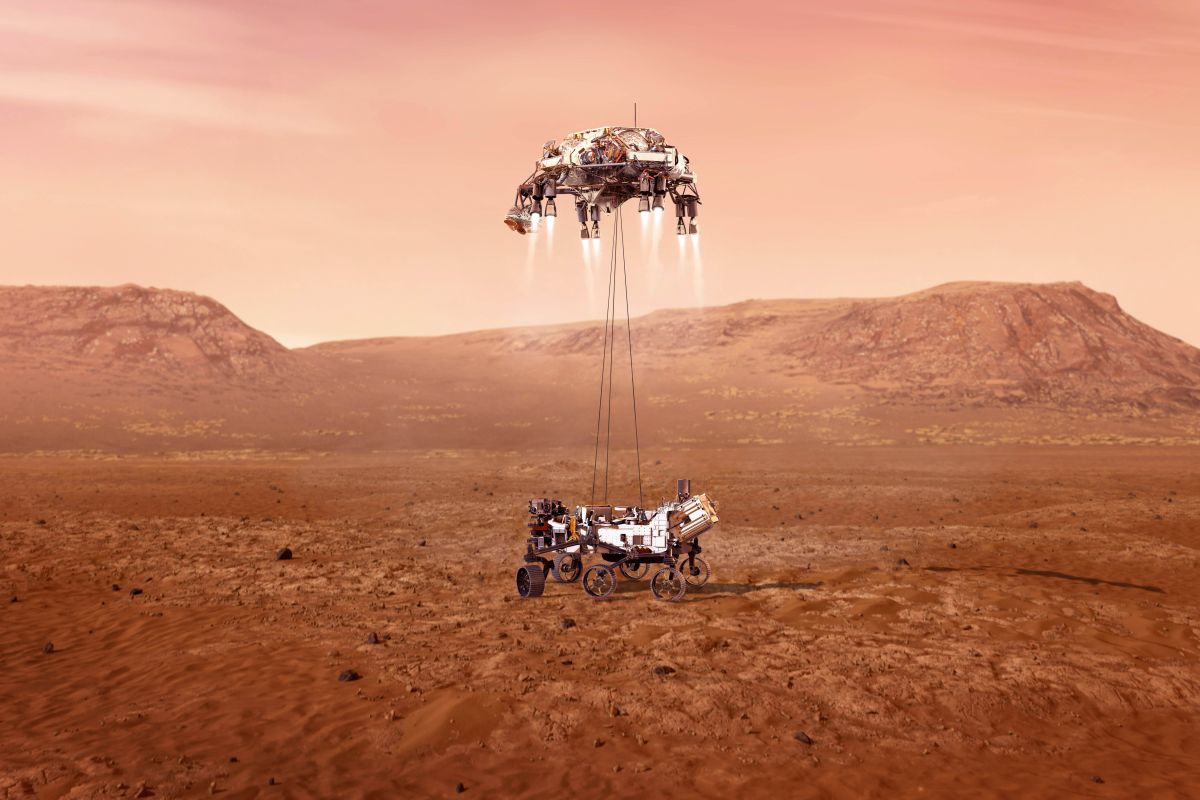
NASA Rover Finds Promising Signs of Ancient Microbial life on Mars
Los Angeles, CA – NASA’s Perseverance rover has uncovered what scientists are calling the most compelling evidence yet for past life on Mars.Samples collected from an ancient riverbed within Jezero Crater contain potential biosignatures – indicators that could represent the remnants of ancient microbial life,the agency announced Wednesday.
The sample, dubbed “Sapphire Canyon,” was extracted last year from a rock formation known as Cheyava Falls. A detailed study published today in the journal Nature outlines the findings, emphasizing that while incredibly promising, further research is needed to confirm the presence of past life.
“these findings represent the closest we’ve come to identifying life on mars,” stated Sean Duffy, a NASA administrator. ”The potential detection of biosignatures on the Red planet is a revolutionary discovery that will dramatically expand our understanding of Mars and its potential to have once harbored life.”
Perseverance identified Cheyava Falls while exploring the “Bright Angel” formation in July 2024. This formation consists of protruding rocks lining the Neretva Vallis, a 400-meter-wide ancient river valley that once fed water into Jezero Crater.
Analysis of the sedimentary rocks within Bright Angel revealed a composition rich in clay and mud – materials known on Earth to be excellent at preserving microbial fossils. Crucially, the rocks also contain meaningful amounts of organic carbon, sulfur, oxidized iron (rust), and phosphorus.
“The combination of chemical compounds we’ve found in the Bright Angel formation is highly likely to have been a rich source of energy for microbial metabolism,” explained Joel Hurowitz,a Perseverance scientist at Stony Brook University and lead author of the study. “However,the presence of these chemical signatures doesn’t automatically confirm past life. We need to carefully analyze the data to understand their meaning.”
“Sapphire Canyon” is one of 27 rock core samples Perseverance has collected since landing in Jezero Crater in February 2021. These samples are intended to be returned to Earth for more in-depth analysis in the future, offering the best chance yet to definitively answer the question of whether life once existed on Mars.Keywords: NASA, Perseverance Rover, Mars, Jezero Crater, Microbial Life, Biosignatures, Space Exploration, Red Planet, Bright Angel Formation, Cheyava Falls, Organic Carbon, Astrobiology
