
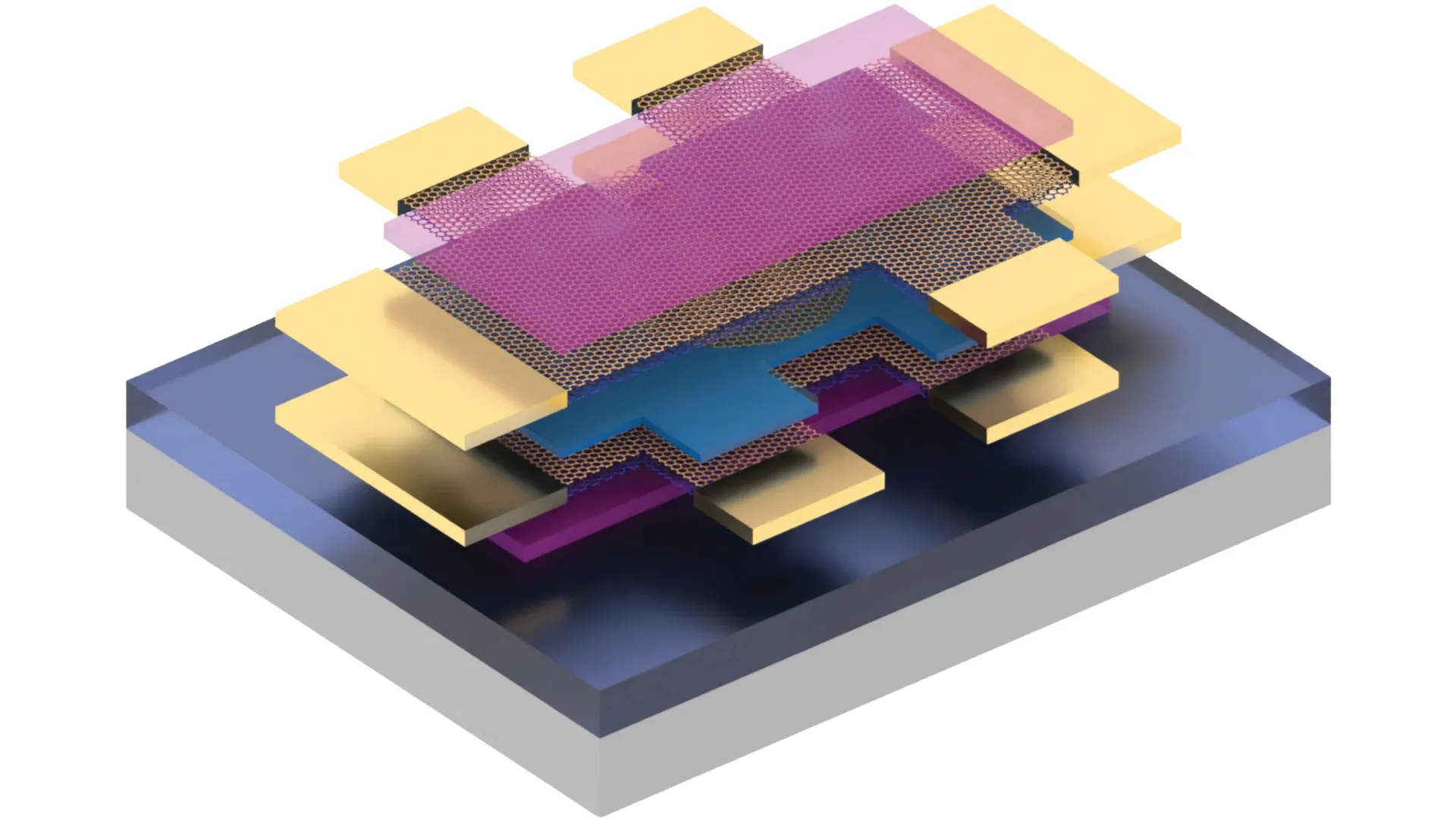
Summary of the Research on “Magic-Angle” Twisted Graphene (MATTG)
This research from MIT details a important step forward in understanding unconventional superconductivity in a material called magic-Angle Twisted Graphene (MATTG). Here’s a breakdown of the key findings:
* What is MATTG? Its created by stacking layers of graphene and twisting them at a very specific (“magic”) angle. This twisting leads to surprising and unique electronic properties.
* Conventional vs. Unconventional Superconductivity: Conventional superconductors have weakly bound electron pairs (“Cooper pairs”) that flow with no resistance. MATTG appears to have strongly bound Cooper pairs, behaving more like molecules. this is a key indicator of unconventional superconductivity.
* Proving unconventionality: The researchers used a combination of tunneling spectroscopy (measuring how electrons “tunnel” through the material) and electrical transport measurements (tracking current and resistance) to directly measure the superconducting gap.
* The Key Finding: A V-Shaped Gap: MATTG exhibited a sharp, V-shaped superconducting gap, which is very different from the flat gap seen in conventional superconductors. This V-shape confirms the material’s unconventional nature.
* How it Works (Hypothesis): Unlike conventional superconductors where lattice vibrations help pair electrons, MATTG likely relies on strong electronic interactions - electrons helping each other pair up.
* Future Implications: This new experimental setup will be used to study other twisted and layered materials, aiming to understand and ultimately design new superconductors and quantum materials for advanced technologies like more efficient power systems and quantum computers.
In essence, the research provides strong evidence that MATTG is a fundamentally different type of superconductor, opening up new avenues for exploring and creating advanced materials with unique quantum properties.
