
ESA deploys Laser Technology too Combat Growing Space Debris Threat
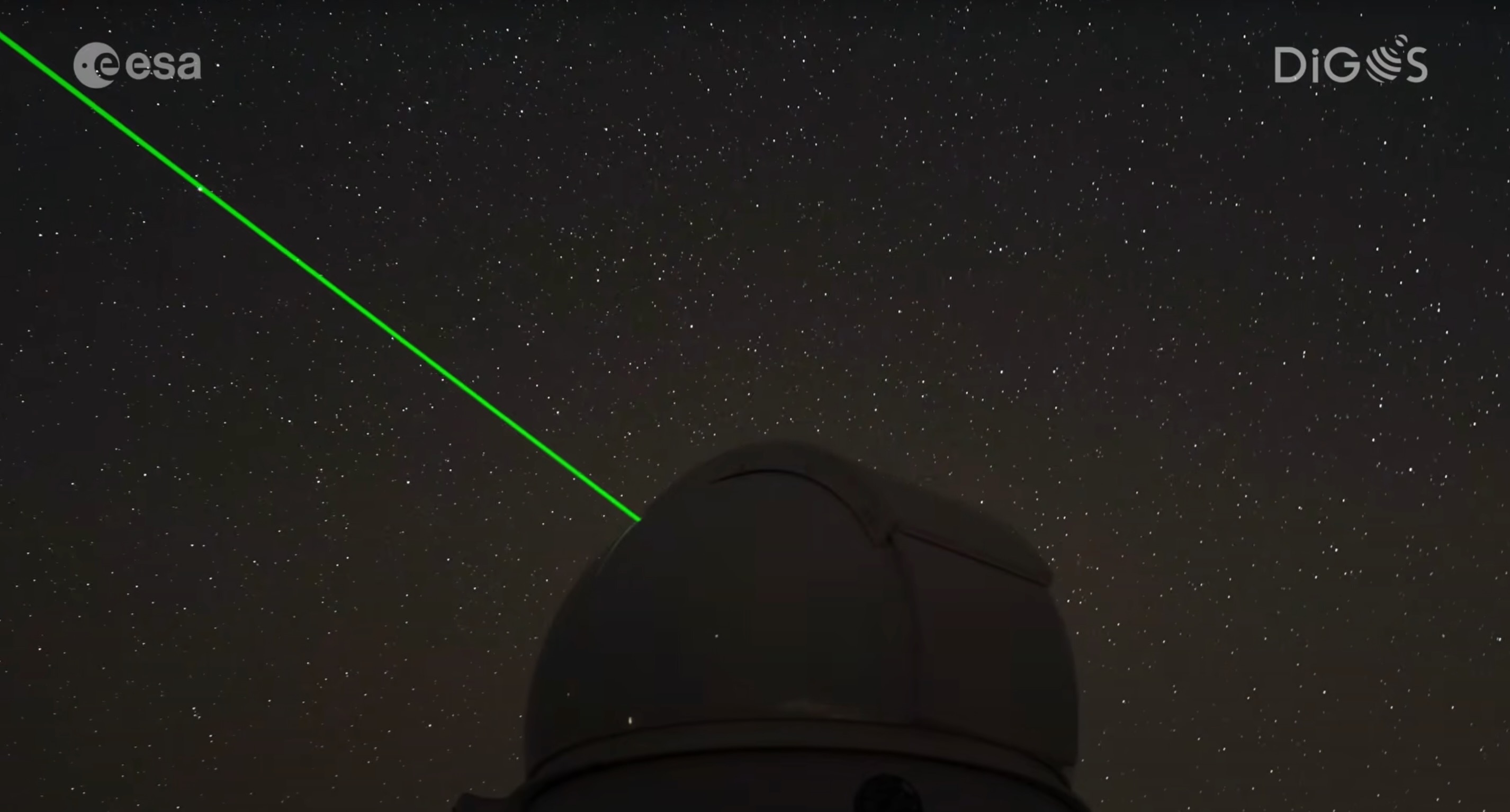
CANARY ISLANDS – The European Space Agency (ESA) is pioneering a new approach to managing the increasing problem of space debris, utilizing laser technology to track and potentially nudge hazardous objects away from operational satellites. Two telescopes, Izaña-1 and Izaña-2, located in the Canary Islands, are central to this effort.
Izaña-1 focuses on tracking both space debris and active satellites, while Izaña-2 employs laser momentum transfer to subtly alter the orbits of debris. “One possibility is laser momentum transfer to gently push the space debris on its orbit a little bit away so it doesn’t collide with orbiting satellites,” explained André Kloth, Managing Director at DiGOS. This technique mirrors the principle behind solar sails, where photons impacting a surface generate momentum.
By using lasers to adjust debris trajectories, satellites can conserve fuel that would or else be used for avoidance maneuvers, extending mission lifespans. The system is integrated with ESA’s OMLET (Orbital Maintenance via laser momEntum Transfer) project, designed to provide satellite operators with real-time debris positioning data and the capability to actively move threats. OMLET aims to function as a “space-traffic cop,” coordinating satellite and debris orbits.
Beyond debris mitigation, the Izaña-2 laser is also being explored as a potential testbed for laser communication. This technology offers advantages over traditional radio waves, including reduced interference and the possibility of utilizing quantum encryption – specifically, quantum key distribution (QKD) - for secure data transmission.
Recent advancements demonstrate the reliability of laser technology even in challenging atmospheric conditions. Earth-observation satellites routinely employ lasers for lidar despite cloud cover, and Chinese scientists recently achieved the first daytime laser-ranging experiment from Earth to the moon.
The deployment of these laser-based systems marks a meaningful step in addressing the growing threat of space debris, 65 years after the invention of the laser itself.
