
Jupiter‘s Early Role May Have Stabilized Earth’s Orbit, New Research Suggests
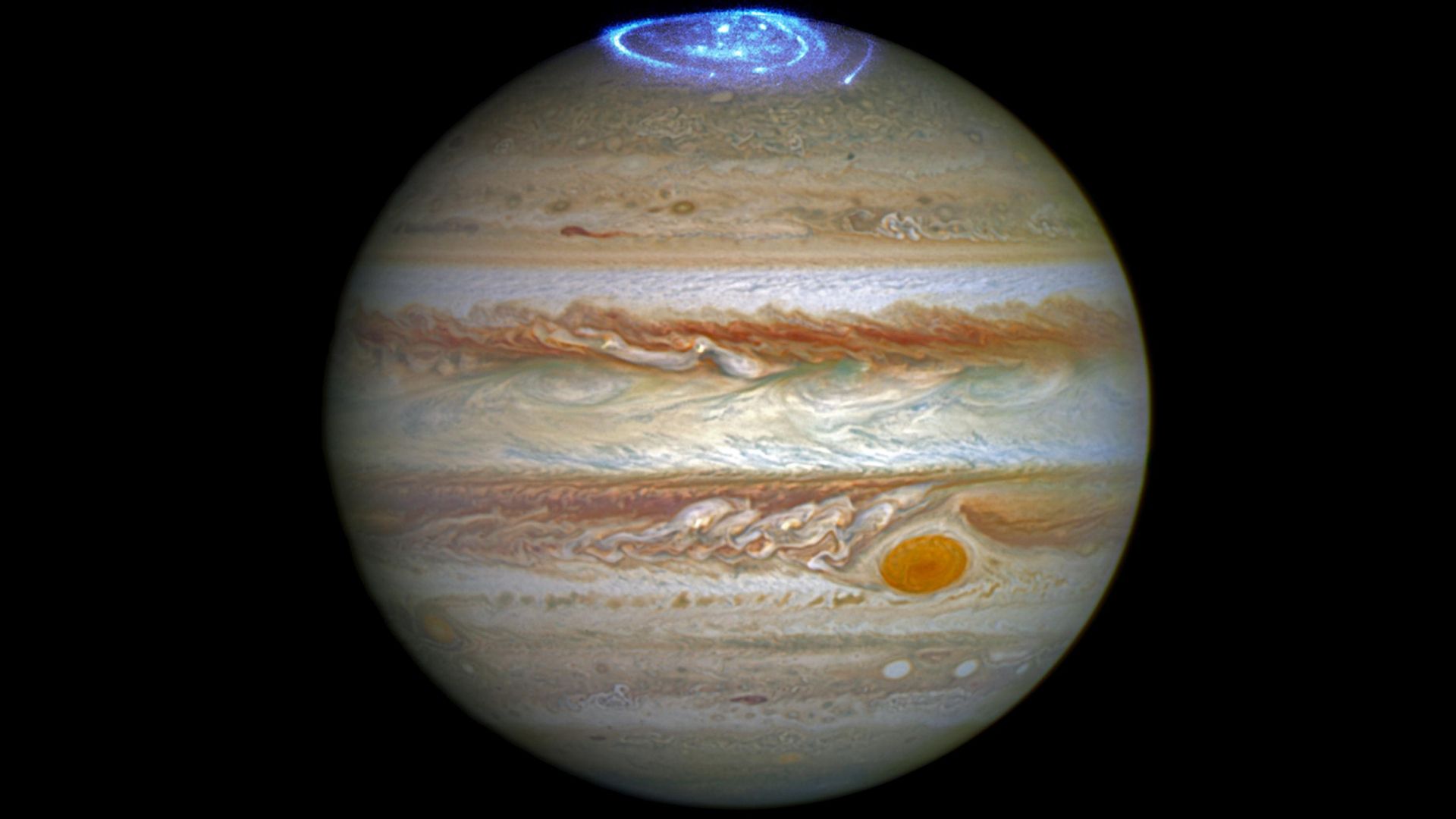
WASHINGTON – A new study published oct. 22 in the journal Science Advances reveals that Jupiter’s early formation likely played a crucial role in stabilizing the inner solar system, potentially preventing Earth from spiraling into the sun.Researchers have long debated the timing of Jupiter’s growth and its impact on the development of other planets, and this research provides compelling evidence that the gas giant acted as a planetary guardian in the solar system’s infancy.
The research, led by Dr.Alejandro Izidoro at Rice University, suggests that Jupiter’s gravitational influence halted the inward migration of material in the early solar system, creating a buffer that protected Earth and other inner planets. This finding stems from analyzing the composition of chondritic meteorites - ancient space rocks containing tiny molten droplets called chondrules that preserve a chemical record of the solar system’s earliest days. “The mystery has always been: Why did some of these meteorites form so late, 2 to 3 million years after the first solids?” izidoro said in a statement. “Our results show that Jupiter itself created the conditions for their delayed birth.”
The team’s models indicate that Jupiter’s growth shaped the protoplanetary disk,effectively stopping the inward flow of material. This process triggered a second generation of planetesimals, some of which eventually became the chondritic meteorites that continue to fall to earth today. Without this intervention, Earth’s orbit may have been unstable, leading to a catastrophic collision with the sun or ejection from the solar system altogether.
This research isn’t limited to our solar system. Similar rings and gaps predicted by the team’s models are now observed in young star systems using the Atacama Large Millimeter/submillimeter array (ALMA) in Chile, bolstering the theory that giant planets sculpt their surroundings during formation. “Our own solar system was no different,” Izidoro said. “Jupiter’s early growth left a signature we can still read today, locked inside meteorites that fall to Earth.” The findings offer a new understanding of planetary formation and highlight the delicate balance that allowed Earth to become a habitable world.
