
James Webb Telescope Confirms Einstein‘s Theory with Eight Stunning ‘Einstein Ring’ Discoveries
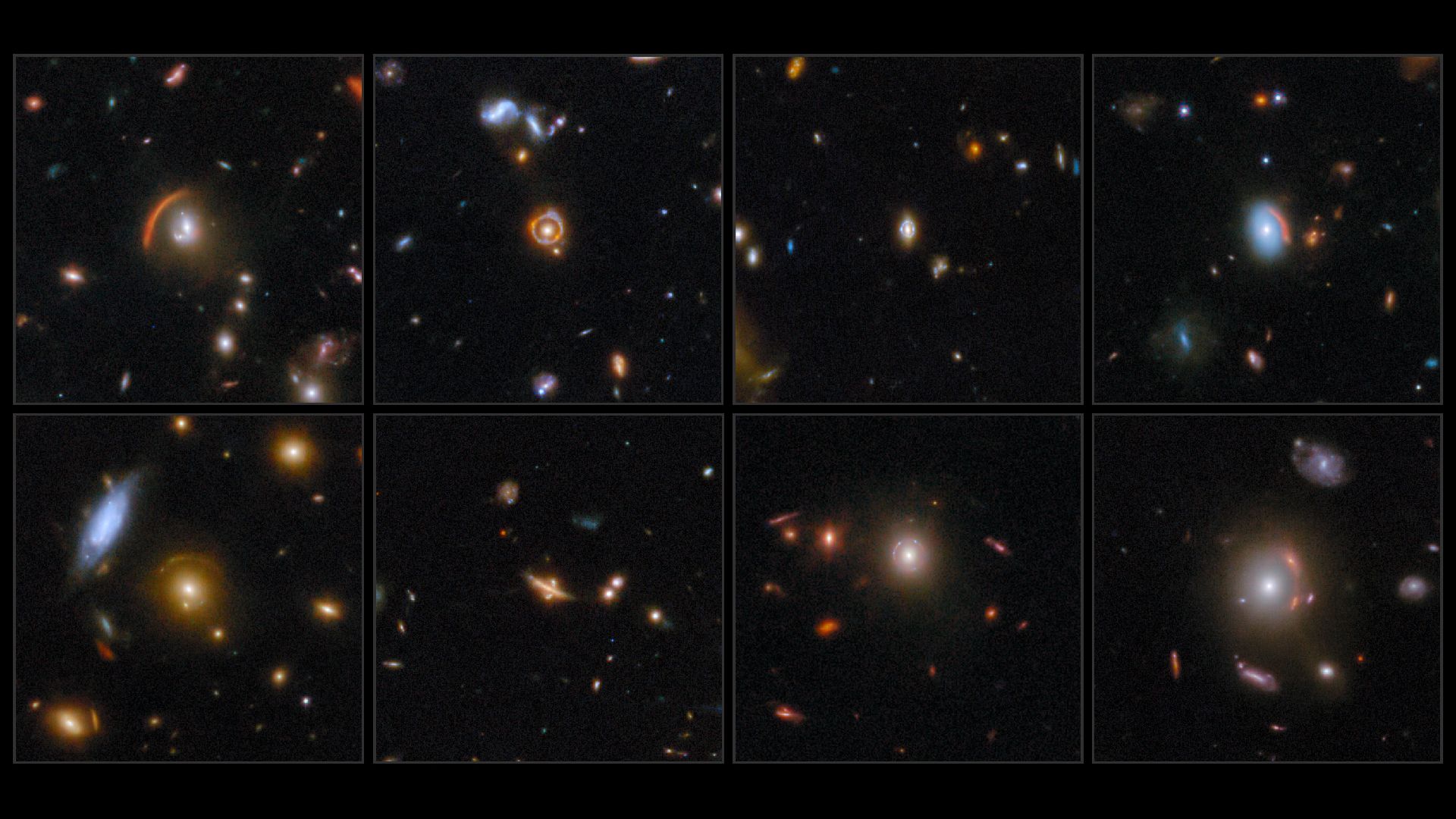
WASHINGTON – The James Webb Space Telescope (JWST) has delivered striking visual confirmation of Albert Einstein’s theory of general relativity, capturing eight dramatic examples of “Einstein rings” – distorted images of distant galaxies bent by the gravity of massive objects in the foreground. These observations, stemming from the COSMOS-Web project, represent the most detailed views of these phenomena to date and offer unprecedented insights into the early universe.
Einstein predicted in 1915 that gravity could bend light, and when a distant light source is perfectly aligned with a massive foreground object, the light bends around it, creating a ring-like image known as an Einstein ring. JWST’s powerful infrared vision and a rare “double-zoom” technique have allowed astronomers to observe these rings with exceptional clarity, magnifying and amplifying light from galaxies otherwise too faint to detect.
The COSMOS-Web project involved 255 hours of telescope time focused on over 42,000 galaxies, resulting in the identification of more than 400 potential Einstein ring candidates, with eight highlighted as notably dramatic. One standout image showcases COSJ100024+015334, a perfect Einstein ring revealing a galaxy as it existed just one billion years after the Big Bang – a mere fraction of the universe’s current 13+ billion-year age.
While some of the galaxies exhibiting these rings were previously observed by the Hubble Space Telescope, JWST’s superior resolution reveals previously hidden details. The telescope has also identified entirely new galaxies, including those reddened by dust and immense distance.
these rare alignments provide astronomers with a unique opportunity to study the fundamental building blocks of galaxies, star clusters, and supernovae, offering a window into the universe’s formative years and the role of dark matter in its evolution. The observations allow scientists to measure the mass of galaxies, including the elusive dark matter that cannot be directly observed.
