
Webb Telescope Detects Unexpected Ultraviolet Radiation Emanating From Young Stars
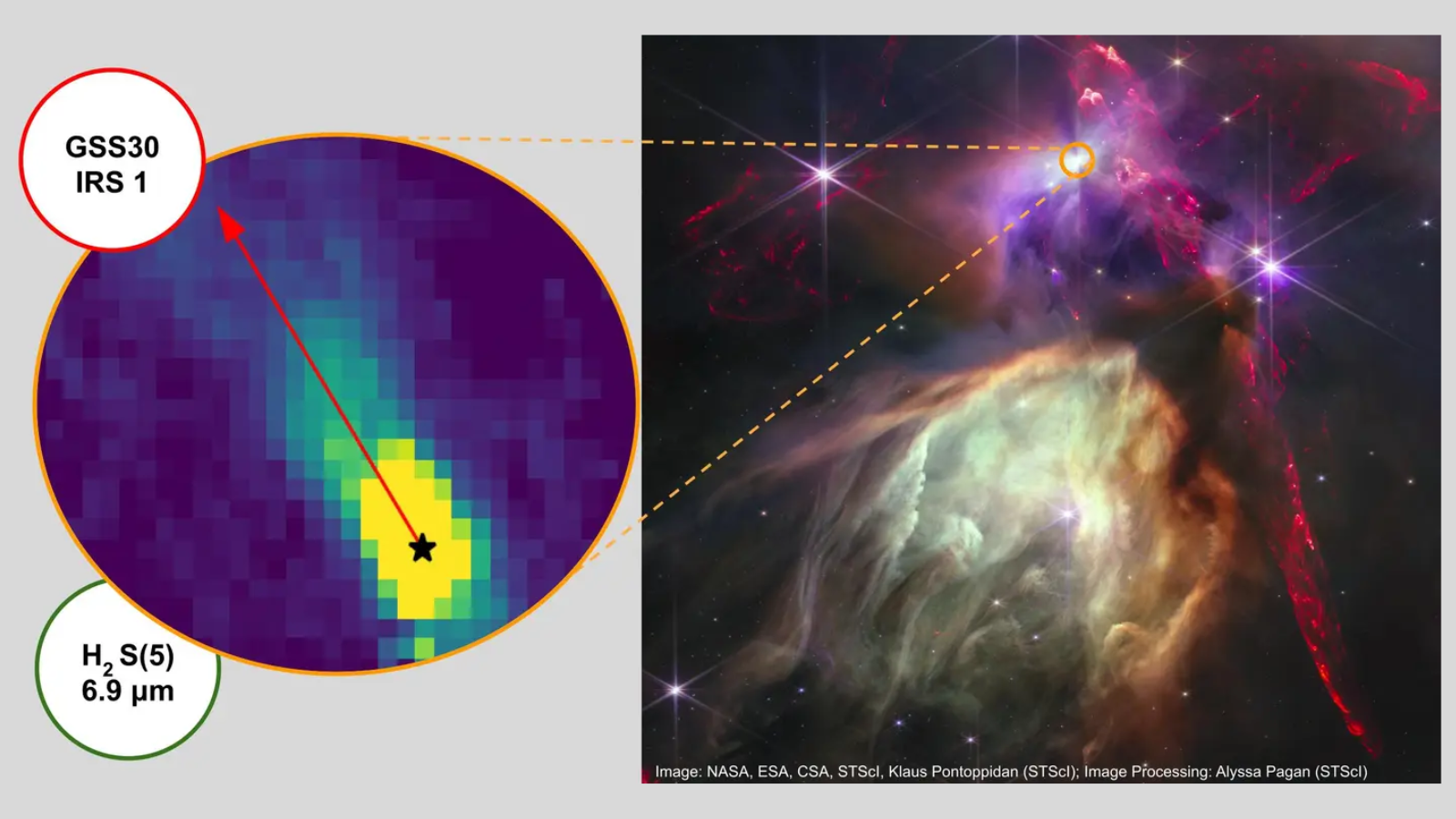
A new analysis of data from the James Webb Space Telescope has revealed a puzzling source of high-energy ultraviolet (UV) radiation surrounding protostars – infant stars still forming within the ophiuchus star-forming region. The revelation challenges existing models of star birth and suggests previously unknown processes are at play in the earliest stages of stellar advancement.
Researchers, led by a team investigating the Ophiuchus molecular cloud, initially sought to understand the impact of external radiation sources on the chemical composition of gas surrounding these young stars. However, their findings, published Nov. 13 in the journal Astronomy & Astrophysics, indicate the UV radiation isn’t coming from nearby massive stars, but originates within the protostar systems themselves.
“We can say with certainty that UV radiation is present in the vicinity of the protostar, as it undoubtedly affects the observed molecular lines,” stated researcher Dr. Karolina Karska. “Thus, its origin has to be internal.”
The team considered two primary internal sources: shockwaves created as material falls onto the protostar, or shocks generated along jets of material erupting from the developing star.The consistent presence of UV radiation across different protostars, despite varying external conditions, led the researchers to rule out external sources.
“Using these two methods, we showed that ultraviolet radiation, in terms of external conditions, varies significantly between our protostars, and therefore we should see differences in molecular emission,” explained team member Theodoros Skretas. “As it turns out, we don’t see them.”
The Ophiuchus cloud, observed by the European Southern Observatory, provides a unique laboratory for studying star formation. The team plans to continue analyzing JWST observations of the region, focusing on the interplay between gas, dust, and ice, to pinpoint the exact mechanisms generating this unexpected UV radiation and further unravel the mysteries of early star birth.
