
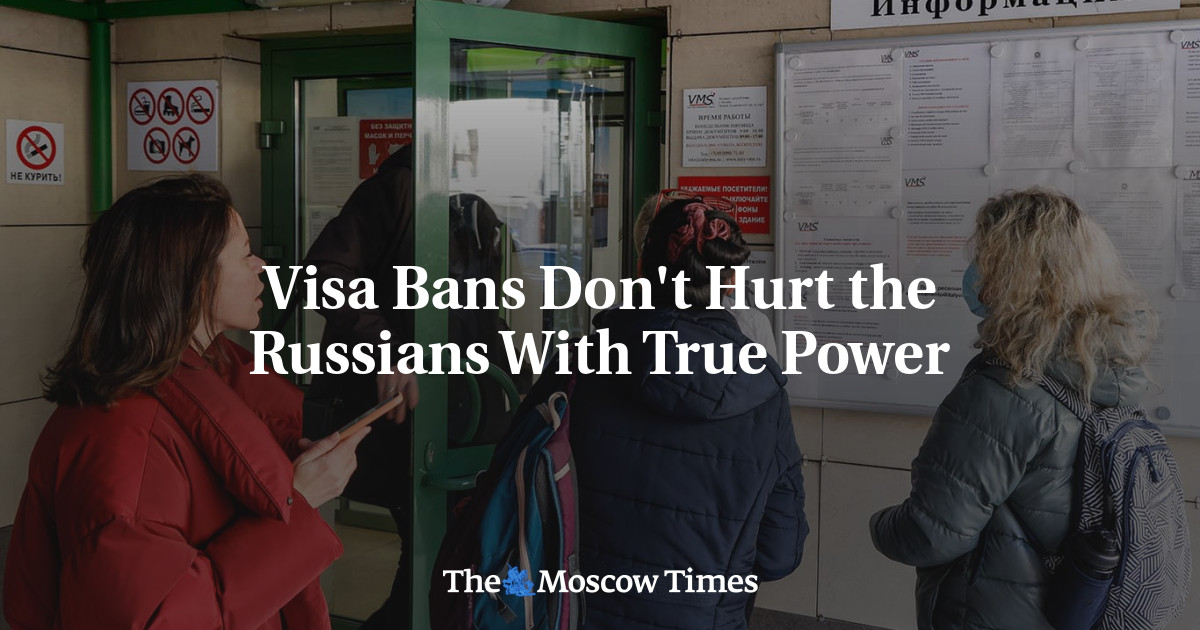
Visa Bans Primarily Impact Ordinary Russians, Leaving Elite Untouched
Moscow, Russia - Recent and proposed visa restrictions targeting Russian citizens by European nations, intended to pressure the Kremlin over its ongoing invasion of Ukraine, are overwhelmingly affecting ordinary Russians while largely failing to impact those with genuine power and influence within the country, experts say.The measures, including blanket bans and stricter vetting processes, are hindering travel for tourism, study, and family visits, but are easily circumvented by the political and economic elite.
The rationale behind the visa restrictions – to increase domestic pressure on the Russian government – is flawed, argues a growing chorus of analysts. Instead of targeting the decision-makers, the bans primarily punish ordinary citizens who often hold dissenting views and represent a potential bridge to a more open Russia. “Isolation breeds loyalty to power; connection sparks change,” writes columnist Tatiana Stanovaya in The Moscow Times,highlighting the counterproductive nature of the policy.
The current wave of restrictions follows the European Union’s suspension of the visa facilitation agreement with Russia in September 2022,making it more tough and expensive for Russians to obtain visas. Several EU member states, including Estonia, Latvia, Lithuania, Poland, and Finland, have since implemented stricter measures, including outright bans for Russian citizens with even tenuous ties to the government.
Though, those connected to the Russian leadership – oligarchs, government officials, and their families – routinely possess multiple passports, utilize shell companies, and leverage existing networks to bypass such restrictions.They continue to access European healthcare, education, and financial systems, rendering the visa bans largely symbolic.
“The people who actually make decisions in Russia are not affected by these measures,” explains Dr. Maria popova, a political science professor at McGill University specializing in Russian politics. “They have the resources and connections to navigate these obstacles. What we’re seeing is collective punishment directed at a population that is already suffering the consequences of the war and domestic repression.”
The impact on ordinary Russians is notable. Travel for medical treatment, education, and family reunification has become increasingly difficult, forcing many to forgo essential opportunities.The restrictions also stifle cultural exchange and limit exposure to alternative perspectives, reinforcing the Kremlin’s narrative and hindering the potential for future societal change.
Critics argue that a more effective approach would involve targeted sanctions against individuals directly responsible for the war and policies that actively facilitate people-to-people connections, such as easing visa requirements for students, journalists, and civil society representatives. By fostering dialog and understanding, rather then erecting barriers, Europe could contribute to a more peaceful and democratic future for Russia.
