
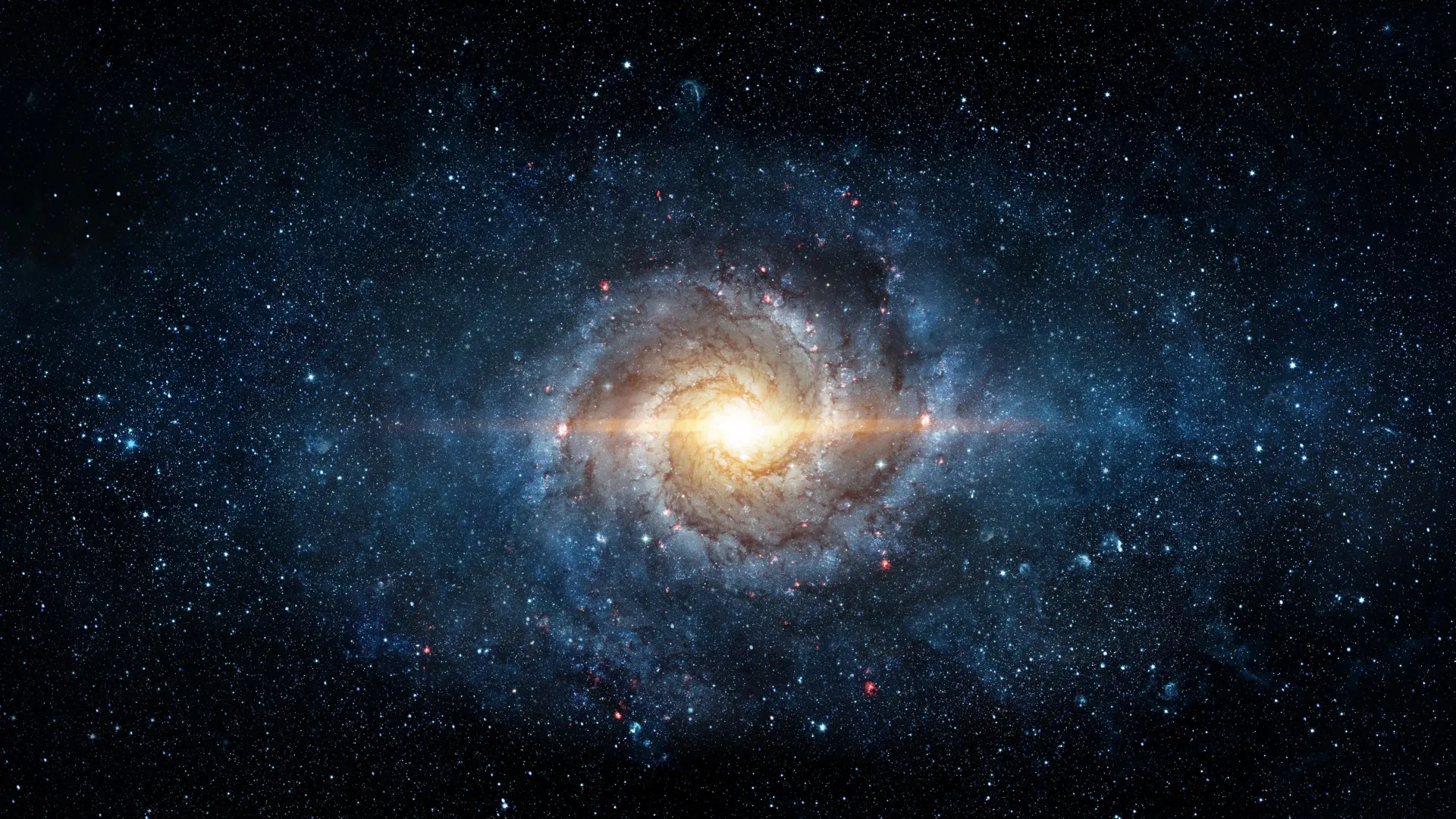
AI Powers Breakthrough Milky Way Simulation
Researchers have achieved a major leap forward in astrophysics with the creation of the first Milky way simulation capable of tracking the evolution of over 100 billion individual stars across 10,000 years. Led by Keiya Hirashima at RIKEN in Japan, with collaborators from The University of Tokyo and Universitat de Barcelona, the team combined the power of artificial intelligence (AI) with advanced numerical simulations.
This new model represents a significant improvement over previous efforts, boasting 100 times more stars and running over 100 times faster.The breakthrough, presented at the SC ’25 supercomputing conference, has implications not only for understanding galactic evolution but also for fields like climate and weather research.
the Challenge of Simulating a Galaxy
Accurately simulating a galaxy like the milky Way is incredibly complex. It requires calculating numerous physical processes – gravity, fluid dynamics, chemical reactions, and supernova explosions – over vast timescales. Previous simulations were limited by computational power, typically representing groups of around 100 stars with a single “particle,” sacrificing detail and accuracy.
The need for small time steps to capture rapid events like supernovae further exacerbates the problem. A star-by-star simulation of the Milky Way using traditional methods would take an impractical amount of time – over 36 years to simulate just one billion years of galactic activity.Simply adding more computing power isn’t a solution due to energy consumption and diminishing returns.
A Hybrid AI Solution
HirashimaS team overcame these hurdles by integrating a deep learning “surrogate model” with conventional physical simulations. This AI model was trained on detailed supernova simulations and learned to accurately predict gas behavior following an explosion, reducing the computational load on the main simulation. This allowed the researchers to model both the large-scale galactic behavior and the fine details of individual supernovae.
The team rigorously validated their approach using supercomputers at RIKEN and The University of Tokyo.The results are remarkable: simulating 1 million years now takes just 2.78 hours, compared to the 315 hours required by previous methods. This means a billion-year simulation can now be completed in approximately 115 days.
Beyond Astrophysics
This innovative hybrid approach has the potential to revolutionize other computationally intensive fields.Areas like climate modeling, weather forecasting, and oceanography, which also grapple with linking small-scale physics to large-scale systems, could substantially benefit from this acceleration of complex simulations.
“I believe that integrating AI with high-performance computing marks a fundamental shift in how we tackle multi-scale, multi-physics problems across the computational sciences,” says Hirashima.
