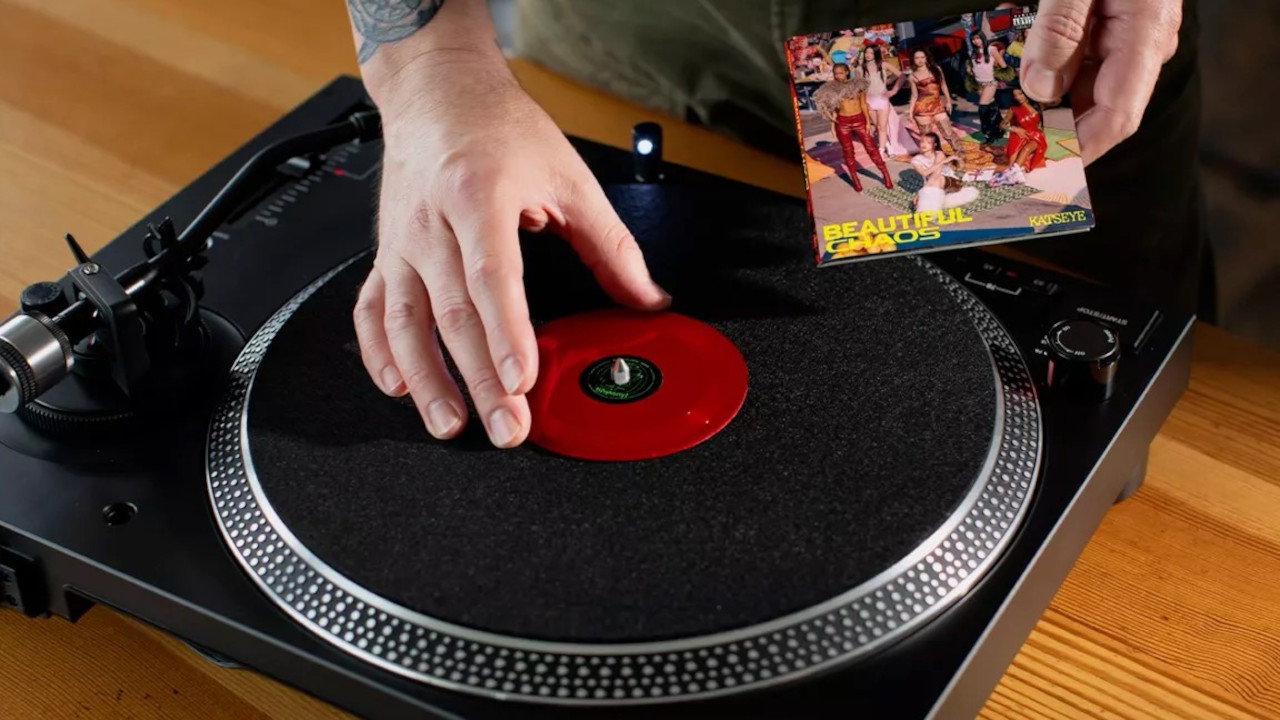
Tiny Vinyl Launches Affordable Miniature Turntable for Four-Inch Records
Available exclusively through Target in the US, the device targets the collectible market by supporting a proprietary miniature format that spins at 33⅓rpm and features integrated Bluetooth and wired audio outputs.
The Tech TL;DR:
- Hardware: Manual belt-drive system calibrated for 4-inch discs at 33⅓rpm; includes built-in speaker and Bluetooth connectivity.
- Compatibility: Proprietary lock-in; the player cannot operate standard 7-inch or 12-inch records.
- Market Scale: Over one million 4-inch discs pressed to date, featuring licensed content from artists like BTS and The Rolling Stones.
From an architectural standpoint, the Tiny Vinyl Player isn’t a general-purpose audio solution but a dedicated playback endpoint for a specific physical medium. The primary bottleneck for most users is the acoustic output; hands-on testing indicates the built-in speaker is tinny and muffled. However, the inclusion of Bluetooth and a wired rear connection allows users to bypass the onboard DAC and amplifier in favor of higher-fidelity external systems.
Hardware Specifications and Component Analysis
The device utilizes a belt-drive motor calibrated to maintain a consistent 33⅓rpm, mirroring the speed of full-sized LPs. While the faux-leather exterior suggests a lifestyle product, the internal platter and tonearm are scaled specifically for the four-inch format. This creates a hard hardware limitation: the player is incompatible with standard vinyl. According to Tiny Vinyl, the records themselves are designed for a single track per side, averaging four minutes of playback.

| Specification | Tiny Vinyl Player | Standard Entry-Level Turntable |
|---|---|---|
| Platter Diameter | Optimized for 4-inch | Optimized for 12-inch/7-inch |
| Drive Type | Manual Belt-Drive | Belt or Direct Drive |
| Connectivity | Bluetooth / Wired / Internal Speaker | RCA / USB / Bluetooth (Optional) |
| Price Point | $49.99 | Various price points |
The integration of a storage slot within the platter area—capable of holding five to six records—minimizes the footprint of the setup, reducing the physical “desk creep” often associated with analog audio. This design choice emphasizes the “collectible” nature of the product over audiophile performance.
Signal Chain and Connectivity Logic
The Tiny Vinyl Player operates as an all-in-one system, but the real value for power users lies in the output options. By routing the signal via Bluetooth or the wired connection, the user shifts the processing load to a more capable amplifier.

import pyaudio
import numpy as np

CHUNK = 1024
FORMAT = pyaudio.paInt16
CHANNELS = 2
RATE = 44100

p = pyaudio.PyAudio()
stream = p.open(format=FORMAT, channels=CHANNELS, rate=RATE, input=True, frames_per_buffer=CHUNK)

print("Monitoring Tiny Vinyl audio signal...")
try:
    while True:
        data = np.frombuffer(stream.read(CHUNK), dtype=np.int16)
        peak = np.abs(data).max()
        print(f"Current Signal Peak: {peak}")
except KeyboardInterrupt:
    stream.stop_stream()
    stream.close()
    p.terminate()
Market Positioning and Ecosystem Expansion
Tiny Vinyl is attempting to build a closed-loop ecosystem. The player is supported by a suite of accessories, including a $20 “Crate” for storing up to 30 records and a $15 “Frame” for wall display. This strategy mirrors the “razor and blade” model: the low-cost hardware ($49.99) encourages the continuous purchase of licensed, numbered miniature discs.
The format has already scaled significantly, with Tiny Vinyl reporting over one million discs pressed. The roster of artists—including Chappell Roan, Sabrina Carpenter, and Noah Kahan—indicates a targeted push toward Gen Z and Millennial collectors who value the aesthetic of analog media without the spatial requirements of a full hi-fi rack. Because these 4-inch records can technically be played on standard 33⅓rpm turntables, the Tiny Vinyl Player is a redundant piece of hardware for existing vinyl enthusiasts, but a low-friction entry point for new users.
A UK release is reportedly being considered for later in 2026, although there’s no confirmed UK launch date yet.
Disclaimer: The technical analyses and security protocols detailed in this article are for informational purposes only. Always consult with certified IT and cybersecurity professionals before altering enterprise networks or handling sensitive data.