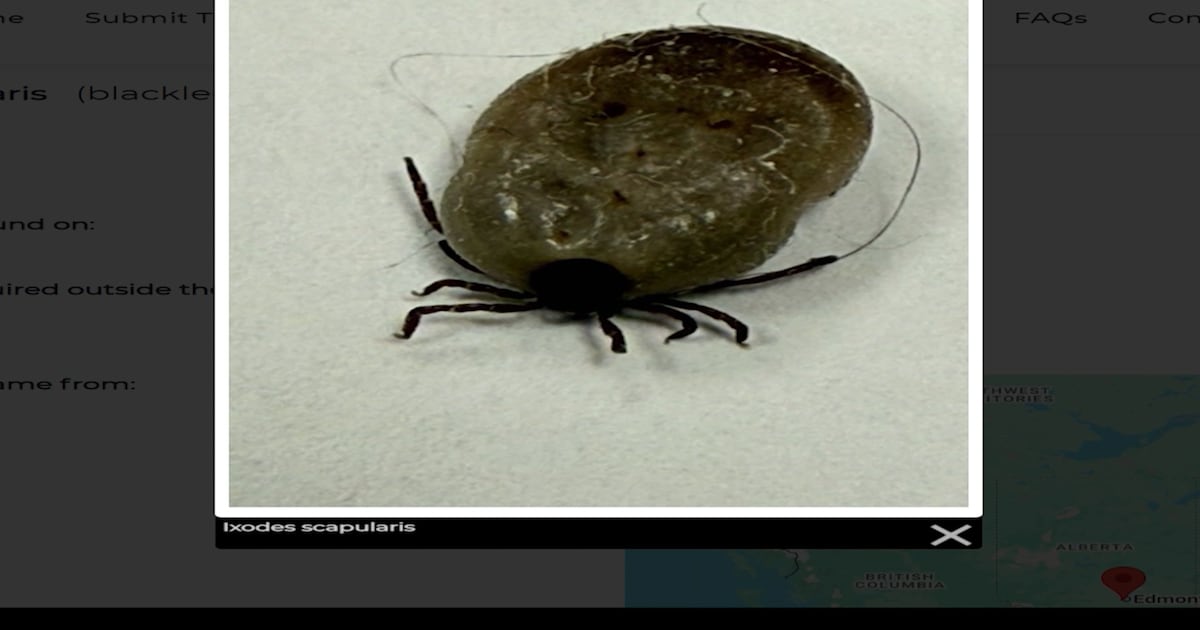
Ticks on the Rise in Alberta: Province Sees Second-Highest Reports
Alberta has recorded the second-highest volume of tick reports in Canada, signaling an accelerated expansion of tick populations into regions previously considered low-risk. Public health data indicates that the northward migration of Ixodes scapularis, the primary vector for Borrelia burgdorferi—the bacterium responsible for Lyme disease—is intensifying, necessitating heightened surveillance and proactive clinical screening for patients presenting with non-specific febrile illnesses.
- Ticks are increasingly prevalent in Alberta, requiring residents to adopt rigorous, full-body skin inspections after outdoor activity.
- Early clinical detection of erythema migrans (the “bullseye” rash) remains the gold standard for initiating prophylactic antibiotic intervention.
- Pet owners should utilize veterinary-approved acaricides to mitigate the risk of household tick introduction, as pets can act as transport hosts.
Epidemiological Shifts and Pathogenesis
The current surge in tick activity across Alberta reflects a broader ecological trend in North America, where milder winters and shifting migratory patterns of host animals—specifically white-tailed deer and migratory birds—have facilitated the establishment of endemic tick colonies. According to surveillance reports from regional health authorities, the density of black-legged ticks is no longer confined to southern hotspots but is appearing in urban and semi-rural environments with greater frequency.
From a clinical perspective, the primary concern is the transmission of Borrelia burgdorferi. Once a tick attaches, the bacterium typically requires 36 to 48 hours of feeding to migrate from the tick’s midgut to the salivary glands and subsequently into the human host. This temporal window represents the critical period for clinical intervention. If a patient presents with a history of tick exposure, clinicians must evaluate the necessity of single-dose doxycycline prophylaxis, provided the exposure meets specific criteria defined by the Infectious Diseases Society of America (IDSA) guidelines.
Diagnostic Challenges and Clinical Triage
Because early-stage Lyme disease often manifests as non-specific malaise, myalgia, and fatigue, it is frequently misdiagnosed as a viral syndrome. Accurate diagnosis relies on a combination of patient history and clinical observation. For patients concerned about tick-borne pathogens, it is essential to seek evaluation from board-certified infectious disease specialists or primary care providers who are trained in the differential diagnosis of zoonotic diseases.

Diagnostic testing often relies on a two-tiered serological approach, utilizing an Enzyme-Linked Immunosorbent Assay (ELISA) followed by a Western Blot to confirm the presence of antibodies. However, clinicians must remain cognizant of the “window period,” where serological markers may not yet be detectable in the acute phase. Patients experiencing persistent joint pain or neurological symptoms following a suspected bite should be referred to specialized rheumatology or neurology clinics to rule out disseminated infection or post-treatment Lyme disease syndrome (PTLDS).
Preventative Measures and Community Infrastructure
Public health messaging emphasizes that mechanical removal of the tick remains the most effective immediate response to an embedded parasite. Using fine-tipped tweezers to grasp the tick as close to the skin surface as possible—applying steady, upward pressure—minimizes the risk of leaving mouthparts behind or compressing the tick’s abdomen, which could force infectious material into the host’s bloodstream.
Veterinary health experts remind pet owners that household pets are frequent vectors for tick-borne diseases, including anaplasmosis and babesiosis. Routine use of systemic or topical acaricides, as recommended by veterinary professionals, is a standard of care for preventing household infestation. For families managing pets in high-risk zones, consulting with a veterinary diagnostic center can provide clarity on the regional prevalence of specific tick-borne pathogens.
Future Trajectory of Vector Surveillance
The expansion of tick habitats is a long-term public health challenge that will likely necessitate more robust, localized tracking systems. Current research, often supported by federal grants and university-led ecological studies, is focused on mapping the “tick-line” to better inform public policy and clinical alert systems. As the disease burden shifts, the healthcare sector must prioritize the integration of standardized tick-bite protocols within urgent care settings to ensure that patients receive timely, evidence-based care.
For individuals in high-transmission zones, maintaining a high index of suspicion for tick-borne illness is a fundamental component of preventative medicine. Given the complexity of co-infections—where a single tick may harbor multiple pathogens—early consultation with a qualified healthcare provider is the most effective strategy to prevent long-term morbidity.
Disclaimer: The information provided in this article is for educational and scientific communication purposes only and does not constitute medical advice. Always consult with a qualified healthcare provider regarding any medical condition, diagnosis, or treatment plan.