Thousands Protest in Brussels Against Austerity as Strikes Disrupt Transport and Air Travel Across Belgium
With red, green, and blue banners unfurled against the autumn chill, thousands of demonstrators flooded the streets of Brussels on Monday for a national mobilization against federal austerity measures and falling purchasing power.
The Brussels police counted approximately 50,000 participants in the march, according to figures relayed by the Belga agency and reported by 7sur7.be. The joint union front, uniting the FGTB, CSC, and Synova, drew supporters from mutual aid societies, poverty-relief charities, environmental groups, and youth organizations to protest the economic climate, according to Le Soir.
The three main unions called in a common front for a “grande mobilisation citoyenne” for a new national demonstration organized Monday in Brussels, as reported by Le Soir. The unions demand to place the budgetary effort “sur les épaules les plus solides”.
Transport Paralysis Across Belgium
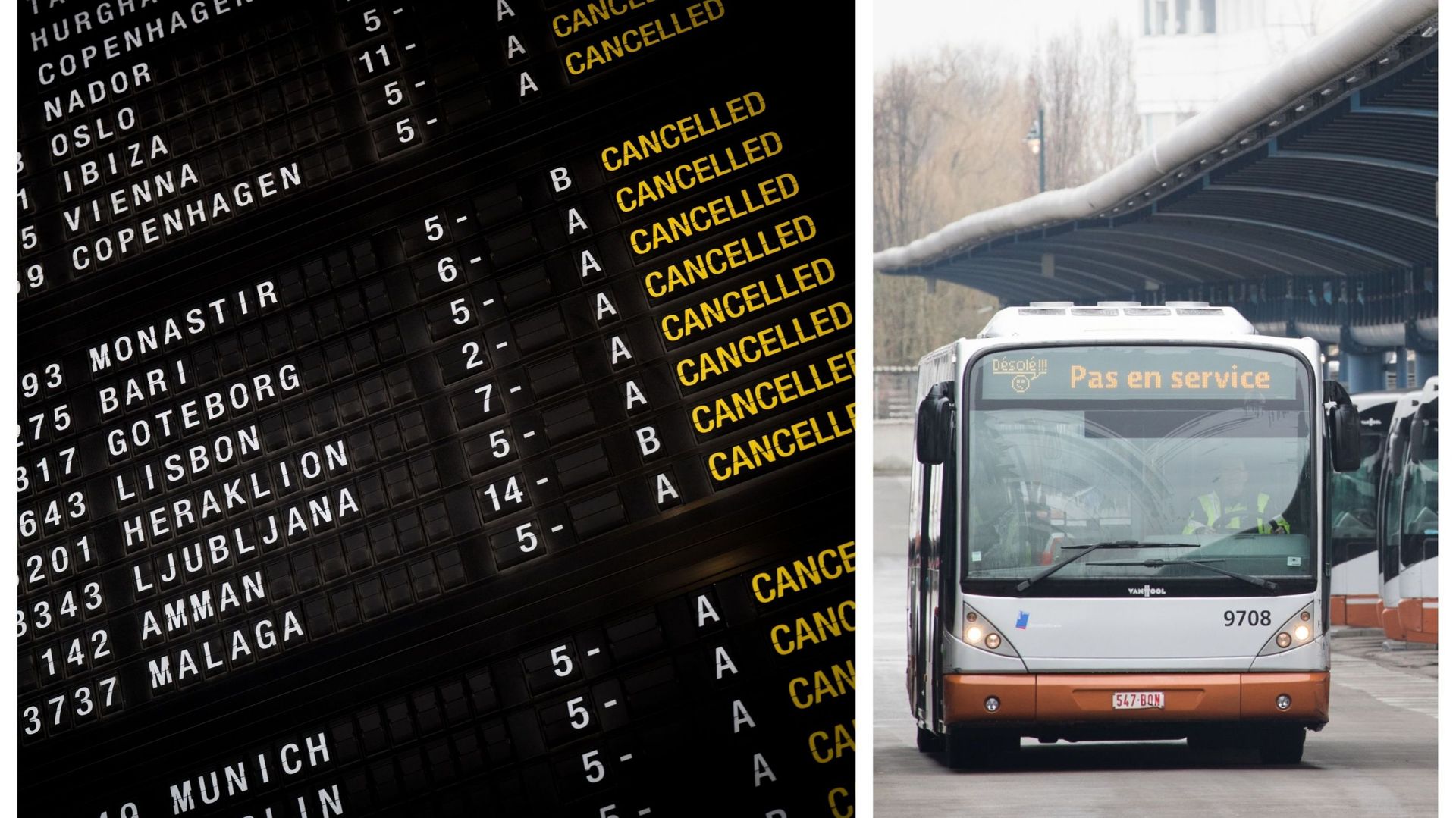
The day of action severely disrupted transit networks nationwide. In the capital, the STIB network operated only two of its four metro lines, specifically lines 1 and 5, alongside a handful of tram and bus routes, as reported by RTBF. The trams roll on lines 4, 7 (between Heysel and Docks Bruxsel, and between Leopold III and Vanderkindere), 8, 10, 82, and 92, according to RTL Info.
Air travel ground to a near-total halt after air traffic controllers represented by Skeyes began a stoppage that closed Belgian airspace from 7:00 to 21:00. Brussels Airport, which had anticipated nearly 59,500 travelers, sat largely empty in the early hours, with management at Brussels South Charleroi Airport criticizing the impact on thousands of passengers and staff, as detailed by DHnet.
“Des milliers de passagers, les compagnies et les quelque 3 400 personnes qui travaillent sur la plateforme de BSCA en paient le prix, alors que BSCA était pourtant prêt à opérer,” the management said. TUI Fly managed to salvage 20 of its 26 planned flights by shifting schedules before the shutdown, RTL Info reported.
Disrupting Regional Public Transit Networks
Public transport networks across the country experienced severe cancellations as bus and tram operators adjusted schedules for the national mobilization. Services run by De Lijn and the TEC faced widespread disruptions and route deletions, prompting transport officials to advise commuters to check real-time applications before traveling.
Rail operators also warned passengers of heavy congestion on services heading toward and departing from the capital. The SNCB specifically flagged high passenger volumes building up directly in front of the Brussels-North and Brussels-Midi railway stations.
Paralyzing National Air Space
Meanwhile, the federation of airline companies called for an open discussion regarding what they termed an abuse of the right to strike. The carriers argued that such widespread closures jeopardize public safety and penalize thousands of staff members.

Political Tensions and Union Demands
The protest route stretched from the Boulevard du Roi Albert II toward the Gare du Midi via the Petite Ceinture, passing heavily secured police cordons designed to prevent unrest. Among the marchers were former chemical plant workers from Vynova in Limburg, whose site faced bankruptcy after investment group ICIG allegedly halted funding.
PS President Paul Magnette joined the procession and voiced sharp criticism of the federal budget proposals put forward by Prime Minister Bart De Wever, aligning himself with the party Vooruit in rejecting the latest fiscal terms.
“De nouveaux sauts d’index seraient catastrophiques pour le pays,” said Paul Magnette, President of the PS, speaking to RTL Info during the demonstration.
“Le Premier ministre De Wever ferait mieux de participer un jour à la manifestation aux côtés des manifestants pour les écouter,” Magnette told RTL Info.
As Belgium’s second largest labour union, the General Labour Federation of Belgium (FGTB) operates as a socialist national trade union federation holding a membership of 1,517,968 members divided across its 7 affiliates in 2017. Operating within the joint union front alongside other major organizations, the federation exerts significant influence through nationwide mobilizations and strikes, uniting hundreds of thousands of workers across Flanders, Wallonia, and Brussels to challenge federal economic policies.
Postal services also felt the strain, with one in three postal workers walking off the job in Wallonie, leaving Bpost unable to clear its usual volume of letters and parcels, according to RTL Info.
Further labor actions are already on the calendar, with a dedicated march for the non-profit sector scheduled in Brussels on December 10, noted Moustique. Elle entend y dénoncer “la volte-face de la majorité fédérale qui a trahi sa promesse d’élaborer un statut digne de ce nom pour les aidants-proches”.